-
I wouldn’t choose to describe cultural phenomena by colors – particularly skin colors. Of course, I don’t particularly like describing race by skin color, either. In February, I’m getting fairly pale – come September, I’ll be back to the spot where Vargas would set his arm by mine and observe, “Darker than mine – and you call yourself a white man!”
I’d tend to call the cultural priorities a blend of European and American Indian – white people were assimilated by the native population as well as the reverse. Compare an American’s views on civil liberty infringements with the average European, and you’ll begin to realize that the natives did some respectable work on assimilating the early European immigrants.
I ran into a tremendous difference between “white” schools and Reservation schools over Christmas of 2009. I got a notification from the high school vice-principal that they weren’t going to give Sam credit for the semester – she had missed too many days of school. She was passing everything, still on the honor roll, but had too many absences. So I met with the bitch. I explained the situation – I had gone through surgeries for both melanoma and colon cancer. I was still going through chemo. Sam had missed the first week of school to be with her grandmother as she was dying. We didn’t stay for the funeral. The vice-principal’s reply was “You should have called me.” Somehow, that seemed a bit arrogant. I called the superintendent – he explained that I should go through the chain of command, and was a little shocked at my reply: “Roger, I’m a sick man. I lack the energy to push my way through layers of bureaucracy. Right now, it’s Roger and Mike looking at a problem. If we don’t solve it now, it will be Dr. DeGroot and Dr. McCurry communicating through attorneys . . . and you will lose.”
The problem was solved – but it would never have occurred at a school on a Sioux Reservation – and that’s an example of how folks who encounter bureaucratic power call it ‘Whiteness’. At the time I ran across this problem, I worked in another bureaucracy – the university. The vice-principal treated Sam the same as she would have an Indian kid, or a black kid, or – more importantly, any kid whose parents lacked power. Her classmate, Stryker, matched that characteristic. His mother had been ill, he was down for excessive absences, he wasn’t on the honor roll. And he was black. I understand why they call it whiteness. As Sam was completing her first college degree, Stryker was moving into prison.
The typical native kid probably attends 50 funerals by the time he or she is 15. The extended family provides a lot of social support – but takes a lot of time in providing, and learning to provide that support. It’s a situation where the tribal value of generosity (spread amongst a large extended family) contrasts with the white cultural value of savings and thrift. There is definitely a conflict when it comes to economics within a tribe and within the larger, mostly white, culture. The vice-principal’s behavior would not have occurred in a Sioux school.
Mike Jandreau – Chairman of the Lower Brule – always had tens and twenties in his wallet. Culturally, a tribal office-holder has to be able to help a needy member. It’s a responsibility. I don’t expect my state senator or representative to pick up the check – but for Mike Jandreau, there was always a chance a tribal member would drop in and need a tank of gas to get back home.
The problem – to me, at least – is that ascribing color to a cultural trait isn’t rational. Max Weber wrote of ‘the Protestant Ethic’: according to Merriam, “ an ethic that stresses the virtue of hard work, thrift, and self-discipline.” I suppose the term ‘protestant’ is as poorly assigned as the term ‘whiteness’. I’ve known Buddhists, Catholics and Hindi whose behavior would fit that definition as well. I’m not sure that the Bahai wouldn’t fit it better than the Baptists.
Max Weber’s book was The Protestant Ethic and the Spirit of Capitalism. He interpreted Martin Luther’s doctrine, and even more John Calvin’s as valuing hard work, frugality, and prosperity as a basis that motivated the active economic life that was very compatible with capitalism. It is hard to imagine how frugality could lead to prosperity in a cashless economy – which is what the Sioux had for generations.
Of course, this explains why Americans of Asian ancestry are being termed white. They’re not necessarily protestant either – but they also value hard work, frugality and prosperity. It’s hard to develop that ‘protestant ethic’ if you live in a culture that doesn’t permit you to accumulate wealth . . . but Asia has long been a place where wealth correlates with prosperity.
-
I watched the State of the Union address – well, parts of it anyway. My attention was diverted when I received a link to a film of Tanner Hall (Skier Caught Filming Jump off Roof of Trego School) skiing into a tree, busting himself up, and crying “ow, ow, ow.” Watched it 3 times before my laugh level dropped to mild chuckles on the fourth iteration. Schadenfreude is not the most noble emotion, but it was evidence that karma is still working. I saw that over 5,000 people liked the video – but I doubt if any of those who clicked the like button enjoyed it as much as I.
With the sidebar to Joe Biden’s speech being the cockroach skiing into a tree and breaking bones, Slow Joe looked pretty good to me. Sure, I’ve seen the post SOTU comments, describing how often our President lied, invented words, etc. and that only 18% of those polled want him to run again. The thing is – I counted Biden out back in 1988 when Dukakis proved him a plagiarist and pushed him to the sidelines of the Democrat presidential primaries. So far as I was concerned, it was Dukakis’ finest accomplishment – but I’m an academic, and plagiarism is pretty much the unpardonable sin within the academy. Obviously, I was wrong to count Slow Joe out in 1988.
Joe completed law school at 26. At 30, he began his Senate career – from 1973 to 2009 – then spending 8 more years as vice-president before spending 4 years out of office, then winning the presidency. The man is obviously good at winning elections. I’m not really sure what else he’s good at, but he is good at winning elections.
As I think of 2024, and look at the potential Biden-Trump rematch, the words from the old Kingston Trio song come back; “Too old, entirely too old.”
-
There are cultural and religious quirks that just don’t fit. I read of the mayor of some Palestinian town setting a five dollar reward payment for anyone who shoots a dog. I don’t particularly care how, what, or where you worship. That’s behavior that decent folks have no need to tolerate.
First of all, it’s an old testament thing – the grudge against dogs probably goes back to Moses – and that book is shared by Jews, Muslims and Christians. The Koran goes into specifics – dogs are seen as ritually unclean, and if one licks you it takes 7 launderings to regain your ritual cleanliness. History tells that Mohammed was a cat dude. There are stories that he was bitten by a dog – but Islam in general doesn’t regard dogs a whole lot differently than the other descendents of Abraham.
Occasionally, I hear of someone shooting a dog in my general neighborhood – say between Whitefish and Kalispell. The uproar does a good job of convincing me that it isn’t considered an act of religious commitment so much as poor mental health.
The Islamic thought is that dogs should not live in the house with you – that the angels will not enter a house with a dog present. Living with a pair of Pomeranians, I suspect that belief may have some foundations – Kiki and the little Lass would definitely sound off on a home invasion, whether angelic or satanic in origin.
I may live with dog hair – heck, I do live with dog hair – brushing a Pomeranian is a time-consuming task. I don’t worry about 7 ritual cleansings every time I get licked. The little beasts think that they protect me and look out for my best interests, and at least their hearts are there. I have the feeling that people are better when we associate with dogs.
-
I tend to like successful politicians – their very likability is the largest factor in getting elected. Most successful scam artists are likable. When we get screwed over, financially or politically (assuming there is a significant difference) it’s generally done by people we like rather than curmudgeons whom we can’t stand.
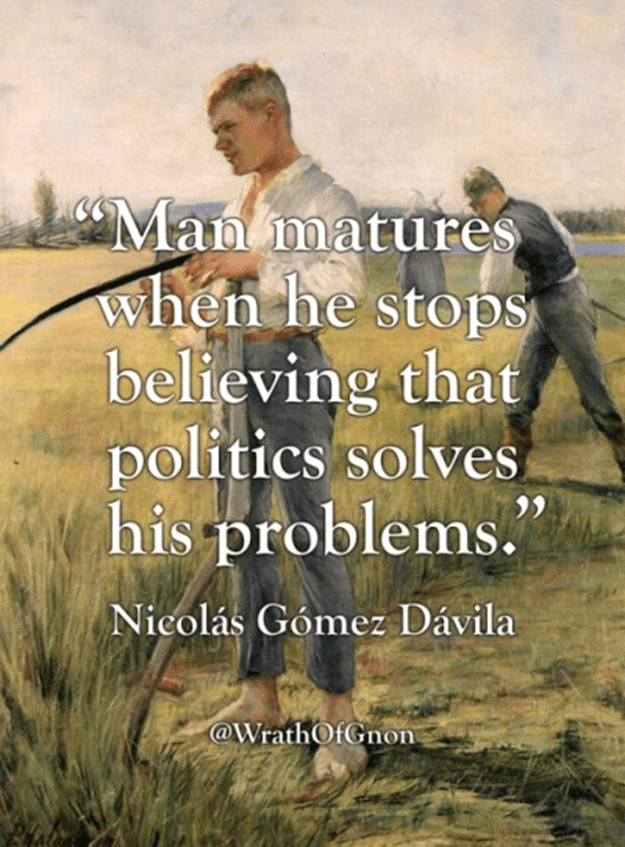
In general, the politicians we elect are confident that they have the answers. Think about that one for a minute – they’re likable, overconfident people. Whether as close to me a state senator, or as remote as the President, we elect likable, overconfident people. Let me go through a few issues – Climate Change . . . used to be global warming . . . the folks who are the most certain are folks who take the issue on faith. I’ve met a bunch who would explain the significance, yet give me no explanation of how warming would affect my home, 3,000 feet above sea level and just a touch below the 49th parallel. Gun control – people who have no mechanical ability assume that a gun is too hard to build, confident that the rest of society shares their inability and banning the tool will eliminate its use.
We have a bunch of likable politicians who believe in Keynesian Economics – the problem of having to pay back the national debt is beyond their comprehension. That was a majority of our elected officials during the last budget session. And I suspect, if I were to meet this sorry crew as individuals, I would like them. Unfortunately, there is something approaching half of the US
Congress that can’t understand that when you live beyond your means, there is a reckoning day coming. Likable, possibly even bright people, wedded to an impossible idea.
I guess I’m finding myself in the position of voting for the party that will damage me the least. It’s probably about the same as dealing with coyotes – if I have coyotes around that don’t cause me problems, I coexist. Their replacements could be worse.
-
Sometimes, a chart or a graph says everything about inflation and economics I want to say. This chart says everything that I could hope to say – particularly if you look at 3 different rates in the past 13 months.
Standard Mileage Rate
The following table specifies the standard mileage rate for specific tax years and date ranges within tax years.
Year Standard mileage rate Depreciation rate per mile 2023 0.655 0.280 7/1/22 – 12/31/22 0.625 0.260 1/1/22 – 6/30/22 0.585 0.260 2021 0.560 0.260 2020 0.575 0.270 2019 0.580 0.260 2018 0.545 0.250 2017 0.535 0.250 2016 0.540 0.240 2015 0.575 0.240 2014 0.560 0.220 2013 0.565 0.230 2012 0.555 0.230 7/1/11 – 12/31/11 0.555 0.220 1/1/11 – 6/30/11 0.510 0.220 2010 0.500 0.230 2009 0.550 0.210 7/01/08 – 12/31/08 0.585 0.210 1/01/08 – 6/30/08 0.5050 0.210 2007 0.485 0.190 2006 0.445 0.170 9/01/05 – 12/31/05 0.485 0.170 1/01/05 – 8/31/05 0.405 0.170 2004 0.375 0.160 2003 0.360 0.160 2002 0.365 0.150 2001 0.345 0.150 2000 0.325 0.140 4/1/99 – 12/31/99 0.310 0.120 1998 – 3/31/99 0.325 0.120 1997 0.315 0.120 1996 0.310 0.120 1994 – 1995 0.300 0.120 1992 – 1993 0.300 0.115 1989 – 1991 0.300 0.110 1988 0.300 0.105 1987 0.300 0.100 1986 0.300 0.090 1983 – 1985 0.300 0.080 1982 0.300 0.075 1980 – 1981 0.300 0.070 For tax years prior to 1990, the depreciation rates apply to the first 15,000 miles. For tax years after 1989, the depreciation rates apply to all business miles. -
When I studied surveying, compass declination was a simple thing – there was a page in the text that showed a map of North America, the geographic north pole and the magnetic north pole, and a series of lines showing where to set the declination so you could push a line due north (or south or east or any direction you wanted to go.
Back when (and where) George Washington was surveying, the magnetic north pole was pretty much on a straight line with the geographic north pole. The really precise guys would stay up at night and establish a reference line from Polaris, or you might establish a line on the solstice, but in general, American surveyors had a lot of confidence in the magnetic compass.
Since I retired, I’ve had to change my references – the page on the old blue surveying book that showed how much correction was needed to correct my compass bearing just doesn’t pack it anymore. Magnetic north has moved a long way in my lifetime:

So now, before I decide to push a line out with a compass, I get online. Fortunately, NOAA provides more information than weather: noaa.gov/maps/historical_declination shows the movement of magnetic north from 1500 to present (nobody paid much attention before 1500).
My goto place for updating the declination is ngdc.noaa.gov
If I don’t use the NOAA information, I have a stretch of road that runs east-west where I can adjust declination without needing technology. The more modern folks just use GPS – though most of them are probably more comfortable without a compass than I.
Things change. And that’s OK, so long as I stay current and change with them.
-
I went through three books that seemed unrelated this past week – Benjamin Lee Whorf’s Language, Thought and Reality, Robert Ruark’s The Honey Badger, and Gary Montgomery’s Doughboys, Rumrunners and Bootleggers.
I’ve been looking, off and on, for a copy of Whorf since 1969. He was an MIT chemical engineer who was employed in fire prevention, and (taking a few seminars from Edward Sapir) moved his studies into linguistics – how the language we use affects how we think, how we research. It has been a slow read. Whorf died in 1940, and most of his concepts have already been delivered to me, well thought out and developed, by two generations of scholars that researched his topics before I got the book.
I first read The Honey Badger as an undergrad dormie. Ruark’s phrase, “There is a bloody brave little animal called the honey badger in Africa. It may be the meanest animal in the world. It kills for malice and for sport, and it does not go for the jugular – it goes straight for the groin. It has a hell of a lot in common with the modern American woman.” I’m not really sure that I would recommend the book to a seventeen-year-old college freshman . . . a thought about the mature cynicism of Ruark being inflicted during a young man’s formative years forms without needing a lot of development.
It was a lot different read at 73 than at 17 – mostly because, on page 341, I was reintroduced to an old friend and colleague. I realized that portions of Leonard Bull, a gunsmithing instructor when I taught at Trinidad State, were fitted into the final third of the book. Leonard had worked with Ruark as a hunter in Kenya, when Ruark reported on the Mau-Mau uprisings – his daughter had told me how much of the action in Uhuru’s pages was based on Leonard’s work during the uprising. Leonard could not return to Kenya – the nation he had represented in the Olympic games. A thoughtful, pleasant man, his work opposing the revolution had left too many people in the government knowing who to credit with a relative’s disappearance.
Reading an autobiographical novel sixty years after it was written, and encountering old friends at a time before you met them is an interesting experience – definitely not something my English teachers prepared me for.
Ruark did prepare me for Gary’s book. Gary’s a touch older than I and came to this country a half-generation later. The old-timers he interviewed over the years were often folks I had met as a kid . . . and they had shared the same stories of the Great War, of prohibition, bootlegging, and rum running with me as a kid as Gary heard in his many interviews. As I think on it, Mom was a pre-teen in the time of his novel . . . the stories I heard from her – for example, of Billy Lloyd flying whisky in from Canada to the “old airport” up Swamp Creek – were stories that she had heard from an older generation. Ten-year old girls just weren’t central to the stories of blind pigs and speakeasies.
So as I read Dougboys, Rumrunners and Bootleggers, the story line was always supported by the tales I heard as a little boy – I can say for certain that P.V. Klinke’s tale of taking out a runner’s tires with a 1×4 full of nails didn’t show up in my reading . . . but I was waiting for it. The description of the places in the neighborhood . . . places that were new to Gary when he arrived in the seventies, kept me thinking what things were like in the seventies when he first arrived.
His description of the irrigation district brought back a memory of Bert Roe, at the end of the system, in the late seventies, telling how it was the first time his place had water all season. The coal trains from Canada, with rye whisky barely hidden beneath the coal were from stories I had heard long before.
There are a lot of worse things for a writer than having Robert Ruark prepare your reader.
-
When I bought my sawmill, the advertisement read: “The Frontier OS27 is our reliable mid-size sawmill with even more horse-power to serve your milling needs.” Bruce Todd, who has a lot more experience with mills than I ever will, told me that it’s a toy. From the fun I’ve had learning to use a mill, I think he may be right – but my sawmill is for a retiree, cleaning things up. To Bruce, a mill has been a way to make a living and support a family.
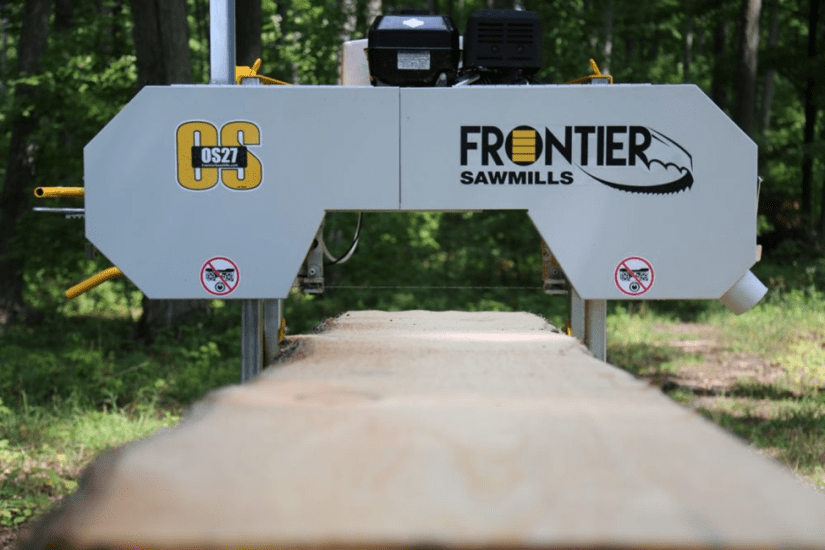
It is definitely fun – and I’m glad that my venture into sawmill operation came 50 or 60 years later than my classmates. It’s just one more of my retirement activities. Somehow, I retired into a complexity of self-employment activities – the old service station/store building needed lots of maintenance, the trees need thinned for forest health, a few acres of hay make things qualify as a farm, the trailer park needed maintenance . . . I think staying busy as aging takes me down physically does qualify as a retirement plan. Last night, I listened to another retiree telling about landing in Madrid. My story is about sawmilling for fun. I’m not certain that my retirement path has been the norm.
My first research into band sawmills was over 40 years ago – Russ Hudson and John McBride set me up to visit a guy who was using one and to try to get him working on a conservation plan. The visit was a failure – a very stoned and very pregnant teenager greeted me to explain that “Dad isn’t home. He’s in court.” The story gets more upbeat – when I taught at FVCC’s Libby campus half a generation later, I encountered the young lady again in the classroom and academic reinforcement center. Even later, she made a point of tracking me down to tell me that she had completed her master’s degree. Later still, I learned the lessons of running a bandsaw.
Part of the fun of the sawmill is leveling the track – the track is light, the logs are heavy, and the soil beneath shifts with wet and dry, frost and thaw, and needs to be as close as possible to dead on. Some folks can accomplish this with a carpenter’s level and string. I’m no carpenter – I started with a self-leveling level and a survey rod. I’ve recently picked up a self-leveling laser, and I think I’ll be able to level the mill far quicker, with fewer steps, and by myself.
Changing the sawbands was a challenge when I started, but with everything adjusted correctly, after the fourth band, it has grown to be an easy task. When things warm up in the Spring, I’ll be cutting and moving more downed timber and turning it into boards. I have learned that even a lead bullet in a tree dulls the saw, and really enjoy dodging the full metal jacket bullet or fence staple that awaits my saw.
Cull boards? I think my standards aren’t as limited as the American Wood Council produces – my poorest are still suitable for firewood, and my next category is fence bracing. There are a lot of uses for a board that has a bit of errors in it . . . and I have fences that need repair, as well as buildings that need maintenance. As an old man, cutting four or five hundred board feet in an afternoon is plenty for me . . . the task of cutting the logs to length and moving them to the deck takes the same amount of time for my toy mill as a larger one.
-
When I started snow surveys, the only electrical instrument we had was a meter to read the Bouyoucos blocks to measure soil moisture below the snow course. Everything else was clockwork for measurements on the snow pillows, or by weighing the tubes.
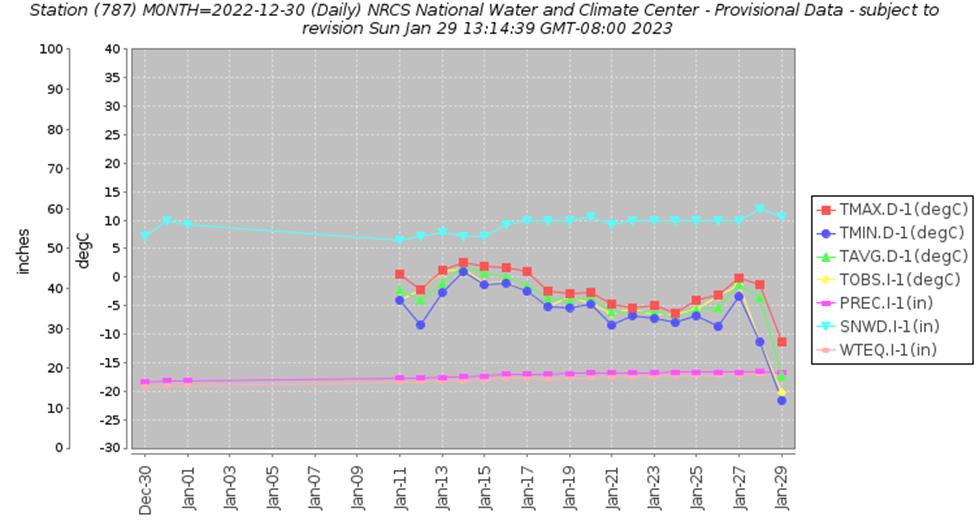
Now, knowing what’s up there is as simple as typing in the site name, and watching the computer screen. On Sunday, the 29th, we could see that Stahl’s Snow-water shows about ten days worth of blank data, but only increased from 16.9 to 18.8 inches over the month.
Montana SNOTEL Snow/Precipitation Update Report
Based on Mountain Data from NRCS SNOTEL Sites
**Provisional data, subject to revision**KOOTENAI RIVER BASIN
Banfield Mountain 5600 8.7 11.0 79 13.8 15.9 87
Bear Mountain 5400 24.3 34.4 71 34.6 46.9 74
Garver Creek 4250 5.8 6.7 87 10.0 12.4(24) 81
Grave Creek 4300 8.2 10.6 77 16.2 20.8 78
Hand Creek 5035 6.6 7.0 94 9.0 11.7 77
Hawkins Lake 6450 14.1 14.2 99 17.5 20.7 85
Poorman Creek 5100 16.6 22.4(22) 74 27.5 37.8(22) 73
Stahl Peak 6030 18.6 21.5 87 18.8 25.4 74
Basin Index (%) 81 77
80% might look low – but there is a lot of time left for more snow to fall.


Want to tell us something or ask a question? Get in touch.

Recent Posts
- The Density of Water Explains When Dickey Lake Freezes
- Watching Iran
- The Quality of Numbers
- Robert Treat Payne Had Traveled To Greenland
- 75 Years Ago in New York
- Recovery Time for a Retiree
- Venn Diagram and DSM
- When Castro Was Cool
- You Have To Beat Darwin Every Day
- Computer Repair by Mussolini
- Getting Alberta Oil to Market
- Parties On Economics
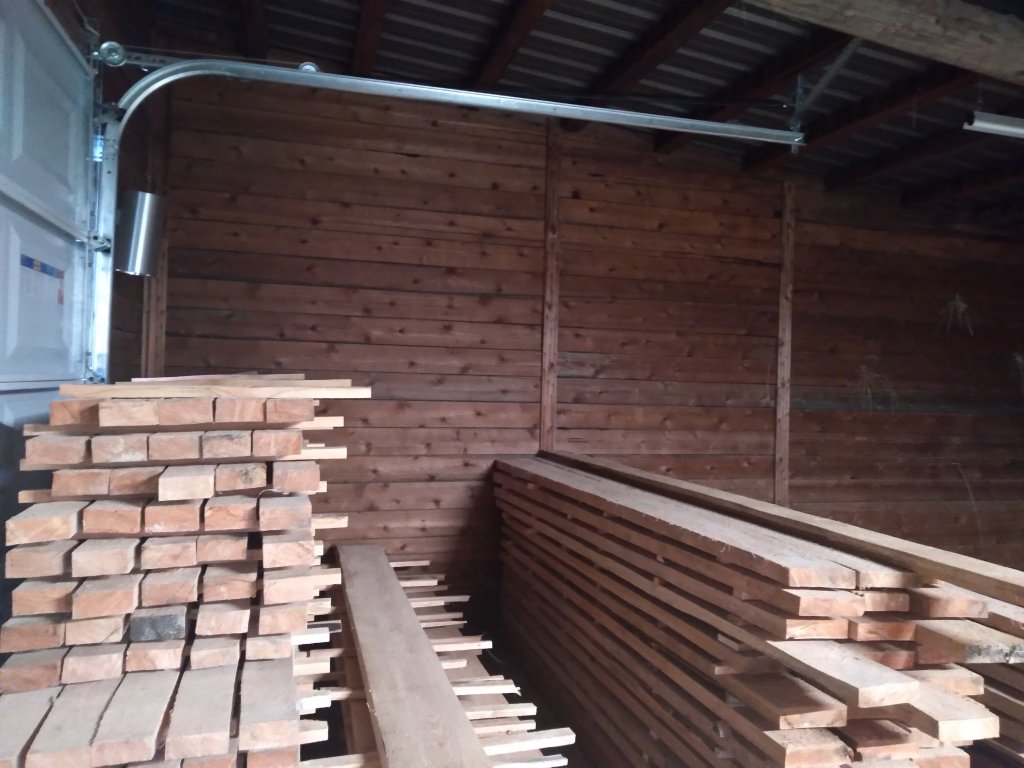
Rough Cut Lumber
Harvested as part of thinning to reduce fire danger.
$0.75 per board foot.
Call Mike (406-882-4835) or Sam (406-882-4597)
Popular Posts
Ask The Entomologist Bears Books Canada Census Community Decay Covid Covid-19 Data Deer Demography Education Elections family Firearms Game Cameras Geese Government Guns History Inflation life Lincoln County Board of Health Lincoln County MT Lincoln Electric Cooperative Montana nature News Patches' Pieces Pest Control Politics Pond Recipe School School Board Snow Taxes Teaching travel Trego Trego Montana Trego School Weather Wildlife writing
 Trego's Mountain Ear