-
I saw a friend’s rifle – his grandfather’s gun. From the serial number, it was purchased in the Great Depression . . . and even then, the Savage Model 40 Super Sporter wasn’t the most common of rifles. While Savage was a bit of the low-priced spread, buying a new 30/06 in 1933 would have still shown a bit of financial dedication to hunting.

It’s not a common gun – maybe 18,000 were made, in all calibers, between 1928 and the demands of World War II taking the rifle from production.
My own Grandfather Gun is a model 1894 Winchester – much more common, but with its own unique features – the serial number dates it to 1902, and it was November of 1901 when they came out with the 32 Special cartridge. I heard a lot about the inferiority of the 32 special – but the nickel-steel barrel was an extra $10 over the standard barrel, and the 32 special was 10% greater in muzzle energy than the more common 30-30. My grandfather’s 32 special is a rifle – with a 26 inch barrel, and, with a 1902 production date, is one of the first 32 specials.

The photograph is of a rifle in better shape than my grandfather’s. On mine, the blue is worn on the corners of the octagon barrel. The tree stand my grandmother used to get a 4 point buck in the twenties is gone now, but I recall her telling the story . . . often.
These old rifles are family connections – but I don’t know if the connections with great-grandparents will remain as strong.
-
I ran across a report I had made to help the late Rick Holm, MD, with a presentation he was making – I don’t recall if he was president of South Dakota’s Medical Association at the time, or the specific group that made up his audience. As I looked at it, I realized that there was a lot of information in the answers to Rick’s questions. When I wrote this, I was both teaching the class Indians of North America (senior level and graduate students) and South Dakota’s State Demographer – which probably explains enough.
The topic was the effects of disease on the Native American population following European contact and colonization. Another way to look at the topic is “why do we speak English instead of Swedish in North America? It may have been that the fighting abilities of the northeastern Indians and the Inuit were so discouraging to the Norse that European invasion was delayed by 500 years, but it may not.
The first question is why weren’t the Native Americans capable of resisting the post-Columbus European invasion? It becomes more significant if we look at the failure of the Norse to successfully colonize North America – and I think we can make a pretty good argument that the old Swedes and Norwegians, traveling in open ships across northern waters, with stops in Iceland and Greenland, were pretty healthy people . . . and that their failure to make successful colonies (while the Spanish, French and English were so successful) was due to the fact that they did not introduce new diseases onto the North American continent.
The first major outbreak of an infectious disease recorded on the northeastern Atlantic coast was 1616-19. The Massachusetts and other Algonquin tribes in the area were reduced from an estimated thirty thousand to three hundred (Bray). When the Pilgrims landed a year later in 1620, there were few Indians left to greet them. Many observers believe this infectious disease was smallpox. The Norse might have been just as aggressive as the later European settlers (but in my view) they lacked the advantage of contagious diseases.
http://www.pbs.org/gunsgermssteel/variables/smallpox.html
The second question is why the diseases didn’t flow both ways – with North American diseases infecting and damaging Europe as severely as European diseases more than decimated the American population.
According to Jared Diamond – “The part of that question that’s easiest to answer concerns the reasons why Eurasia evolved the nastiest germs. It’s striking that Native Americans evolved no devastating epidemic diseases to give to Europeans, in return for the many devastating epidemic diseases that Indians received from the Old World. There are two straightforward reasons for this gross imbalance. First, most of our familiar epidemic diseases can sustain themselves only in large dense human populations concentrated into villages and cities, which arose much earlier in the Old World than in the New World. Second, recent studies of microbes, by molecular biologists, have shown that most human epidemic diseases evolved from similar epidemic diseases of the dense populations of Old World domestic animals with which we came into close contact. For example, measles and TB evolved from diseases of our cattle, influenza from a disease of pigs, and smallpox possibly from a disease of camels or rodents. The Americas had very few native domesticated animal species from which humans could acquire such diseases.”
Malaria and Yellow Fever came into the New World along with African slaves – the mosquitoes started spreading the diseases.
Question three — Measles seems to be a pretty mild disease to make a big difference. Why is it on the list?
In Mann’s 1491, he describes the introduction of measles to the Yanomami Indians living near the Brazil-Venezuela border (missionaries in 1967). James Neel and Napoleon Chagnon flew in with several thousand doses of vaccine, and tried to make an “epidemiological firebreak” by vaccinating ahead of the disease. Despite the vaccine, the affected villages had a mean death rate of 8.8 percent. The implication is that Indians were more vulnerable to European diseases than Europeans. In 1824, King Kamehameha and Queen Kamamalu of Hawaii visited England, attended the theatre in the English King’s own box – Queen Kamamalu died of measles on July 8, Kamehameha on the 14th. They were healthy young adults, in their mid-twenties, but their bodies couldn’t handle the relatively gentle European disease.
The age-adjusted mortality rates for the following causes were higher among American Indians than among all races in the US in 1983:
Tuberculosis–560% greater
Alcoholism–374% greater
Accidents–135% greater
Diabetes–107% greater
Homicide–91% greater
Pneumonia and influenza–39% greater
Question 4- How about bubonic plague – the Black Death – the European settlers must have brought it along?
Probably – but bubonic plague is present across the Western US, and probably has been for a long time. The animal connection is there – it’s a disease found in wild rodents (ground squirrels) and passed from rodent to human by fleas. Modern statistics show the Navajo as the people most likely to get the disease – but the demographic analysis shows that it is not a question of susceptibility to the disease – its that there are more Navajo where the disease is . . . Navajo cases are first, but Caucasians cases are in proportion their population. Case fatality rates were actually a touch lower among the Navajo, but not significantly – and with the nation’s center for plague on the Navajo Reservation, this may be a situation where the local medical people are a little better at diagnosis.
It was a lot more serious in Europe because rats work harder at living close to people than prairie dogs and ground squirrels do.
Question 5 – How about flu?
TABLE 1. Comparison of the number and rate of deaths related to 2009 pandemic influenza A (H1N1) among American Indian/Alaska Natives (AI/ANs)* and persons in non-AI/AN populations, by age group — 12 states, April 15–November 13, 2009 Rate† Age group (yrs) Total deaths AI/AN deaths All racial/ethnic populations AI/AN Non-AI/AN populations§ Rate ratio AI/AN to non-AI/AN(95% CI¶) 0–4 18 4 0.6 3.5 0.5 7.2 (2.4–21.8) 5–24 51 5 0.4 1.1 0.4 2.7 (1.1–6.8) 25–64 273 26 1.2 4.2 1.1 3.7 (2.5–5.6) ≥65 84 7 1.6 7.2 1.4 5.0 (2.3–10.8) Total 426 42** 1.0†† 3.7†† 0.9†† 4.0 (2.9–5.6) * All AI/ANs were non-Hispanic. † Per 100,000 population. § Includes 19 persons with unknown race/ethnicity. ¶ Confidence interval. ** Alabama (one death), Alaska (two), Arizona (16), Michigan (zero), New Mexico (eight), North Dakota (zero), Oklahoma (three), Oregon (one), South Dakota (four), Utah (two), Washington (four), and Wyoming (one). †† Age adjusted to the 2000 U.S. standard population. Just in this last go-round, the H1N1 flu, mortality among American Indians and Alaska natives was four times higher than among the rest of our population (CDC, 12/11/09). The Spanish flu, back around 1918 – most of us know that researchers have recovered samples of that virus from bodies buried in permafrost in Alaska, where fatalities among Native populations reached 90 percent. On the other hand, some communities on South Dakota Reservations fared equally badly – and some of the reports from boarding schools on the Navajo Reservation showed the entire (white) teaching staff converted to nursing staff for schools and communities, moving when they heard of new outbreaks.
Question 6 – What does demography have to do with this?
The diseases that we recognize as particularly lethal to the American Indians – like smallpox, measles, tuberculosis, and influenza – tend to kill off a disproportionate part of the 15 to 45 population . . . the folks who take care of the young and the old. Basically it’s what demographers refer to as the dependency ratio. A culture that loses that 15 to 45 year-old group is going to lose more of the young and old too, as it loses the age group that provides most of the care. There was a second whammy, when the caretakers couldn’t help the most dependent through recovery.
Question 7 – what happened in the Dakotas?
If we look at the winter counts – records painted on leather – of our own Dakota, the Sioux, we see this:
1780-1781 Smallpox
1801-1802 Smallpox
1810 Smallpox
1813-1814 Whooping Cough
1818-1819 Measles (“little smallpox winter”)
1837 Smallpox
1845-1846 “many sick winter”
1849-1850 Cholera
1850-1851 Smallpox
But compared to their neighbors the Sioux minimized the effects of these new diseases. With the tipi, they had the ability to move readily, and their social structure was based on the tiospaye – kind of a large family group – so it was natural for them to scatter across the country in relatively small, kind of isolated separate groups – the Sioux had a social structure that made a partial, seasonal quarantine a regular situation. On the other hand, the farming tribes, like the Mandan, had large permanent villages, permanent earth-walled buildings, and stayed in one place in a large group. After the smallpox epidemic of 1837, there were 125 or fewer Mandans left alive. Their population was estimated at 9,000 prior to white contact. And there are tribes that weren’t as successful in dealing with the diseases as the Mandan were.
Question 8: I’ve heard that smallpox was deliberately spread among the Indians by the army, by the government. What can you say about that?
It happened, but it wasn’t common. Historically, we know that during a parley at Fort Pitt on June 24, 1763, Captain Simeon Ecuyer gave representatives of the besieging Delawares two blankets and a handkerchief that had been exposed to smallpox, in hopes of spreading the disease to the Indians in order to end the siege. That’s the only documented case a military attempt at infection. It was enough to motivate Washington to vaccinate the entire Continental Army during the Revolution – apparently he figured that if the Brits would expose Native Americans, they’d also be willing to share with their white enemies. On the Plains, in the late 1830’s, Jim Bridger credited the Crow and Jim Beckwourth with sending smallpox exposed blankets to the Blackfeet in a case of opportunistic bio-warfare.
The interesting thing is that, in 1832, Congress had appropriated funds for the army to inoculate the Plains tribes against smallpox. It was only $1,200 dollars, and they expected Army doctors at forts so do the work . . . but it is a spot where history shows the US government trying to stop smallpox instead of trying to spread it.
I suspect that more items that had been exposed to smallpox went as trade items and loot than were intentionally used as bio-warfare agents. Even used blankets had value, and if you had already survived the disease, a village that had been annihilated or abandoned after smallpox would have been a cheap source of second-hand trade goods.
Question 9: What are the current health differences among American Indians?
This is, in a way, the easiest question to answer – several of our counties have populations where American Indians make up well over 80 percent of the population, so we can readily get the data from state records. Diabetes comes to mind – raw numbers don’t show if the cause is genetic predisposition or diet – but it is definitely there. My guess is that both factors are at work – but there has been a tremendous change in the human diet over the past couple of centuries, and it’s even more extreme on our Reservations. Other health differences include more liver problems, higher infant
mortality rates, some higher cancer rates . . . but let’s stress that these aren’t the epidemics that occurred during white settlement. These chronic diseases aren’t the same as virgin field epidemics.
Question 10: Did the Native Americans have any nutrition-related health problems at the time of European contact?
At contact, North America had a lot of farming Indians. The main crops were corn, squash and beans, while animal protein came from hunting . . . where the farming was good, the archaeological record shows large towns . . . and the buried remains show that corn was the primary food. Among the Anasazi, we find teeth damaged by the small pieces of stone added in the grinding process, and a lot of bone loss along the jaws from abscesses. At Cahokia (down by St. Louis) the human remains suggest too much carbohydrates and too little protein.
On the other hand, a study by Franz Boas in 1890 showed that the average Plains Indian was taller than his or her White American peer at the time – but most of the folks in the study were raised in a buffalo hunting society. Whether in the New World or the Old World, farming provided a way for more people to make a living – but not a balanced diet.
-
Ice Pillars
It’s that time of the year again, or rather the temperature is that low again. Strange pillars of light in the sky? Ice pillars, or light pillars, form under conditions of very cold temperatures. They are caused by light being reflected by crystals in the atmosphere, and careful observation of them can actually provide some insights about the weather. The source of the reflected light can be anything from the sun to streetlights. Color will vary depending on the light source. Since these require very dense, cold air,…
Do you get the Government you pay for?
The area represented by the Lincoln County High School district has 31.8% of the county’s population, and provides 45.5% of the tax dollars that fund county government. Libby, where most of the county government occurs, has 50% of the county’s population, and provides 36.1% of the taxes that fund county government.
I guess it’s a question suitable for debate – is it better to receive more government than you pay for, or is it better not to receive as much government as you pay for?
Why Frost Heaves
Frost heaves – back when I was teaching engineering uses of soils 40 years ago – were explained by osmosis, compression and fine-grained soil. So think clay, or even better, glacial silt as your fine-grained soil. For compression, remember that just ten or fifteen thousand years back there were some thick glaciers on top of our soil. For osmosis, think of the difference between rain water, or snow melt, and the groundwater with it’s calcium salts under my field. And glacial silts tend to have a lot of…
Proving nonexistence
It’s probably a half-century and more since I realized the amount of faith it takes to be confident something doesn’t exist. Most recently, it was a positive, confident statement that there was no voter fraud in the last election. A half-century back, it was a college student answering the question, “How can you possibly be an atheist?” The answer is the same – there are some things you just have to take on faith. Just as it takes faith to be an atheist, it takes faith to be…
Measuring Snow is Easier Now
In the mid-seventies, I would start the week of snow surveys by leaving home a little before 7:00 am, meeting Jay Penney at Grave Creek, then snowmobiling up to Stahl Peak, Weasel Divide and then catching the Grave Creek on the way down. After that it was a week of motel living as we would sample snow courses four more days, ending with Banfield Mountain. Later in the decade, it would be 5 days in the Kootenai drainage, then 5 more in the Flathead. By the end, we…
Winter changes voles’ moods, too.
As the seasons wear on, and we begin another year with our movements restricted by Covid19, it’s easy to see cabin fever creeping up on folks. This plight turns my mind to the voles, and how much better they handle winter than us humans.
Fair Representation on the County Board of Health?
Last week, we asked if the County Board of Health was a fair representation of the county. We’ve looked at how people are distributed in the county before, in “Searching Lincoln County Data” and “If LCHS District were a County” and have mostly compared high school districts (which is a handy way of splitting the county into three). Splitting the Board of Health into representation by high school district: High School District % of County Population % of Vote on Health Board Libby 50 % 57.1 % Eureka…
-
You might recall the signs about not feeding bread to ducks. It’s also (among other carbohydrates) bad for deer.
There are several reasons for bread to be bad for ducks:
- dependency on humans as a source of food is just generally bad for wildlife,
- crowding caused by an attraction to food humans provide can increase the spread of disease,
- molding bread can make ducks sick
- bread is actually really poor in the nutrition ducks need
For deer, the reasoning is somewhat different. The first two risks, human dependency and spread of disease by crowding remain, but the rest is more complicated. Deer are ruminants, like cows, and rely on symbiotic bacteria to digest the sort of things we can’t. This means that, like us, deer and other ruminants have a gut microbiome that’s very important.
The gut microbiome has been studied to some degree since microscopy was developed (by Antonie van Leeuwenhoek, during the late 17th century), but much of the research on it is fairly recent. In general, it’s complex, important, somewhat diet dependent, disturbed by generalized antibiotics, influenced by probiotics, and likely associated with some diseases.
In humans we have enough research to conclude that disturbing the gut microbiome is probably a bad idea. In ruminants, this is extremely evident.
Diet changes the microbiome. In ruminants, the risk is that a system unaccustomed to carbohydrates is not a system that is ready to receive a lot of carbohydrates. Sudden influx of carbohydrates results in a massive increase in the digestive bacteria that thrive on those carbohydrates.
Like many organisms these have a competitive strategy that involves poisoning the competition (this is how yeast benefit from producing alcohol). In this case, the product produced is lactic acid. The net result? What in cattle is called “grain overload”. In more technical terms, rumen acidosis. Inflammation. Ulcers. Inability to absorb nutrients. The animal dies.
Corn. Grain. Birdseed. Hay. Apples. Anything notably higher in carbohydrates than what is available in the environment represents a hazard.
In Montana, feeding the deer is decidedly illegal (though I’m unclear if leaving your retired Christmas tree out for them qualifies- they will eat pine needles if given the opportunity, though it isn’t a preferred food source). And locally, the potential for disease to spread seems to be a primary concern: deer feeding has been cited as a factor in the high transmission rate of chronic wasting disease in Libby.
-

Trego School‘s K-2 teacher, Kelly Kiser, was responsible for applying for the grant that allowed the school to add blinds to the windows.
Trego School received $5,500 in funding from the NRA School Shield Grant. This particular NRA Grant Program began in 2012, with the goal of improving school security.

School resumed Monday January 2nd, following winter break.
-
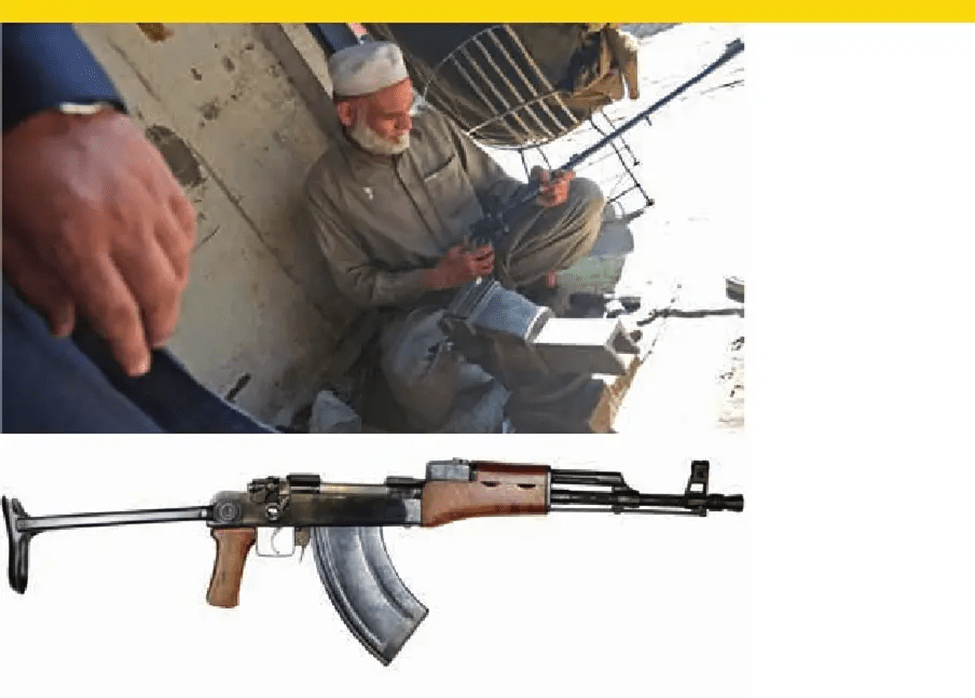
Most nations have more intensive control over gun manufacturing than the US. This article describes firearms that we might consider “home-made” going from simple zip-guns and slam-fire shotguns up to mortars and recoilless rifles.
In Yemen:

Pakistan:
Toronto, Canada:

Australia:

Palestine:

Safety“The operation of improvised or craft-produced small arms and light weapons—as opposed to professionally-manufactured weapons—often poses significantly higher safety risks for users and bystanders. As discussed above, individual classes and types of weapons can suffer from shortcomings that range from the poor quality and consistency of raw materials (including improper material selection, heat treating, and finishing) to insufficient manufacturing tolerances and a lack of quality control or proof-testing, all of which result in dubious chamber, barrel, and action integrity. In turn, these weaknesses greatly increase the risk of catastrophic failure, in which case the weapon is rendered useless and the firer may be injured or killed. If ammunition has been hand-reloaded or wholly or partly improvised, further problems may arise from too much or too little propellant, under- or over-calibre projectiles, insensitive or over-sensitive primers, and other factors.
Quite apart from these endemic problems with improvised and craft-produced firearms,controlling for correct cartridge headspace is another serious issue for designs that require the use of high-pressure conventional ammunition. Even if a weapon is otherwise well made, insufficient headspace will prevent reliable feeding, and excessive headspace can result in catastrophic weapon failure and harm to the user (Ferguson, 2015).
In view of these factors, craft-produced and improvised firearms tend to be chambered for relatively low-pressure cartridges, such as .22 Long Rifle, .380 ACP, and shotgun cartridges. Similarly, improvised and craft-produced light weapons tend to fire low-velocity projectiles or rockets, which do not exert the same pressures on a weapon system as many conventional artillery or support-weapon projectiles. However, there are other, less dramatic dangers inherent in the use of improvised or craft-produced weapons under combat conditions. Weapons need not directly harm users to put their personal safety at risk. Given that poor-quality magazines, especially magazine springs, and crudely manufactured magazine wells and feed ramps are commonplace, employing certain models of improvised and craft-produced weapons increases the risk of stoppages or failures-to-feed significantly. Poorly manufactured critical components, such as firing pins—which may be either too brittle or too malleable—can cause a weapon to experience a failure-to-fire. While not as disastrous as a catastrophic failure, these problems can still expose the user to significant danger during armed conflict.
These shortcomings are also likely to reduce an individual user’s or group’s confidence in a weapon, which can limit its effectiveness even before any malfunction presents itself. This type of issue seriously affected the British Army in 1991, when UK troops deployed to the Gulf War in what was termed Operation Granby. Platoon commanders expected to sustain extra casualties during fortification-clearance operations, specifically because infantrymen lacked confidence in their stoppage-prone weapon systems (LANDSET, 1991, as cited in Raw, 2003). Given that low levels of confidence in the reliability of weapons can have a serious impact on trained soldiers, the effects on untrained or poorly trained insurgents and armed criminals are also likely to be substantial, especially among those operating in urban areas or close terrain. Consequently, most unauthorized users prefer factory-built weapons to their improvised and craftproduced counterparts.”
The report is worth reading.
-
I listened to another question about moving from a university career to Trego. I didn’t really answer – because the question wasn’t grounded in my reality. I’ve met bright people in the universities – and I’ve met bright people in Trego. I think it’s safe to say that some of the really challenged folks at the U held a Ph.D. In Trego, I run across fewer dummies with doctorates.
I did enjoy the pleasure of a conversation with some of the highly trained bright people I ran across daily – but I remember that I’ve had the Dialectic explained by an old logger who never attended high school, yet did as good a job as a very good prof who specialized in Marxist social thought. Intelligence and knowledge are not limited to people with formal education. Despite a career in the academy, I never met a person whose thinking was as disciplined as Earl Meier. I suspect growing to adulthood here prepared me to appreciate people who were smart . . . and to tolerate folks who thought they were.
Still, I have lost the access to textbook review copies – the books sent out to faculty members in hopes that they will be required for a class. And copies that were passed on by faculty in different departments made informal learning every bit as available at the university as in Trego. I have a hunch that is my biggest ‘intellectual loss’ in moving to Trego.
This December, I found a catalog from The Great Courses in the mail – offering a host of college courses (without grades or credits) at $30 each, if I wanted the DVD or $20 for just downloading the information. I ordered The Origin and Evolution of Earth (it’s about 40 years since I took a geology course, and I’m sure the science has moved ahead). I never have taken Western Civilization, so I ordered the Foundations of Western Civilization – I don’t think it covers anything different than the class I didn’t have time for at 17. Finally, I added in the History of Ancient Rome – a topic where I have really began to notice my ignorance since I encountered Tainter’s theories on the collapse of complex societies.
Now, once I get my DVD cleaning disc from Amazon, I can start going through the classes this winter in my living room. Real estate may be location, location, location – but education isn’t.
-
The technology of snow measurement has turned the trips I made as a young adult in the seventies into a simple keyboard search. It’s a lot warmer to check the snow pillows from the living room.
Stahl Peak:

Grave Creek:

So 2023 starts with 7.3 inches of snow water equivalent at Grave Creek, and 15.2 inches at Stahl. At this time in Winter, a little above average, but not enough above to make any reliable projection.
Looking at the data, it always surprises me how measuring snow depths prepared me for a career in demography,
-
In 1650, French gunpowder was 75.6% Potassium Nitrate, 14% charcoal, and 10.8% sulfur. As the US Army went over to the smokeless powder 30 US cartridge (30-40 Krag) in 1892, the black powder it replaced was 76% Potassium Nitrate, 14% charcoal and 10% sulfur. The similarities in the recipes suggest that making black powder was definitely a mature technology in 1650. Still, a 1662 inventory shows that five out of six guns in the British Royal Army were matchlocks – while the energy source was a mature technology, ignition still had a lot of development to go through. The Alden gun, brought to America with the Plymouth Colony in 1620 was a wheellock, and the oldest flintlock on display (King Louis XIII’s) was built in the same year. There were probably some earlier – but the ignition had to move from sparks to chemicals, then from percussion caps to primers. But such is the story of mature technologies.
When we look at electric cars, electric motors are definitely mature technology – so mature that I have all the tools needed to make an electric vehicle in my garage – and over a century worth of reference materials on electric cars, bikes, trucks, tractors, etc. The challenge is the battery. Gasoline beat the battery in the early years of automotive development – but it may be that battery technology just advanced slowly.
The dishwasher I have now should be mature technology. I got it’s predecessor used in 2000, and it ran nearly flawlessly for the next 15 years, needing only the occasional cleaning. Today’s dishwasher took the mature technology, added the congressionally mandated water savings, and became a flawed technology – in order to get the water savings, the designers added a dedicated single-purpose computer on a motherboard, and the motherboard dies every couple of years. It’s annoying and expensive.
Renata’s search criteria for the machine was how available warranty service was on the machine. I think my search criteria for the next machine will be how simple it is, and how long a record the design has for working without failure. Great service technicians are good – but a machine that never needs one is better. -
It was mid-afternoon on Friday (December 23rd), at Trego Elementary School. The temperature was below ten degrees Fahrenheit. A few people were wrapping presents to gift to the students and had been hearing some odd noises on the roof when school board member Clara Mae Crawford arrived and informed them that there were people up on the roof.
Surprised, one of the folks present (Matt) stepped outside and explained that they really couldn’t be allowed to be up there, doing that, since it was a liability issue, and if they would not stop, he would have to call the police. Since they didn’t leave, after being asked to depart twice, the police were called.
In the meantime, Clara called fellow school board member (and board chair) Mike McCurry.
“It was about 3:20 on Friday, December 23, when I answered a phone call from Trego School. The gist of the call was that there were people on the school roof, skiing, and that when Matt (the maintenance guy) had asked them to leave (twice) they were still there, so he had dropped a dime and called the police.
I had just gotten out of some cold, wet jeans, and got into the car ASAP, thinking either I’m going to show up at the school to see another board member laughing “Got you this time.” or I’m due to meet some people that are crazy enough that I’ll end up wishing I had a pistol in the pocket. The second was the reality.”
Mike McCurryMike spoke with the people outside until police arrived. He’s somewhat hard of hearing- but here is his summary:
“I initiated the conversation with the standard query: “Who are you and what are you doing here?” I met a short middle-aged man with delusions of significance – he introduced himself as Tanner Hole, and told that they were making a ski movie . . . apparently thinking that this should impress me. Claimed he was a high school dropout and had made a living skiing all his life – and that he’s 39 years old. One of his compatriots was telling me that the woman in the school had given them approval to do the stunt and filming (neither of the women in the school agreed with that statement).
I heard the argument that the school was public property – so I thought I should square that away, explaining that I’m the chair of the school board, and if they had asked for board approval I would certainly, by God, remember it. Mr. Hole informed me that he had over 100,000 followers on some social media, that they never ask permission, that’s part of his culture . . . and I replied that I didn’t give a flying ___ about his culture – in mine he was trespassing. He offered to show the film of his jump – I explained that their best move would be to be gone before the police arrived, that all I wanted to see was the tail gates of their pickups headed out. He angrily headed toward his pickup.
Later, Mr. Hole approached me again, and seemed to anger up as I described him as a cockroach. Frankly, I was relieved when the deputy showed up before he got closer . . . at 73, I’m a bit beyond my prime for a physical altercation.”
Mike McCurryMike misheard the name- but a man with that sort of Instagram following (Username: TannerHall420) isn’t hard to find, and his public photos were recognizable.
Who is this guy, anyway?
Tanner Hall is a Kalispell native, age 39, apparently known for freeskiing. Media coverage of him in publications about skiing is glowing, with the words “legend” and “icon” tossed around quite a bit. His legal record appears a bit more colorful in various local papers.
Hall’s wikipedia lists a substantial number of 1st places in various competitions from 1999 to 2012- at which time the list ends abruptly. In 2016, he had an interview to the Magazine High Times, around the same time he was sponsored by a marijuana producing company which sold a “420 kit” complete with wrapping papers featuring his likeness.
It’s hardly Hall’s first time seeing police at a school, nor is it a recent habit. In 2008, he was ticketed outside a Colorado high school in the early morning hours where police noticed people performing “extreme ski stunts” and smelled marijuana.
Were any laws broken?
We’re not police, or lawyers, but it seems probable that some were. If nothing else, given Hall’s admitted marijuana habit, it seems quite likely that he had drugs on school property.



Want to tell us something or ask a question? Get in touch.

Recent Posts
- The Density of Water Explains When Dickey Lake Freezes
- Watching Iran
- The Quality of Numbers
- Robert Treat Payne Had Traveled To Greenland
- 75 Years Ago in New York
- Recovery Time for a Retiree
- Venn Diagram and DSM
- When Castro Was Cool
- You Have To Beat Darwin Every Day
- Computer Repair by Mussolini
- Getting Alberta Oil to Market
- Parties On Economics

Rough Cut Lumber
Harvested as part of thinning to reduce fire danger.
$0.75 per board foot.
Call Mike (406-882-4835) or Sam (406-882-4597)
Popular Posts
Ask The Entomologist Bears Books Canada Census Community Decay Covid Covid-19 Data Deer Demography Education Elections family Firearms Game Cameras Geese Government Guns History Inflation life Lincoln County Board of Health Lincoln County MT Lincoln Electric Cooperative Montana nature News Patches' Pieces Pest Control Politics Pond Recipe School School Board Snow Taxes Teaching travel Trego Trego Montana Trego School Weather Wildlife writing
 Trego's Mountain Ear