-
In Montana, energy for transportation didn’t start with fossil fuels – the first energy production was firewood for steamboats traveling the Missouri. I recall the name “Peter Koch” from my years at MSU – not from any history class, but because his name designated a high rise apartment complex in married student housing. I no longer recall whom (that I knew) lived there, but I recognized the name of the early energy entrepreneur when I read excerpts from his diary, chronicling the life of a woodcutter at the mouth of the Musselshell:
Oct. 4. Commenced chopping. Blistered my hands and broke an ax handle.
8. Twenty five years old and poor as a rat. Cut down a tree on the cabin.
20. Cutting while Joe is on guard. Snow tonight.
24. Killed my first buffalo. He took 7 Spencer and 6 pistol balls before he died. River full of ice.
Nov. 7 A Gale of wind. Those Arapahoes who camped abt 10 days at Jim Wells woodyard have moved down the river after shooting into his stockade.
15. Chopped hard all day. BM says 3 cords. Fred came back all wet. He started in a skiff with Dick Harris, both drunk, and upset at squaw creek.
25. Fred and Olson started out wolfing. We stopped chopping on account of shooting and shouting in the hills. Joe and I found 4 wolves at our baits.
Dec 10 Sick. No meat.
11. Sick yet. Bill, Joe and Mills went to Mussellshell, said Indians had attacked and stolen 3 horses and mule but lost one man.
24. Christmas eve. No wolves.
Jan 16 Awful cold. Froze my ears.
17. Too cold to work. Went up to Musselshell. Froze my nose.
24. Thawing heavily. Mills drunk.
Mar 22 Saw three geese. Martin sick.
Apr 29 Sixty Crows went up the river after Sioux to avenge killing of 29 Crows. They were all looking dreadful, had their hair cut off, their fingers and faces cut, with blood left on their faces.
May 9 One hundred and seventy cords on the bank. We put fire to the brush piles. The fire spread and burned up 50 cords. We played out before we got it checked. Nothing to eat.
13. Wind turned and started the fire again. About 20 cords burned.
22. The ‘Nick Wall’ passed about 2 o’clock in the morning without stopping.
23. 40-50 Indians showed themselves at Musselshell on the 20th. The crazy Frenchman started toward them and was badly beaten when firing started they turned and ran.
24. Raining. The ‘Ida Reese’ passed by about daybreak without our knowing it.
28. Sold ‘Deerlodge’ about 10 cords of wood.
June 13 The ‘Sallie’ passed after midnight and took on 15 cords of wood.
16. The ‘Ida Stockdale’ passed without stopping. We threw 6 cords back from the bank to keep it from falling into the river.
No more steamers bought wood from Koch and his companions; he gave it up in the fall, headed southwest toward the Big Belt Mountains, became an Indian trader and surveyor, and, eventually a director of Bozeman’s First National Bank.
At the same time, Liver-Eating Johnson was partnered with X. Biedler in another firewood business – their operation was described by a traveler who came upriver on the ‘Huntsville’:
“Along the brink of the riverbank on both sides of the landing a row of stakes was planted and each stake carried a white, grinning, Indian skull. They were evidently the pride of the inhabitants, and a little to one side, as if guarding them, stood a trapper well-known throughout eastern Montana by the sobriquet of Liver-Eating Johnson.”

(taken from pp 176-181 The Old West Rivermen 1975, Time-Life books)
If my recollections are correct, Liver-Eating Johnson filed water rights on Ashley Creek, over in the Flathead.
-
Every winter, the open water of Dickey Lake reminds me that water is at its maximum density at 3.98 degrees Celsius – 39.16 degrees Fahrenheit. Simply enough, when the surface water reaches 3.98 C, it heads for the bottom. Since Dickey lake is somewhere around 74 feet deep, there is a lot of water that needs to be cooled below 3.98 before the surface temperature can reach 0 and ice can start to form. The map (or is it better termed chart for water?) shows why the ice on Dickey Lake forms from the south end first.

Turnover is the simple term describing how lake and pond water reacts to the seasonal changes. It’s a natural phenomenon – I was fortunate enough to have Bruce May of Montana’s Fish, Wildlife and Parks explain the basic physics of temperature, and bring me along to observe temperatures and dissolved oxygen levels in several local lakes back in the seventies. When the water at the top is at the same density as the water at the bottom, wind and wave action provides enough energy to mix the water easily – but when the heaviest (3.98 Celsius) water is at the bottom, and the surface water is significantly warmer, the layers don’t mix so well.
-
Forty-odd years ago, James Burke came up with a book and a television series called Connections. The back jacket reads “He explains, for instance, how the arrival of the cannon led eventually to the development of movies; how the popularity of underwear in the twelfth century led to the development of the printing press; how the waterwheel evolved into the computer.”
On page 157, he pointed out “Among the earliest references to the change comes from the Anglo-Saxon Chronicle, kept by monks, for the year 1046: “And in this same year after the 2nd of February came the severe winter with frost and snow, and with all kinds of bad weather, so that there was no man alive who could remember so severe a winter as that, both through mortality of man and disease of cattle; both birds and fishes perished through the great cold and hunger.” . . . At the start of the thirteenth century, what is now called the ‘Little Ice Age’ had set in. It was to last for nearly two hundred years.”
“The first innovation to come to the aid of the shivering communities was the chimney. Up to this time there had been but one central hearth, in the hall during winter, and outside in the summer. The smoke from the central fire simply went up and out through a hole in the roof. After the weather changed this was evidently too inefficient a way of heating a room full of people who until then would have slept the night together.”
On p.159 the concept of social change because of the chimney appears. “The open patio-style structure had been replaced by a closed-off building, built to withstand the violent meteorological changes. The new chimney . . . also produced structural changes in the house. The use of a flue to conduct away sparks meant that the center of the house was no longer the only safe place for a fire . . . buildings were less fully timbered so that the risk was less, and the flue permitted setting a fire in a corner or against a wall . . . the chimney began to act as a spine that could be used to support more than one room – which, in any case, could now be heated by separate fireplaces.”
“The primary effect of the introduction of these new rooms was to separate the social classes. The first chimneys in royal residences were constructed in rooms to which the king could withdraw, at first with his immediate family, later with officials. The English Privy Council did not come into existence (in 1300) before there was a place to be private. . . Courtly love-poetry may have first been written during the long periods of abstinence on the Crusades, but it would not have flourished in the cold of northern Europe without some help from the chimney.”
The chimney didn’t directly lead to Britain’s wood shortages – the move from open, patio-like construction to houses of many rooms first led to a demand for windows . . . then to a glass-making industry, then to cleared forests by around 1600. “ . . . a glass-making furnace was even set up in Jamestown, Virginia, in 1608, only a year after the colony had been founded.”
Later, we’ll examine the connection between medieval underwear and the printing press.
-
You weren’t seeing double- we really are a community so rich in well-meaning people that there were two meals for the public this Thanksgiving.
Both the 5th year? This isn’t our community’s first Thanksgiving Meal. It’s something of a yearly tradition.
4th Annual Thanksgiving Dinner at the Community Hall
This year, a traditional sit-down meal will be possible (though it isn’t the only option). The dinner is taking place at both the community hall and the Trego Pub on Thanksgiving Day. The meal (and delivery) are free- though donations (of any kind) are welcome. If previous experience is any indication- the food will be…
Third Annual Free Thanksgiving
Last Thursday was the community’s third annual free Thanksgiving meal. The Trego Fortine Striker Volunteer Fire Department collaborated with the Trego Pub to serve a takeout meal.…
This year, the Thanksgiving Meal has grown from an informal collaboration of various groups (the Community Hall Board, TFS Volunteer Fire Department, etc.) into multiple events. The new venue is hosted by a non-profit, Hearts of Grace (which hopes to serve meals at other holidays as well), while also continuing in the previous location (a necessary split due to the Community Hall’s status as a federal grant recipient).
The Hall Board arranged for food to be served out of the Trego Pub, since the pub had been better trafficked than the hall in previous years, while Hearts of Grace served food at the Dickey Lake Bible Camp in order to take advantage of the space available at the camp. Funds raised by the Community Hall ($808) are going to the local 4-H group this year, while Hearts of Grace will put donations they received towards further meals.
No confusion was intended- and everyone was welcome at either (or both!) meals. It’s a fortunate community that has a choice of where to get a free holiday meal (or who to ask for a delivery), and it’s all the more impressive given the size of our community.
If I’m grateful for anything this Thanksgiving, it’s the amazing community members who work hard to serve, nurture, and feed our community. Thanks to everyone who was involved.
-
My favorite match was High Power Service Rifle – and, excepting the wear and tear on a 73 year-old body, I’m better equipped for it than at any time in my life. Ssusa.org describes the rifles used:
“The match can only be shot with U.S. service rifles (or civilian equivalents) with iron sights or even up to a 4.5x optic. The most popular rifle is of course the AR-15, however you will still find a few M1As, M1 Garands and even a handful of guys shooting Remington A3s or 1903 Springfields.”
I shot my first match with a borrowed AR-15 . . . finished in sixth spot, and felt pretty good. Two of the guys who beat me had the little red medal that reads distinguished rifleman, and one had shot at 4 Olympics. Luck – the cop I had borrowed the rifle from obviously sighted it in correctly. That match left me able to buy a DCM Garand for $168 . . . and when I got it, they took it down to Berg Hall and went through it until it was ready for high power service rifle. Looks something like this one:

My Springfield was built in March of 1943, and rebuilt with a Marlin barrel in 1956. And, to go along with it, I have Dad’s Remington 03A3 – made toward the end of 1944. Now, it looks like this:

Before Dad put the Bishop stock on, it looked something like this:

While they are both 30/06, the Garand was designed for a lighter cartridge, and wants to be fed cartridges with a lighter bullet and less powder. George Patton wrote “In my opinion, the M-1 rifle is the greatest battle implement ever devised.” Well, I won’t argue with the ghost of George Patton – but I won’t feed my Garand the same full load, 168 grain bullets that my O3A3 likes. Instead, I’m looking at ordering more ammunition – ideally, I could still get cartridges with headstamps that read LC for Lake City . . . but my Garand ammunition is now made in Serbia by Prvi Partizan. The other potential source of new ammunition is in the Czech Republic.
My Service Rifle ammunition may come from the eastern edge of Europe – but it is available, and loaded to the right pressure for the old M1.
-
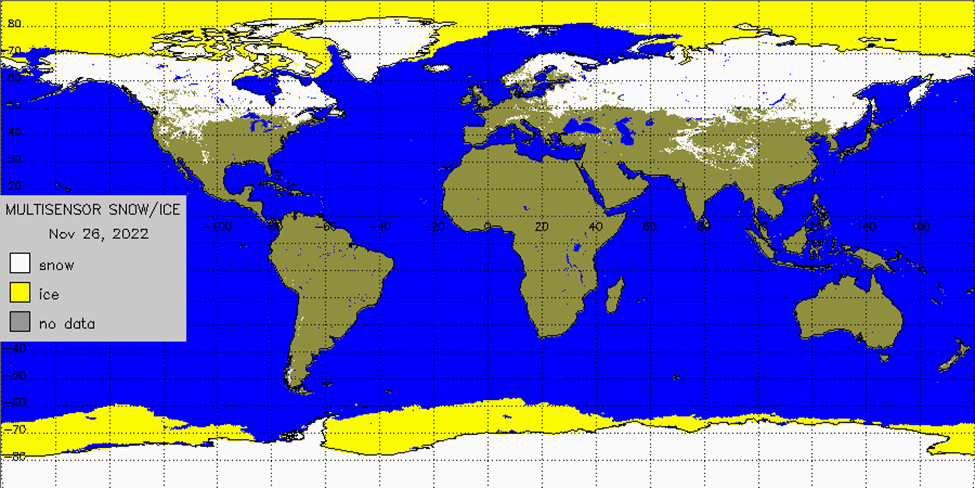
NOAA provides so much information about snow . . . data which nearly 40 years ago I gathered on snowshoes and snowmobile. Jay Penney led the party when I started – and Jay had measured both the highest and lowest snowfalls in the Kootenai and Flathead drainages. Younger and starting later, I only measured the lowest – and even that record didn’t last.
I don’t need to do the analysis – it’s at: severe-weather.eu This quote from the article starts us on the proper assumption:
You could probably forecast a colder-than-normal winter based on Autumnal Northern Hemisphere snow cover extent alone. It’s the largest snow extent in decades. Having so much snow on the ground means any arctic outbreak is going to be a little bit colder. But why should be like this?

The Finns show the amount of snow on a graph:

Here, in NW Montana, we were always reluctant to project the snowpack before March – but this graph shows more snow cover – which correlates with more sunlight being reflected, and less heat building up in the soil. It’s a fairly direct correlation. Canadian data seems to support the Finns. (Again, these are from the NOAA page)

The global picture:

It’s early in the winter. Weather can change. Still keeping an eye on the link might keep this winter from being a surprise.
-
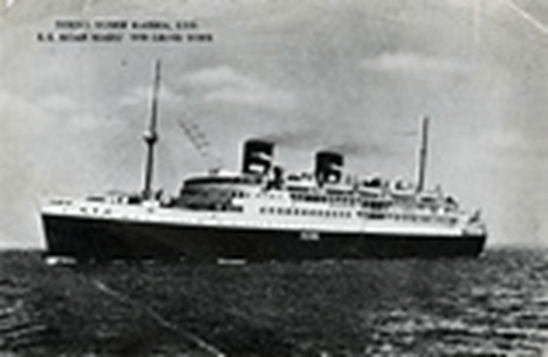
My father’s first ship in the Korean war was a Japanese troop transport. On the trip from Japan to Pusan, he was one, you might call it “first”, of many Americans. On the trips back to Japan, he was often the only American with a crew that had spent WWII moving Japanese soldiers to fight Americans. Sometime, between August and mid-September, 1950, a Marine Captain came to the Maru, looking for an American to take his 1903a3 rifle. Dad passed on a bottle of Crown Royal, took the rifle, and ordered an inletted Bishop stock. Sometime in his year on the Japanese Transport, he had a wood carver add a bear to the stock – posed along a stream, backed by mountains. The stock was, and is, gorgeous. The rifle, still military except for the stock.

Dad often explained that the Maru was the best quarters he ever had – his own suite. She was the world’s first fully air-conditioned ship when she was launched in1937. Basically a luxury liner/ferry her WWII career was spent mostly crossing the sea of Japan to Korea – so it was an easy shift into transporting US troops to Korea with a US warrant officer in charge of a Japanese ship and crew.
I took my first little buck with that rifle – I remember the instructions – set the sight at 200, hold dead on, there’s no wind. From my teen years, I have appreciated the adjustments on the 03a3 – and much of my career was surveying, so estimating ranges came naturally. Still, as an adult, I needed to find my own rifles, and Dad’s rifle was on his wall.
I was in South Dakota when I was sent home with Dad’s rifle. I noticed that recoil had taken some small chips behind the tang, and that the trigger guard screw didn’t fill the tang. Before I could do anything about it, colon cancer came along, and chemotherapy took the feeling from my hands. My neighbor explained that the conversion was sloppy – the screws were ¼ inch too short.
Last year, I got back on the project. I needed to find the right length for the screws . . . correctly they are called action screws, and I needed information. It turns out that when they made the 1892 Krag-Jorgenson rifle, they made lots of screws for it – so many that when the model 1903 replaced it, they used those same screws on the 1903, with a blind threaded hole in the trigger guard.
When World War II came along, the 1903a3 was developed to be easier and cheaper to build – instead of a blind, threaded hole in the trigger guard, they drilled and threaded all the way through – and still used the 50-year-old Krag-Jorgenson screws. Dad could never have found screws for a sporter conversion in Japan. I bought replacement aftermarket screws from Brownells, and, for the first time, the screws fill the trigger guard . . . Dan Sorenson won’t tell me of the mistakes Dad made again.
This winter, I’ll get a little acraglass and bed the action. I won’t try to cover up the chips around the tang – they are an honest part of the rifle’s history. It is one of the last 1903a3 rifles produced. I doubt if it was used in WWII. I know it was briefly used by a Marine officer in Korea during 1950. Since then it has been Dad’s deer rifle. And next Fall, I will take it out again.
-
Kevin O’Brien is gone, but his Weaponsman Blog is still available. It was a great source of information when I was trying to come to grips comparing the design accomplishments of Arno Lahti with those of John Moses Browning – but this article describes the development of the first torpedoes, powered only by a heavy flywheel and the discovery of one by US Navy dolphins.

That’s right – Navy dolphins, definitely not to be confused with Navy Seals. The article is at weaponsman.com. It’s well researched, entertaining, and worth reading.
Here’s the original torpedo boat, launching one of these original torpedoes:

US Stiletto – sometime around 1890. “The limited range and speed stemmed from the Howell’s mechanism: it had no on-board motor per se, simply a flywheel that was spun up to 10,000 RPM by shipboard equipment. The flywheel (F in the blueprint at this article’s end) weighed 132 lbs. — more than the torp’s warhead. It was, practically, a clockwork torpedo.”
Check the link out – it includes links to articles on the Navy’s Dolphin project that describe their accomplishments. While the old articles suggest the dolphins would be phased out, replaced with machines, this article suggests the machinery still comes in second compared to Flipper:
“Dolphins are remarkably intelligent creatures, with the most sophisticated sonar known to science. They send out focused, high-frequency clicking and buzzing sounds that bounce off objects. The returning sound waves can then be picked up by the dolphins’ inner ears, generating information that’s transmitted to the brain and interpreted. With sonar, dolphins can essentially “see” across sizable distances underwater, even in murky visibility. Couple this superpower with their speed and agility, and it’s easy to see why the Navy thought they would make great companions.”
Click it – it’s a fun read for a wintery day or evening.
-
During the last 30 years, the book that I have given away most often is Jay Carter’s Nasty People. I think I started giving away copies when I worked at Lincoln County Campus (FVCC) in Libby, and kept replacing, and eventually giving away copies almost until retirement.
Carter is a Psy.Doc – and he defines “invalidators” as Nasty People – and back when he wrote the book, we really didn’t have the internet as a source of information. Carter described “Invalidation is a general term that I use in this book to describe one person injuring or trying to injure another. . . It is usually the sneaky mental invalidations that cause the most damage.”
A search online for “invalidation definition” brought me to https://therapymantra.co/terms/invalidation/ where I found a lot more complete definition:
“Invalidation is a term used in psychology to describe the act of communicating to another person that their thoughts, feelings, or experiences are not real or valid. This can be done through words, actions, or even just by ignoring someone. It is a common tool used by people who want to control and dominate others.
Invalidation is a way of shutting someone down and making them feel powerless. When someone is invalidated, it sends the message that their thoughts and feelings don’t matter. And that they are not worth listening to. This can be incredibly damaging to someone’s self-esteem and can leave them feeling isolated and alone.
People who invalidate others often do so because they are insecure and need to feel superior. They feel threatened by the other person’s thoughts or feelings and often don’t want to hear them. They may also not understand what someone else is going through. So they invalidate them in order to avoid dealing with their own uncomfortable emotions.”
The online information made me realize that, while Nasty People is still relevant, it has become an introduction, with far more detailed information available online. I think of one of the guys in my Master’s program – a former college track star who greeted everyone with “Hello, loser.” Not a particularly subtle invalidation (I was almost 9 the first time I finished second to last in a foot race – my self-worth has never been based on how fast I can run). On page 27, Carter writes, “I have never met a conscious invalidator who wasn’t narcissistic. The rest of us don’t mean to be narcissistic and we don’t mean to invalidate. As we get older and wiser, there are still unconscious pockets of it even in the most enlightened human beings.” (Personally, when I am at my limit of invalidation, I tend to respond in kind – and, as Jay Carter points out: “Narcissism is the same as taking it personally.” On page 37 he writes “Most people slip into the invalidator archetype unconsciously, reacting to subtle and sometimes unnoticed clues in the environment. . . Unconsciously, without understanding the source of their trouble, they become invalidators at various unpredictable times.”
Back on line, therapymantra.com goes into the how, the methods of invalidation:
“There are many different ways that someone can be invalidated. Some of the most common include-
Emotional Invalidation– Invalidating someone’s emotions makes them feel as though their feelings are not real or that they don’t have the right to feel a certain way.
Minimizing– When people minimize what someone is saying or going through, it diminishes the other person’s thoughts and experiences to make them seem less important or valid.
Belittling– This is similar to minimization but goes beyond just dismissing someone’s feelings. With belittling, you also attack someone personally to show that they are inferior and not worth listening to.
Attacking Motives– When you attack someone’s motives, you accuse them of having malicious intent for feeling or thinking something that may be hurtful towards you.
Denial Of Responsibility– Denying responsibility invalidates someone’s feelings by suggesting that they are responsible for how they feel.
Blame– When you blame someone, you accuse them of being the source of their own emotions and experiences. You might say things like “you’re just too sensitive,” or “if you weren’t so stressed out all the time, I wouldn’t have to yell at you.”
Ignoring– Ignoring someone makes it clear that what they feel does not matter and is something you hope they will simply get over on their own.
Competing– Competing invalidates someone’s thoughts and feelings by suggesting that your thoughts and feelings are more important than theirs and should therefore take priority.
Trivializing– Trivializing occurs when a person gets caught up in the details of something to the point where they are able to dismiss it entirely.
Deny Effects– When you deny effects, you refuse to acknowledge how someone’s thoughts or feelings affected them. This often comes in the form of well-meaning reassurances like “but everything is okay now,” or “it’s not that big of a deal.””
I still like Carter’s book – the newest version is up to 100 pages, so even if you don’t like it, there’s not a lot of reading there to get mad about. A society without invalidation would probably be a lot better place. Until then, I’ll try to copy Dad’s behavior – where he would politely call women in their sixties “Young lady.” I think it’s a lot healthier than copying my classmate’s greeting of “Hello loser.”
-
November 21st, 2022
Dear Secretary of State Jacobsen;
I received your letter of October 19, and was pleased to be commended for being a responsible, educated and committed voter, etc. It’s nice to have you say these nice things about me.
Still, the only commitment in your letter was “Our office will carefully review your information and observations.” Consequently, I am describing my observations in detail in this letter to be certain your office has them and hopefully nothing is missed.
This started before the 2022 Primary, and I wrote the following to describe the experience:
I’ve inadvertently ran across a spot where Montana Counties – at least Lincoln County, and I believe others – are systematically violating election law.
When Lincoln County mailed out primary ballots, the Democrat ballot had no one running within Lincoln county, showing only 3 candidates for US House – the closest Dem candidate was in Polson. The Republican ballot had a single race for Libby commissioner, a candidate for county school superintendent who had bailed out too late to get off the ballot, and no candidate for county administrator.
My daughter meets all the requirements for superintendent, so she and I came up with the amusing idea of running a miniature, stealth write-in campaign for the jobs – based on MCA 13-10-211-7 – which pretty much mandates that write-in votes are accepted without filing under the conditions I highlighted in my message to the election administration (after the election was occurring):
“Greetings Paula – under 13-10-211 7
(7) Except as provided in 13-38-201(4)(b), the requirements in subsection (1) do not apply if:
(a) an election is held;
(b) a person’s name is written in on the ballot;
(c) the person is qualified for and seeks election to the office for which the person’s name was written in; and
(d) no other candidate has filed a declaration or petition for nomination or a declaration of intent.I anticipate ballots will appear with write-in votes for Michael McCurry (or Mike McCurry) for county administrator, on both Republican and Democrat primary ballots. I am qualified for and seeking election to that office. No candidate is listed on either party’s ballot.
Additionally, we anticipate ballots will appear for Samantha McCurry (or Sam McCurry) for county superintendent of schools. Sam holds a current certificate issued by the superintendent of public instruction, and has taught for 4 ½ years (Geraldine 2, Trego 1, and is halfway through her second year at Chrysalis. No candidate is listed on the Democrat ballot. She is a qualified elector. Upon your request, she can send a copy of her resume and her certificate. She is seeking election to that office.
Thank you for your attention. Should you need more information, do not hesitate to contact us.
Michael McCurry Samantha McCurry
Trego, MT Trego, MT”
Now Paula tested the ballots in the machines just before the election, when she discovered the bloody things wouldn’t work. (The TVNews article credits the printer with causing the problem – the buck stops in Coeur d’Alene apparently. Zinke couldn’t be announced as the winner until late Thursday) When Lincoln County’s count was complete, and did not include Sam and I, I sent another message to Paula – our exchange follows:
Greetings Paula – just to add to your plate (relax, you’re not the only one to make it onto AP and the NY Times. I’ve been there, and can even look at my celebrity with amusement now). Anyway, the bottom of the secretary of state’s page says to contact you for a report on all the write-in votes. I’ve sent this as an addition to my first message – and think that MCA 44.3.2403, which ends with:
“3) Consistent with 13-10-211, MCA, votes for undeclared write-in candidates may be counted if:|
(a) an election is held;|
(b) a person’s name is written in on the ballot;|
(c) the person is qualified for and seeks election to the office for which the person’s name was written in; and|
(d) no other candidate has filed a declaration or petition for nomination or a declaration of intent.”shows how our candidacies need to be handled. Could you respond by the end of Friday’s work day?
Mike McCurry
Sam McCurryPaula’s reply:
On Fri, Jun 10, 2022 at 12:11 PM Paula Buff <pbuff@libby.org> wrote:
Hi Michael.
We likely won’t have the write-in name information available for a few days.
I will send you the info once we have it available.
Also, just so you are aware, because neither of you were a declared write-in or candidate for either of these positions you cannot be “elected” to those positions. The write in counts are just a count – not a nomination if that makes sense.
Because these positions are essentially still open, they will be filled by appointment by the County Commissioners and in conjunction with the rules / recommendation by the Republican Central Committee, specifically for the Superintendent of Schools.
Thanks.
Paula Buff
Lincoln County Election Administrator
512 California Ave.
Libby, MT 59923
P: 406-283-2302My response to Paula:
Subject: Re: Write In Candidates under 13-10-211-7
To: Paula Buff <pbuff@libby.org>
Paula – It is good to hear from you – however my reading of the laws do not match your conclusion:
From Title 13. Elections. Chapter 10. Primary Elections and Nominations Part 2. Preprimary Procedures: “13-10-211: Declaration of intent for write-in candidates (1) Except as provided in subsection (7), a person seeking to become a write-in candidate for an office in any election shall file a declaration of intent.”
Subsection (7): “(7) Except as provided in 13-38-201 (4)(b), the requirements in subsection (1) do not apply if:
a. an election is held;
b. a person’s name is written in on the ballot;
c. the person is qualified for and seeks election to the office for which the persons name was written in; and
d. no other candidate has filed a declaration or petition for nomination or a declaration of intent.”13-38-201 4(b): “(b) if a part precinct committee election is not held pursuant to subsection (4)(a), the election administrator shall declare elected by acclamation the candidate who filed for the position or who filed a declaration of intent to be a write-in candidate. The election administrator shall issue a certificate of election to the designated party.”
Since there was a primary election, and since your reply indicates that there were no declared write-in candidates, Subsection 7 of 13-10-211 applies to any undeclared write-in candidates.
Frankly, if write-in votes cannot be counted towards a nomination, then including the write-in sections on the largely blank primary ballot was for no other purpose than to give the voters the illusion of choice in a decision that will be made without their input. An election was held. Please explain your interpretation of state law that allows votes to be ignored. We have a difference of opinion – and I would like to give you an opportunity to convince me why your interpretation is correct. Subsection 7 of 13-10-211 seems very clear as I read it, and it does not support your statement “Also, just so you are aware, because neither of you were a declared write-in or candidate for either of these positions you cannot be “elected” to those positions. The write in counts are just a count – not a nomination if that makes sense. Because these positions are essentially still open, they will be filled by appointment by the County Commissioners and in conjunction with the rules / recommendation by the Republican Central Committee, specifically for the Superintendent of Schools.”
Mike McCurry
At this stage, I’m realizing that this is probably a civil rights matter – so I send the situation off to an attorney friend. Here’s the response:
“My first and second readings of the relevant statute(s) make me conclude easily that you are correct. Paula’s interpretation writes SubSection 7’s exemptions from filing a declaration out of the law entirely. That is not allowed under the rules of statutory interpretation, so no, “it doesn’t make sense!” In my opinion, Subsection 7 allows anyone to write in a candidate of his or her choice, and it is indeed a nomination. If not, why is Subsection 7 even there?? There should be several Montana cases from its Supreme Court that explain how statutory interpretation is done there, and how a correct reading takes into account every subsection — which does not mean eliminating it.”
Then sent “Here you go. No one can omit from a statute what is inserted. That language is in this case. http://wcc.dli.mt.gov/sccases/95-106.htm
The case includes this paragraph:
In construing a statute, “the office of the judge is simply to ascertain and declare what is in terms or in substance contained therein, not to insert what has been omitted or to omit what has been inserted.” Section 1-2-101, MCA. The rules of statutory construction require the language of a statute to be construed according to its plain meaning. If the language is clear and unambiguous, no further interpretation is required, and we will resort to legislative history only if legislative intent cannot be determined from the plain wording of the statute. Lovell v. State Comp. Mut. Ins. Fund (1993), 860 P.2d 95, 99. Where the intention of the legislature can be determined from the plain meaning of the words used in a statute, the courts may not go further and apply any other means of interpretation. Tongue River Elec. Coop. v. Mont. Power Co. (1981), 636 P.2d 862, 864.”
The last message was:
“I will try to find a better Montana case that deals with an erroneously ignored part of a statute. Then, if Paula’s halfway intelligent, she will give it to county counsel for an opinion. Even if she does don’t hold your breath.”
I think the entire state has been writing section 7 out for years.
Both the Superintendent of Schools and the county administrator positions met all the requirements of section 7 when Sam and I were written in. We still have no word back from Paula as to the write-in vote count – Zinke needed two extra long days. It looks like our results are unreported after 2 long weeks, despite the county hiring a hand count that was finished in two days.
So here we are, two weeks after the election, still not knowing how many votes we got. We’ve complied perfectly with section 7 . . . and I still don’t know how many votes I got to be the Stupid Party nominee for County Administrator and how many votes I got to be the Evil Party nominee for County Administrator. I do have Paula’s statement: “Also, just so you are aware, because neither of you were a declared write-in or candidate for either of these positions you cannot be “elected” to those positions. The write in counts are just a count – not a nomination if that makes sense.Because these positions are essentially still open, they will be filled by appointment by the County Commissioners and in conjunction with the rules / recommendation by the Republican Central Committee, specifically for the Superintendent of Schools.”
I did ask Paula for her explanation: “Please explain your interpretation of state law that allows votes to be ignored. We have a difference of opinion – and I would like to give you an opportunity to convince me why your interpretation is correct.” I have received nothing, so I really have no idea why she believes that she can omit section 7. If she can, I may have to get the question in front of a judge: Montana Code 1-2-101. Role of the judge — preference to construction giving each provision meaning. In the construction of a statute, the office of the judge is simply to ascertain and declare what is in terms or in substance contained therein, not to insert what has been omitted or to omit what has been inserted. Where there are several provisions or particulars, such a construction is, if possible, to be adopted as will give effect to all.” I’m not a lawyer, nor have I ever played one on TV, but it looks to me like a Judge would have to include section 7, even if Paula doesn’t.
Now I’ve shared this story with Bob Brown (once Montana’s Secretary of State) and Mike Cuffe (my local state senator). Bob advised me to play nice and ask Paula and the commissioners to pass this on to the county attorney for an opinion. I did. Mike Cuffe told me that Paula is a nice lady and non-partisan – which, since I’m playing nice, I will accept this week.
Next week, we’ll include the rest of the story on Mike and Sam trying to run for office, and why we want to have elections with more than one candidate.
* * *
With the general election on November 8, we now have a situation where Paula Buff’s decision to ignore the requirements of subsection 7 have allowed her to determine who the county administrator will be (another courthouse employee, imagine that) and who will be the County Superintendent of Schools.
If your staff can come up with reasons why Paula is permitted to ignore subsection 7, please share that reasoning with me at your earliest convenience. This November, our election in Lincoln County has been safe and secure for a single party, and, while our appointed election administrator had choices, the voters have not. It didn’t take me long to read subsection 7, and I suspect you have a staff attorney who can provide an answer, either in agreement with me or explaining where I am incorrect.
Looking forward to your next reply, I am
Michael McCurry

Want to tell us something or ask a question? Get in touch.

Recent Posts
- The Density of Water Explains When Dickey Lake Freezes
- Watching Iran
- The Quality of Numbers
- Robert Treat Payne Had Traveled To Greenland
- 75 Years Ago in New York
- Recovery Time for a Retiree
- Venn Diagram and DSM
- When Castro Was Cool
- You Have To Beat Darwin Every Day
- Computer Repair by Mussolini
- Getting Alberta Oil to Market
- Parties On Economics
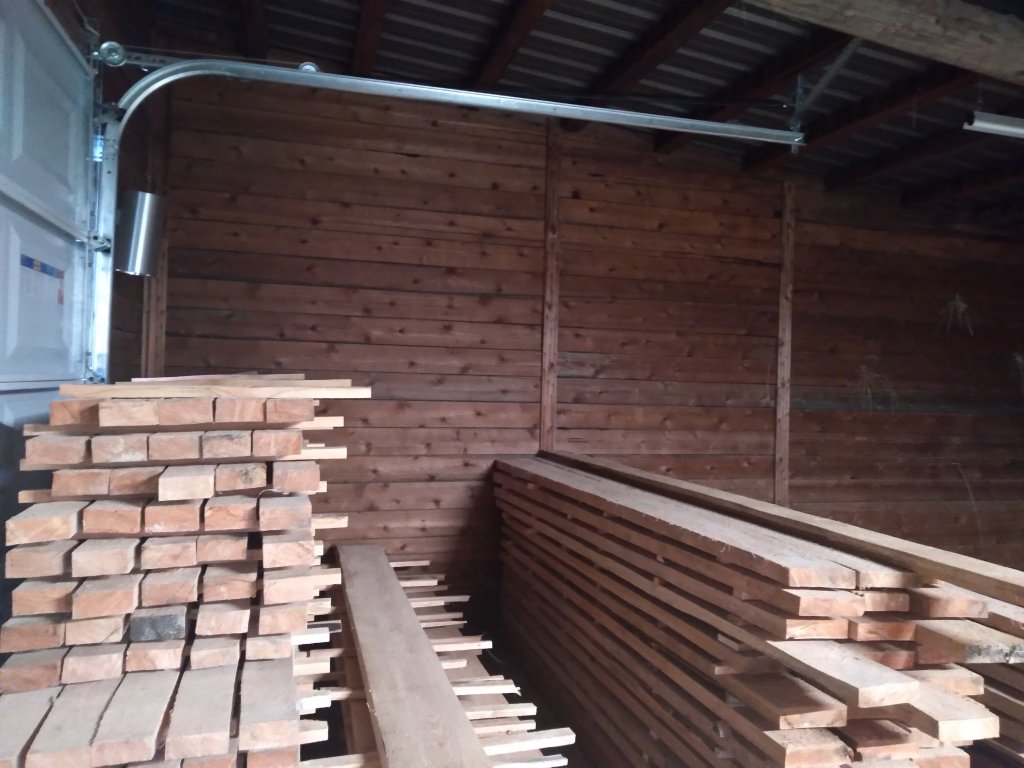
Rough Cut Lumber
Harvested as part of thinning to reduce fire danger.
$0.75 per board foot.
Call Mike (406-882-4835) or Sam (406-882-4597)
Popular Posts
Ask The Entomologist Bears Books Canada Census Community Decay Covid Covid-19 Data Deer Demography Education Elections family Firearms Game Cameras Geese Government Guns History Inflation life Lincoln County Board of Health Lincoln County MT Lincoln Electric Cooperative Montana nature News Patches' Pieces Pest Control Politics Pond Recipe School School Board Snow Taxes Teaching travel Trego Trego Montana Trego School Weather Wildlife writing
 Trego's Mountain Ear