-
Two Supreme Court decisions are getting a lot of press, a lot of comments. I once took an undergrad course in Constitutional Law – and emerged from the 10 week session having heard a lot of lectures on the 14th amendment, and the explanation that the Supreme Court makes the call based on the Constitution. The class didn’t really provide what I wanted – though a half-century and more later, I recognize that even Dershowitz probably couldn’t have managed it in 30 classroom hours.
Overturning Roe V. Wade would not have surprised Ruth Ginsberg – “My criticism of Roe is that it seemed to have stopped the momentum on the side of change,” Ginsburg said. She would’ve preferred that abortion rights be secured more gradually, in a process that included state legislatures and the courts, she added. Ginsburg also was troubled that the focus on Roe was on a right to privacy, rather than women’s rights.
“Roe isn’t really about the woman’s choice, is it?” Ginsburg said. “It’s about the doctor’s freedom to practice…it wasn’t woman-centered, it was physician-centered.”
Only in politics can you build an edifice on a weak foundation and expect it to endure indefinitely. Roe v Wade was an influential case, based on the right to privacy – and now I hear the complaints about the Supreme Court canceling reproductive rights. Ginsberg would not have been surprised.
We all know the Supreme Court is political – had Hillary Clinton beat Donald Trump, neither Dobbs v Jackson nor Bruen would have occurred. Both cases required the three Trump appointees. Still, the Bruen case, striking down the century-old New York law, makes no difference in how I live. I like Clarence Thomas’ ruling that points out that the second amendment is not a second class right – but the numbers I’ve seen show me that the decision makes no difference in 43 states. In Montana, we haven’t needed to show cause for a concealed carry permit in years. Generally speaking, we don’t even need a concealed carry permit.
Likewise Dobbs – I won’t be particularly surprised if a few state legislatures ban abortion completely. I will be a little surprised if California passes new abortion laws allowing retroactive abortion until the 12th birthday – but I don’t expect things to change a whole lot in California, New York, Washington, Montana, etc. That’s right – in 1999, Montana’s Supreme Court ruled that the “right to privacy” is guaranteed by our state constitution and protects “procreative freedom.” As near as I can figure it, Roe v Wade was canceled at the national level, the authority was returned to the states, and in my neighborhood things didn’t change – either on concealed carry or abortion.
-
I’ve written before about the many jobs that require a license. Teaching is among those, but a teaching license isn’t as inaccessible as it first appears. There are technically eight licenses in education offered by the state of Montana- for practical purposes, there are really only three that matter to someone considering beginning a career in education: Class 2, Class 4 and Class 5.
The Class 2 license is the standard path (and, in fact, a standard license). It requires a degree in education and a student teaching experience. The class 4 license is a vocational license, and it relies primarily on work experience. The class 4 requires a high school diploma.
Finally, the class 5 license is a provisional license. A provisional license is one that allows someone to work as a teacher while obtaining their credential. It lasts for three years, and can be obtained only once. It requires a bachelors degree and is intended for an applicant enrolled in some form of distance education while teaching. There is no penalty for failure to obtain the formal teaching credential before the license expires in three years.
In short- the only path that doesn’t require higher education is the class 4 vocational license. The straight forward, college-to-workforce path is the class 2 license. The middle path, with an education that isn’t necessarily for teaching, is the class 5 provisional license.
-
I’ve inadvertently ran across a spot where Montana Counties – at least Lincoln County, and I believe others – are systematically violating election law.
When Lincoln County mailed out primary ballots, the Democrat ballot had no one running within Lincoln county, showing only 3 candidates for US House – the closest Dem candidate was in Polson. The Republican ballot had a single race for Libby commissioner, a candidate for county school superintendent who had bailed out too late to get off the ballot, and no candidate for county administrator.
My daughter meets all the requirements for superintendent, so she and I came up with the amusing idea of running a miniature, stealth write-in campaign for the jobs – based on MCA 13-10-211-7 – which pretty much mandates that write-in votes are accepted without filing under the conditions I highlighted in my message to the election administration (after the election was occurring):
“Greetings Paula – under 13-10-211 7
(7) Except as provided in 13-38-201(4)(b), the requirements in subsection (1) do not apply if:
(a) an election is held;|
(b) a person’s name is written in on the ballot;|
(c) the person is qualified for and seeks election to the office for which the person’s name was written in; and
(d) no other candidate has filed a declaration or petition for nomination or a declaration of intent.I anticipate ballots will appear with write-in votes for Michael McCurry (or Mike McCurry) for county administrator, on both Republican and Democrat primary ballots. I am qualified for and seeking election to that office. No candidate is listed on either party’s ballot.
Additionally, we anticipate ballots will appear for Samantha McCurry (or Sam McCurry) for county superintendent of schools. Sam holds a current certificate issued by the superintendent of public instruction, and has taught for 4 ½ years (Geraldine 2, Trego 1, and is halfway through her second year at Chrysalis. No candidate is listed on the Democrat ballot. She is a qualified elector. Upon your request, she can send a copy of her resume and her certificate. She is seeking election to that office.
Thank you for your attention. Should you need more information, do not hesitate to contact us.
Michael McCurry Samantha McCurry
Trego, MT Trego, MT”Now Paula tested the ballots in the machines just before the election, when she discovered the bloody things wouldn’t work. (The TVNews article credits the printer with causing the problem – the buck stops in Coeur d’Alene apparently. Zinke couldn’t be announced as the winner until late Thursday) When Lincoln County’s count was complete, and did not include Sam and I, I sent another message to Paula – our exchange follows:
Greetings Paula – just to add to your plate (relax, you’re not the only one to make it onto AP and the NY Times. I’ve been there, and can even look at my celebrity with amusement now). Anyway, the bottom of the secretary of state’s page says to contact you for a report on all the write-in votes. I’ve sent this as an addition to my first message – and think that MCA 44.3.2403, which ends with:
“3) Consistent with 13-10-211, MCA, votes for undeclared write-in candidates may be counted if:
(a) an election is held;
(b) a person’s name is written in on the ballot;
(c) the person is qualified for and seeks election to the office for which the person’s name was written in; and
(d) no other candidate has filed a declaration or petition for nomination or a declaration of intent.”shows how our candidacies need to be handled. Could you respond by the end of Friday’s work day?
Mike McCurry
Sam McCurryPaula’s reply:
On Fri, Jun 10, 2022 at 12:11 PM Paula Buff <pbuff@libby.org> wrote:
Hi Michael.
We likely won’t have the write-in name information available for a few days.
I will send you the info once we have it available.Also, just so you are aware, because neither of you were a declared write-in or candidate for either of these positions you cannot be “elected” to those positions. The write in counts are just a count – not a nomination if that makes sense.
Because these positions are essentially still open, they will be filled by appointment by the County Commissioners and in conjunction with the rules / recommendation by the Republican Central Committee, specifically for the Superintendent of Schools.
Thanks.
Paula Buff
Lincoln County Election Administrator|
512 California Ave.
Libby, MT 59923
P: 406-283-2302My response to Paula:
Subject: Re: Write In Candidates under 13-10-211-7
To: Paula Buff <pbuff@libby.org>Paula – It is good to hear from you – however my reading of the laws do not match your conclusion:
From Title 13. Elections. Chapter 10. Primary Elections and Nominations Part 2. Preprimary Procedures: “13-10-211: Declaration of intent for write-in candidates (1) Except as provided in subsection (7), a person seeking to become a write-in candidate for an office in any election shall file a declaration of intent.”
Subsection (7): “(7) Except as provided in 13-38-201 (4)(b), the requirements in subsection (1) do not apply if:
1. an election is held;
2. a person’s name is written in on the ballot;
3. the person is qualified for and seeks election to the office for which the persons name was written in; and
4. no other candidate has filed a declaration or petition for nomination or a declaration of intent.”13-38-201 4(b): “(b) if a part precinct committee election is not held pursuant to subsection (4)(a), the election administrator shall declare elected by acclamation the candidate who filed for the position or who filed a declaration of intent to be a write-in candidate. The election administrator shall issue a certificate of election to the designated party.”
Since there was a primary election, and since your reply indicates that there were no declared write-in candidates, Subsection 7 of 13-10-211 applies to any undeclared write-in candidates.
Frankly, if write-in votes cannot be counted towards a nomination, then including the write-in sections on the largely blank primary ballot was for no other purpose than to give the voters the illusion of choice in a decision that will be made without their input. An election was held. Please explain your interpretation of state law that allows votes to be ignored. We have a difference of opinion – and I would like to give you an opportunity to convince me why your interpretation is correct. Subsection 7 of 13-10-211 seems very clear as I read it, and it does not support your statement “Also, just so you are aware, because neither of you were a declared write-in or candidate for either of these positions you cannot be “elected” to those positions. The write in counts are just a count – not a nomination if that makes sense.
Because these positions are essentially still open, they will be filled by appointment by the County Commissioners and in conjunction with the rules / recommendation by the Republican Central Committee, specifically for the Superintendent of Schools.”
Mike McCurry
At this stage, I’m realizing that this is probably a civil rights matter – so I send the situation off to an attorney friend. Here’s the response:
“My first and second readings of the relevant statute(s) make me conclude easily that you are correct. Paula’s interpretation writes SubSection 7’s exemptions from filing a declaration out of the law entirely. That is not allowed under the rules of statutory interpretation, so no, “it doesn’t make sense!” In my opinion, Subsection 7 allows anyone to write in a candidate of his or her choice, and it is indeed a nomination. If not, why is Subsection 7 even there?? There should be several Montana cases from its Supreme Court that explain how statutory interpretation is done there, and how a correct reading takes into account every subsection — which does not mean eliminating it.”
Then sent “Here you go. No one can omit from a statute what is inserted. That language is in this case. http://wcc.dli.mt.gov/sccases/95-106.htm
The case includes this paragraph:
In construing a statute, “the office of the judge is simply to ascertain and declare what is in terms or in substance contained therein, not to insert what has been omitted or to omit what has been inserted.” Section 1-2-101, MCA. The rules of statutory construction require the language of a statute to be construed according to its plain meaning. If the language is clear and unambiguous, no further interpretation is required, and we will resort to legislative history only if legislative intent cannot be determined from the plain wording of the statute. Lovell v. State Comp. Mut. Ins. Fund (1993), 860 P.2d 95, 99. Where the intention of the legislature can be determined from the plain meaning of the words used in a statute, the courts may not go further and apply any other means of interpretation. Tongue River Elec. Coop. v. Mont. Power Co. (1981), 636 P.2d 862, 864.”
The last message was:
“I will try to find a better Montana case that deals with an erroneously ignored part of a statute. Then, if Paula’s halfway intelligent, she will give it to county counsel for an opinion. Even if she does don’t hold your breath.”
I think the entire state has been writing section 7 out for years.
Both the Superintendent of Schools and the county administrator positions met all the requirements of section 7 when Sam and I were written in. We still have no word back from Paula as to the write-in vote count – Zinke needed two extra long days. It looks like our results are unreported after 2 long weeks, despite the county hiring a hand count that was finished in two days.
So here we are, two weeks after the election, still not knowing how many votes we got. We’ve complied perfectly with section 7 . . . and I still don’t know how many votes I got to be the Stupid Party nominee for County Administrator and how many votes I got to be the Evil Party nominee for County Administrator. I do have Paula’s statement: “Also, just so you are aware, because neither of you were a declared write-in or candidate for either of these positions you cannot be “elected” to those positions. The write in counts are just a count – not a nomination if that makes sense.
Because these positions are essentially still open, they will be filled by appointment by the County Commissioners and in conjunction with the rules / recommendation by the Republican Central Committee, specifically for the Superintendent of Schools.”
I did ask Paula for her explanation: “Please explain your interpretation of state law that allows votes to be ignored. We have a difference of opinion – and I would like to give you an opportunity to convince me why your interpretation is correct.” I have received nothing, so I really have no idea why she believes that she can omit section 7. If she can, I may have to get the question in front of a judge: Montana Code 1-2-101. Role of the judge — preference to construction giving each provision meaning. In the construction of a statute, the office of the judge is simply to ascertain and declare what is in terms or in substance contained therein, not to insert what has been omitted or to omit what has been inserted. Where there are several provisions or particulars, such a construction is, if possible, to be adopted as will give effect to all.” I’m not a lawyer, nor have I ever played one on TV, but it looks to me like a Judge would have to include section 7, even if Paula doesn’t.
Now I’ve shared this story with Bob Brown (once Montana’s Secretary of State) and Mike Cuffe (my local state senator). Bob advised me to play nice and ask Paula and the commissioners to pass this on to the county attorney for an opinion. I did. Mike Cuffe told me that Paula is a nice lady and non-partisan – which, since I’m playing nice, I will accept this week.
Next week, we’ll include the rest of the story on Mike and Sam trying to run for office, and why we want to have elections with more than one candidate.
-
There’s a decent chance you might! Career and technical teaching licenses come in several varieties. They don’t necessarily require higher education, but do require 5,000 hours of work experience.
What kind of work experience? It depends on the area of endorsement. Montana will license vocational teachers for:
- Agriculture Business, Marketing, and Communications
- Agriculture Mechanics
- Auto Body
- Automotive Technology
- Aviation
- Building Maintenance
- Building Trades
- Computer Coding
- Computer Information Systems
- Culinary Arts
- Diesel Mechanics
- Drafting
- Electronics
- Emergency Medical Technician
- Engineering
- Fire and Disaster Services
- Graphic Arts
- Health Science Education
- Heavy Equipment Operations
- Horticulture
- Industrial Mechanics
- Livestock Production
- Machining
- Metals
- Plant and Soil Sciences
- ROTC
- Small Engines
- Stagecraft
- Teacher Education
- Traffic Education
- Videography
- Welding
For each area, there are a long list of possible jobs that would qualify. Health Science has a list of 32 different careers, ranging from Athletic Trainers, to Nurses and Veterinarians. This isn’t something limited to the formally employed. Self-Employment is also viable, though documentation appears somewhat more complex.
Unlike most teaching licenses, the vocational license does not require a teaching degree (except for teaching teacher education). The subjects are so broad, the career possibilities so many, that it seems likely that many people qualify for a teaching license of this type.
Trego School is looking for people that do, to teach a vocational skill for 2 hours a week. Ultimately, there is only one school for which children must prepare, and only one teacher. That school is the world and that teacher is experience. Vocational Education is an essential component for preparing children for the world.
-
The Montana Highway Patrol should patch reads 3-7-77. I’ve heard (and told) several different explanations. Links to several explanations are below the patch – and at the end, is the story that, I feel, best explains the 77.

https://www.montanatrooper.com/3-7-77/
https://southwestmt.com/blog/what-on-earth-does-3-7-77-mean/Cornelius Hedges came headed out on foot from Iowa to the Montana gold fields, arriving in Virginia City in late Summer of 1864. By the time he arrived, the serious Vigilante action around Alder Gulch was winding down, and Hezekiah L. Hosmer, the first chief justice of Montana’s territorial supreme court was arriving.

Hedges moved to Last Chance Gulch, where vigilantes were still active. For many years, he was Grand Secretary of the Montana Masonic Lodge – and his description, taken from the lodge newsletter, follows:
“Brother William H. Bell, of St. Louis, died November 12, 1862, the first natural death in the camp, and in his last moments expressed the desire for a Masonic burial if possible. Notices were circulated as widely as possible and the cabin of Brother C.J. Miller, on Yankee Flat, designated as the meeting-place. To every one’s surprise, so many answered the call that the cabin could not hold them. They adjourned to a still larger cabin the next day and still more attended. The leadership was conceded to Brother Langford who seemed most familiar with the work. After a general examination of those claiming to be Masons there were seventy-five who dropped the sprig of acacia on the Brother’s grave.”
Seventy-five dropping the sprig of acacia, plus Nathaniel Langford presiding, plus the deceased William Bell yields the 77. While Hedges was not yet in Montana at the time of the funeral, there was only a brief six-week span of time when the Vigilantes of Virginia City and Bannock captured and hanged Sheriff Plummer and his gang (the Innocents).
Hedges wrote of 1865 “. . . for it was the time when we were having the death struggle with the gamblers and road-agents, and every good citizen who wasn’t a Mason wanted to become one” and later “. . . during that time we shared our room with another organization which were establishing law and order by raising candidates in a hundred strong, not all Masons, by any means, had marched a few times into a room full of gamblers with cocked pistols and taken out some victim whose criminal career had been investigated and led him over to the pine tree and there left him in suspense.”

http://www.helenahistory.org/hanging_tree.htm Helena’s Hanging Tree was chopped down by a Methodist minister named W.M. Shippen in 1875. There is no record of 3-7-77 written anywhere during 1864 when the original vigilantes hanged the Innocents. 3-7-77 was first noted in 1879, and not connected with a hanging until 1885. Which brings the research to Granville Stuart:

Granville Stuart started a vigilance committee of 14 Musselshell ranchers in 1884 after his horse and 30some cows were rustled (the numbers varied between 17 and 40, depending on where they were operating). Well, they called themselves vigilantes, but they show up on wiki under the heading of Stuart’s Stranglers. The following year, Stuart was elected president of the Stockgrowers Association. I suspect that 3-7-77 first started with this group (though the records suggest he was associated with the vigilantes earlier in Bannack.
-
Never grab your cheese out of your bag with your hands use a spoon or pour out. No matter how clean your hands are it will leave bacteria in there and your cheese will mold quicker.
When making a fresh fruit salad and you don’t like it when your apples or bananas turn brown. Just pour a little sprite/7-up over it acts just like lemon juice but doesn’t give that sour taste.
Lots of left over lemons or limes just pop them in the freezer whole and when thawed you have lemon juice. Also keep one for zesting it brightens up any meal then replace it in a ziploc and use till gone.
From Sam: The lemon juice trick works because it’s an acid (citric acid), and the enzyme that causes the fruit to brown (polyphenol oxidase) doesn’t work an acidic conditions. Sprite and 7 up are acidic too. Most carbonated beverages contain some combination of carbonic acid, phosphoric acid and citric acid. Using soda in place of lemon juice is a clever substitution.
-
I think the lecture started at Trinidad State Junior College during the farm crisis. The federal agencies had lost a lot of popularity, and as JC instructor, teaching cowboy engineering and a bit of farm/ranch management, my college Chevette, five Apple // computers and I were still well received in areas with lots of foreclosures.
So I came up with the obvious answer to the question “What do you do in a No-Win situation?” I mean, what sort of professor can’t answer that? In capital letters: “YOU LOSE.” With that as the answer, the question changes to “How can I minimize my losses?”
Then, the problem was low crop prices and high interest rates – and the loans were secured by land values. There were jokes – at least I hope they were jokes – about the guy who went into the Casino, put a million bucks on one hand at the blackjack table, won, and walked out with the comment, “Well, I can keep farming for one more year.” One of my computer simulations was farm management – I don’t recall the name. I do recall that, out of about 60 people who went through the game, one managed to keep her electronic farm afloat for 132 electronic cycles before the bank foreclosed. From the development of agriculture until now, farmers are the great gamblers of the world.
In a No-Win situation you lose. How much you lose is a question of how quickly you recognize that you are in a No-Win situation and how you choose to get out. Success is measured in terms of what you keep – some loss is inevitable.
I saw a different scenario when I worked at Libby’s FVCC campus around 1990 – the mills closed, the mines shut down, and the good jobs disappeared. Folks who were accustomed to good paying jobs wound up unemployed. As an additional kicker, mesothelioma from the asbestos in the vermiculite kicked in. I watched a lot of people coping with that No-Win situation.
I recall two couples dealing with No-Win scenarios. One family decided to work harder to get through the tough times. Each was putting in long days, each was bright – but hard work alone wasn’t enough to get through. The other couple sold the ranch low, kept a forty with the house, she kept working at the bank, and he started driving a truck. The last I heard of them, she was the bank president, and his trucking was short hauls – he was home at night and the sleeper behind the cab wasn’t in use. When it’s a No-Win situation, recognizing it quickly and reducing your losses is success.
Some left the community. Some hunkered and cut costs to get through. Some started with large mortgages, some were debt free. All lost – it was just a question of how much. Some were able to use spare cash to do a bit of speculation – they might have been the winners. In the aftermath of the war between the states, those folks were termed carpet-baggers.
Our land values, our house prices are high. The transition to a recreation dependent and a retirement destination county has created new opportunities in service jobs – and those service jobs depend on the folks who have bought the expensive homes. Many of those have sold California homes at inflated values and bought lower-priced starter mansions here – the conversation that enlightened me on that was in San Jose . . . the refugee was a third generation Californio, returning to the Arkansas that his grandfather had left with the dust bowl – where he could buy that starter mansion, hire a maid, and pay for it all with his state retirement. He recognized that if he stayed in California, he would lose. I don’t know if his new neighbors in Arkansas recognized the changes in store for them.
Losing isn’t a judgment on the individual – I’m looking at times of social and economic changes. When the world is encountering an economic crash, why would you think that it won’t affect you?
Dad’s stories of the WWII Navy included a strip-ship bill . . . a list of items to be thrown overboard to keep the ship afloat. In that No-Win situation, the things you didn’t need were predetermined. We don’t have strip-ship bills in our homes – but perhaps we should make them.
In a No-Win scenario, you lose. With $5 gasoline, I’ve sped up my Yugo project. The little beast once got 49 mpg on a day when I kept it under 50 mph from Libby to Havre (got trapped behind land yachts). The Yugo doesn’t have AC. I still need to put the new timing belt on. But today, I added two new tires. Putting it back on the road may not be so comfortable. It may be a little lower. But the little beast can drive past the gas pumps. The picture isn’t mine – but it is mighty close to identical. Mine is a little more luxurious – it has a radio and an antenna.

-
It’s not every day that Lincoln County makes the news outside of our state. Our recent primary election did just that due to an error in ballot size, resulting in a hand-count that delayed results.
Montana gained a new seat in the house of representatives- and the race to determine the republican nominee for that new seat was a tight one. Tight enough that Ryan Zinke and Al Olszewski had to wait until Lincoln County’s results were counted in order to know who had one (Zinke).
This isn’t exactly the first time we’ve had trouble with the ballots in Lincoln County, though admittedly the last time didn’t leave such widespread headlines. Last year Trego residents incorrectly received ballots for the Eureka Elementary School Board Election, which complicated the counting a bit. Before that, during the last presidential election, an entire box of ballots was left in north county and not counted until days later (County Clerk Robin Benson, running unopposed for reappointment this November, described this as impeccable). Of course, we have been replacing our election administrator, so the trend belongs to the county and not the person. Still, this doesn’t exactly inspire faith for November.
I’ve been complaining about the number of elections by acclamation in our county, but I think I have a new request. In addition to actually having an election, I’d like to have one where only the results made headlines. Hopefully November’s election runs more smoothly.
-
At 6:00 am, I looked out to see the cow elk back – she shows up for a few days in the late Spring, let’s her calf get walking around up on the hill, and spends the mornings and evenings grazing on the edge of the hayfield and getting her drinks from the pond.
Yesterday, it was a badger stepping away from a culvert – I’m guessing she’s hunting the best place for raising her young. It brought back memories of two little badgers staring at cars from the whole in the roadbank near Ant Flat, and of the mother badger nearly a half-century ago who accompanied me when I hunted gophers – and hauled them back to her den for her little ones.
The goslings are moving from yellow to goose colors – this year we have 5 hatches of them on the pond. I had feared we were seeing Goose for the last time when she flew south last Fall – she was frail. She didn’t return, but Gander was back with a replacement – the sweet young thing nested on the island at Gander’s insistence, but closer to the house and easier to watch. The little diving ducks start asserting their independence at about 3 days old – very different from the mallards and goslings. We have two coots swimming, but no sign of little ones. Nesting on the island provides a lot of protection from predators, but coots are not the brightest of birds.
The raccoon wanders the field and water’s edge – I think that, like the Canada Geese, the raccoon is adapted to a life close to humans. This year has already provided the first firefly – common in the east and midwest, but unusual in NW Montana. I think I saw two flashes in the early morning hours . . . but they are distant and few.
Soon the does will be leaving their fawns in the tall grass of the field. Interesting – spell check is insisting that it will be the dogs, not the does. Perhaps I should use the word “deer” to keep the app happy. The marsh hawk flies the field, concentrating on rodents – probably voles.
It is a good time of the year to look from the front room. I’ll ask Renata to share some of the neighbors pictures next week.




Want to tell us something or ask a question? Get in touch.

Recent Posts
- A Few Charts and Trends
- The Density of Water Explains When Dickey Lake Freezes
- Watching Iran
- The Quality of Numbers
- Robert Treat Payne Had Traveled To Greenland
- 75 Years Ago in New York
- Recovery Time for a Retiree
- Venn Diagram and DSM
- When Castro Was Cool
- You Have To Beat Darwin Every Day
- Computer Repair by Mussolini
- Getting Alberta Oil to Market
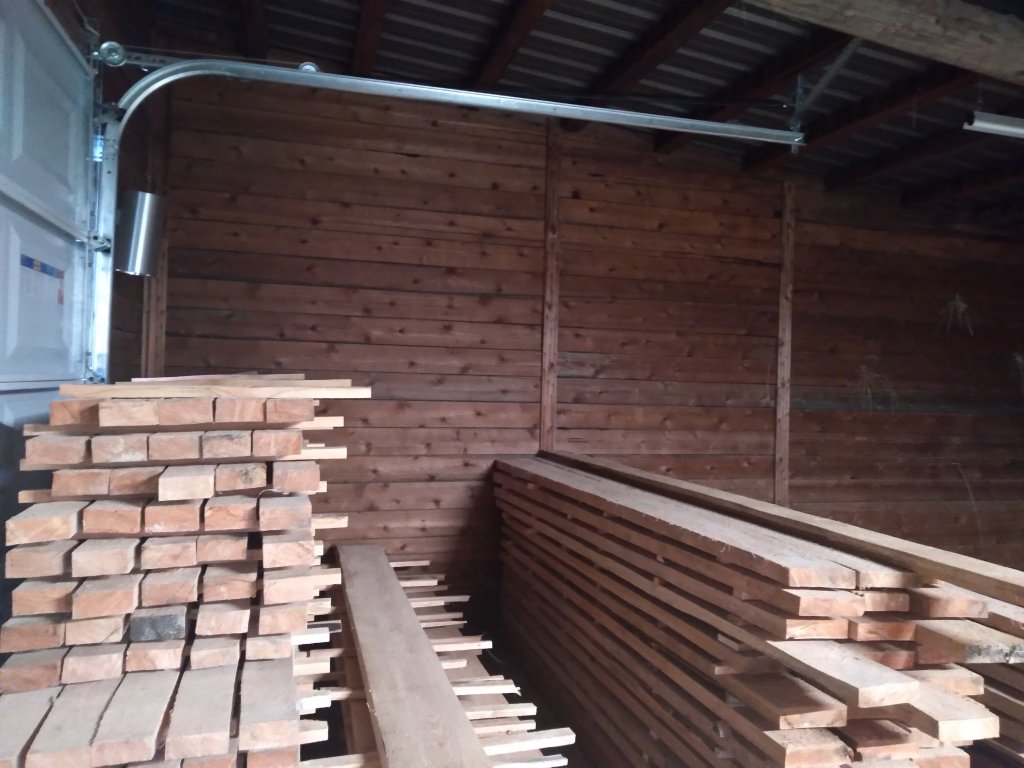
Rough Cut Lumber
Harvested as part of thinning to reduce fire danger.
$0.75 per board foot.
Call Mike (406-882-4835) or Sam (406-882-4597)
Popular Posts
Ask The Entomologist Bears Books Canada Census Community Decay Covid Covid-19 Data Deer Demography Education Elections family Firearms Game Cameras Geese Government Guns History Inflation life Lincoln County Board of Health Lincoln County MT Lincoln Electric Cooperative Montana nature News Patches' Pieces Pest Control Politics Pond Recipe School School Board Snow Taxes Teaching travel Trego Trego Montana Trego School Weather Wildlife writing
 Trego's Mountain Ear