-
I’ve seen comments about an inverse relationship between gas mileage and gas prices – as the price goes up, folks comment that mileage is dropping. It is political – someone pushed the idea that alcohol was a renewable resource, Congress voted, and now nearly all of our regular gasoline has ethanol added.
Like most things in life, mathematics explains what’s going on, how to figure out how much ethanol is in your gas, how far gasoline will put you down the road, and what ethanol will do to your gas mileage. You don’t need to fasten your seatbelt – the research is complete and available online. So, let’s look at the two substances. My little chart is in gallons – though we could change to liters as we cross the 49th parallel, and I’m just pencil-whipping regular. (everything is standardized at 68 degrees Fahrenheit.)
Weight Energy
Gasoline (regular) 6.1 lbs 114,100 BTUs
Ethanol (E100) 6.58 lbs 76,100 BTUs
Methanol (M100) 6.60 lbs 56,800 BTUs
Obviously, with a quality scale, I can weigh a gallon and figure out how much is gas and how much is alcohol. It’s going to be harder to figure out whether the alcohol is ethanol or methanol – the weight of each is fairly similar. It gets a bit more complex when we notice that different grades of gas can vary from 5.9 lbs per gallon to a high of 6.5 lbs per gallon. We’ll use the normal 6.1 for our calculations.
Still, we can figure out that 9 gallons of gas will weigh 61 lbs, and when we add a gallon of ethanol, the total weight will be 67.58 lbs . . . or 6.758 lbs per gallon of E10 blend. Still, in order to keep gas prices down, our President has ordered that the 10% alcohol can be raised to 15%.
Now here are the critical calculations:
9 gallons of gasoline provide 1,026,900 BTUs. A gallon of ethanol provides 76,100 . . . so a gallon that is 10% ethanol yields 110,300 BTUs – which is 3.33% less energy than the 114,100 BTUs that a gallon of pure gas produces. We’d expect that reduced energy to yield an equivalent drop in gas mileage.
If we go to 15% ethanol – which Joe Biden has approved (to end the high prices I guess) the math works easily – 8.5 gallons of gasoline provide 969,850 BTUs, 1.5 gallons of ethanol provide 114,150, for a total of 1,084,000 BTUs. Divide that by 10, and we’re looking at 108,400 BTUs – a full 5% drop in energy potential, and probably a similar result on gas mileage.
You can work the values of ethanol blend gasoline prices at the pump when you know what the blend is – my old Talon likes premium . . . $5.52 today and 93 octane. Octane measures how stable the fuel is as it burns – I pay more, but I don’t really get any BTU increase. But the ethanol blend just doesn’t let the high compression engine run well. E15 fits in at 88 octane, so I won’t be using it if I can help it.
-
Trego School is looking for teachers to foster a love of reading and language on a part-time basis. Specifically the school is looking for licensed educators to teach English Language Arts and Literacy in a four-hour block, one day a week, for at least one thirteen-week trimester (52 hours).
What would this actually look like? As with many of the state teaching standards, English offers considerable flexibility. A topic area class, such as Poetry, could include the standards of English grammar and punctuation, as well as helping with the use of figurative language and nuance. American Literature, or British Literature, or even something less formal, like Adventure Stories or Folk Tales.
This an opportunity for a teacher to do something that they love, to teach a topic that is dear to them. But it also an opportunity for students to learn concepts through application, to broaden their understanding and to learn about a vast array of different topics.
This position could be filled by one person, or by three. In two years, it could be filled by as many as six. It’s flexible, and that’s good for an adult. Teacher turnover is a constant problem in small schools, but students in large districts don’t have the same teacher from year to year either. Often, they have different teachers for every subject.
It’s important for children to be able to learn from multiple styles of teaching. To be able to learn from different people- and to be able to listen to adults who approach things differently, and find the path that works for them. They’ll need that ability, in high school and life beyond. This an opportunity for them to gain that skill.
Interested? Know someone who might be? Come teach at Trego School for a while. Teach Poetry. Or Fairy Tales. Or Short Stories. Or Journalism. Broaden horizons and open new doors. Contact Shari Puryer (clerk@tregoschool.org) for more details and to pick up a copy of the District Application.
-
Somedays I run across interesting graphs – this one is adjusted for inflation, and demonstrates that the price of ammunition is more closely related to the cost of labor than the cost of materials. Every point on the chart is set on the equivalent in 2022 dollars of a single 22 long rifle cartridge.
From the perspective that labor is dead capital, the chart suggests that 2000 was the best time to purchase 22 ammunition – but despite the current price, the second-best time to buy 22 ammunition is today.
The linked article won’t take long to read.

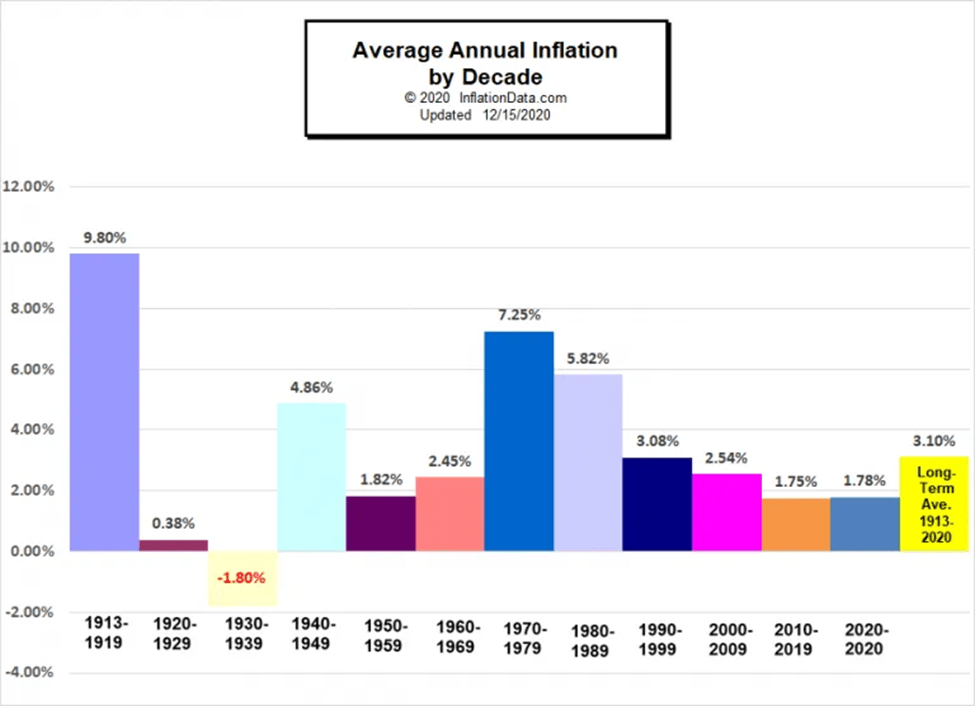
This link shows annual inflation rates since 1913:
-
We’re in a good location to observe Reilly’s law – Libby attracts very little commerce from North County, and we’ve had a great example of how a political decision that minimizes travel at Roosville changes the retail industry.
Reilly’s law best applies to the midwest plains – an area where mountains and rivers have minimal effect. On the other hand, where 37 is the route to Libby, and 93 the route to Whitefish and Kalispell, the limits created by mountains and rivers kind of cancel out.
From the web-site article: “Reilly realized that the larger a city, the larger a trade area it would have and thus it would draw from a larger hinterland around the city. Two cities of equal size have a trade area boundary midway between the two cities. When cities are of unequal size, the boundary lies closer to the smaller city, giving the larger city a larger trade area.
Reilly called the boundary between two trade areas the breaking point (BP). On that line, exactly half the population shops at either of the two cities.
The formula is used between two cities to find the BP between the two. The distance between the two cities is divided by one plus the result of dividing the population of city B by the population of city A. The resulting BP is the distance from city A to the 50% boundary of the trade area.
One can determine the complete trade area of a city by determining the BP between multiple cities or centers.
Of course, Reilly’s law presumes that the cities are on a flat plain without any rivers, freeways, political boundaries, consumer preferences, or mountains to modify an individual’s progress toward a city.”
The populations can be accessed readily – the census count for Eureka is 1,380. The Census lists Libby at 2,775, Whitefish at 7,751 and Kalispell at 24,558. With Libby and Kalispell essentially equal distance from Eureka, the retail gravitation of Kalispell greatly overpowers Libby – even if we ignore the population that is outside the city limits (and north-county has a higher percentage outside town limits). In terms of county solidarity, Libby just doesn’t attract north-county commerce.
-
Imagine that you are a student. Fifth grade. You arrive at school and eat your breakfast with your classmates and your teacher. You know all of them, because it is a small school and you know everyone. Your teacher asks about your pets, your family, your hobbies because it’s a small class and your teacher knows you too.
You and your classmates get into the bus- except, it isn’t actually a bus. It’s technically a class-3 school bus, which means it’s a van. It’s cozy, has seat belts, and it’s easy to talk to the people around you.
Your teacher asks you if you know why pine trees shape their leaves like needles. And you listen, and you ask questions. Learning is a conversation, things pointed out as you drive by or when you stop to look at something more closely. Your teacher welcomes your questions and encourages your curiosity. Sometimes the answer to your question is known and sometimes it goes on the list of things to research later. The geological history of the area is written in the stones and in the shape of the mountains and now that you know what to look for, you can see it.
You see ecosystems, in a pond, in a forest, in a meadow, and even on the moss covered rocks. You take samples of water and look at them under microscopes (the kind that use mirrors for light and require no electricity). You can see the stages of ecological succession; You can see the pioneer species that move in on bare stone, a pond that will one day become meadow, and a meadow that will one day become a forest. The future of the landscape is there and you can see it now.
You see human history, too. Old fire lookouts, and the places that the roads once were, when they were traveled by wagons. You see dynamite scarring that came when roads were built, and you pass stump cultures from Christmas tree farming.
You eat lunch back at school and your afternoon teacher joins you. Your afternoon is a vocational class. This trimester it’s Building Trades, and you are learning the basics of carpentry, plumbing, wiring and masonry. Last trimester was Culinary Arts and next will be Engineering.
This could be Trego School. This is a glimpse of the future we want for the children of our community. We want them to have opportunity to learn how to do things, to ask questions, and to reach their potential as confident, capable adults.
Help us build the future. Do you have a skill or a profession that would benefit the children of our community? Consider putting in an application at Trego School and applying for a Class-4 (vocational) teaching license. -
As I listen to the comments about the need to do something to keep another Uvalde from happening, I’m hearing the usual comments that the second amendment is more to authorize a militia than the individual right to bear arms.
That I disagree is not an adequate reason to ignore the argument – scientific method pretty much demands listening respectfully to folks who disagree. Fortunately, the internet gives me access to historical research that was confined to university campuses a quarter-century ago. There is the problem of avoiding confirmation bias, but I can cope with that.
Hartnation goes through the importance of the militias during the American revolution. Remembering my long ago American History classes, I think George Washington expected a militia unit to be able to stand and fire 3 rounds, but not stand when the Brits closed with bayonets. Hart described how dependent the Continental Army was on the local militias:
At the beginning of American independence an immense task faced the colonial revolutionary. The English army, the best-trained, best-equipped military in the world, had served in the Americas, enforcing the will of the crown for many decades. American victory rested in the ability of the colonists to put together a viable fighting army. We know from history that the American Continental Army, commanded by George Washington, defeated the superior British army and expelled the rule of the crown from the colonies by 1783.
. . . How much did the colonial militia contribute to enable the Continental army to defeat the British? I would posit that the militia movement was the driving force behind the Continental Army’s victory over the British because they were the main source of manpower, because they were already trained and armed with a 150 year harden tradition of defense to protect their own communities, and because the militia was made up of mostly farmers and landowners, they stood to gain the most from independence giving them something tangible to fight for other than “liberty”.”

battlefields.org Militias also provided the Continental armies in the field much-needed manpower, albeit on a temporary basis. When British commanders planned for their campaigns against the Continental armies in the field, they had to take in account the size of the militia forces operating in those same geographic areas. The British knew the militia were unpredictable, but they could not totally neglect their presence either. In some instances, militia units were the deciding factors in important battles. The war’s first battles of Lexington and Concord in Massachusetts were fought mostly by militia with some minutemen units. At the Battle of Bunker Hill, outside Boston, militia dealt a deadly blow to the British. Later in the war at battles such as Bennington, Vermont, King’s Mountain, Cowpens, both in South Carolina and Guilford Courthouse, in North Carolina, the militia was crucial to American victories.”
Reviewing those historical comments, I get the feeling that the militia at the time of the American Revolution could have been described (as in the quote misattributed to Admiral Yamamoto) as a rifle (or at least a musket) behind every blade of grass. The better regulated, the better drilled and prepared, the more essential to the security of a free state.
The Supreme Court (Miller case) ruled that the Second Amendment did not protect weapon types not having a “reasonable relationship to the preservation or efficiency of a well regulated militia”. This kind of invalidates the arguments against “weapons of war.” That 1939 decision protects them.
-
I’m a positivist – which basically says my science is confined to numbers. Since I’m also a stats guy, it means my numbers aren’t always precise – the world is usually plus or minus. That’s OK. Then there is the problem of units of measurement. They need to be consistent.
So here’s a local set of numbers – Eureka is about 50 miles of deadhead run from highway 2. A gallon of gas provides enough energy to move a ton of material about 50 miles by truck, or about 200 miles by rail. Folks fortunate enough to use barges and water can move that same ton about 500 miles – but Koocanusa just isn’t set up for commercial traffic. A century ago Fortine Creek was commercial navigation – logs moved downstream to the mill in Eureka – but we don’t have commercial waterways like the Great Lakes, the Mississippi, Ohio, lower Missouri, etc.
Basically the economics of energy mean that our retail prices have to be higher than Kalispell. As fuel prices increase, that 50 miles of deadhead run costs twice – once to get the munchies to the grocery store in Eureka, and once to get the empty truck back. That same economics of energy isolates us further from the county seat in Libby – 37 is a deadhead route either way, while Libby and Troy are on Highway 2.
At Trego, I’m 50 miles from Walmart. Eureka is 30% further. Stryker is 10% closer in terms of energy. The equations don’t change. They affect our shopping patterns. They affect our ability to market local products. This chart shows the energy equivalents in terms of gallons of gas:
Gasoline Gallon Equivalents
Fuel Type Unit of Measure BTUs/Unit Gallon Equivalent Gasoline (regular) gallon 114,100 1.00 gallon Diesel #2 gallon 129,500 0.88 gallons Biodiesel (B100) gallon 118,300 0.96 gallons Biodiesel (B20) gallon 127,250 0.90 gallons Compressed Natural Gas (CNG) cubic foot 900 126.67 cu. ft. Liquid Natural Gas (LNG) gallon 75,000 1.52 gallons Propane (LPG) gallon 84,300 1.35 gallons Ethanol (E100) gallon 76,100 1.50 gallons Ethanol (E85) gallon 81,800 1.39 gallons Methanol (M100) gallon 56,800 2.01 gallons Methanol (M85) gallon 65,400 1.74 gallons Electricity kilowatt hour (Kwh) 3,400 33.56 Kwhs I’d make a wild guess that it takes somewhere around 100 gallons of gasoline equivalent to run a logging operation for a day. The cost of fuel for a truck was a management decision when that log truck could run to American Timber (Olney), Ksanka (Fortine) or Owens & Hurst (Eureka). With fewer mills, more distant, energy costs reduce the value of our main product. Increased energy costs effectively reduce the value of labor as they increase the cost of living.
Electric vehicles for transportation? We’ll know when the cost of fuel has begun to match the cost of electric vehicles when we see Lincoln Electric linemen driving electric trucks. As long as our electric co-op finds it cost-effective to use gasoline and diesel, they operate as an indicator – heck, they buy fossil fuels at retail or close to it, and buy electricity wholesale. The numbers may not be precise when I type at my kitchen table – but they are good enough for the calculations I need.
The cost of housing increased dramatically with inmigration – unlike our boomtown days with the highway and railroad relocation and the tunnel, private investment isn’t moving in to supply more housing quickly. I see what may be the beginning of a trend – long-time residents selling and moving away. I’ve looked at what happens when an area moves into the recreation dependent and retirement destination classifications. The first noticeable step is long-time locals moving into jobs that serve the new landowners in new houses – the folks who are replacing them.
-
I noticed this meme and it brought me to the topic of personal organic carbon – how much impact does each of us have on atmospheric CO2 enrichment as we leave our bodies behind.

Fortunately, I can figure out roughly how much carbon I am – the atomic mass of carbon is a little over 12, oxygen a little under 16, nitrogen a little over 14 and calcium a touch over 40. Since that’s the lion’s share of amino acids, a little research can give me the percentage carbon in my body. Another alternative is to google it and learn that about 18% of my body is carbon.
That means that at 220 pounds, the planet will regain about 40 pounds of carbon from my lifeless carcass one day. I can handle that – but it isn’t my decision. My thoughts go with a shallow burial in a shroud, to become carbon that is sequestered in the soil three or four feet down. Depending on the energy required to dig the small ditch and fill it back in, this may be the most environmentally friendly way of dealing with the carbon that is no longer mine.
An August 31, 2021 Huffington Post article explains that “cremating a single corpse usually takes between two and three hours and releases almost 600 pounds of carbon dioxide.” Making the assumption that, at 220 pounds I’m at the top end of normal, let’s use that 600 pound number. Carbon is 12, oxygen 16, so carbon dioxide is 44. 12/44 is .2727, so multiplying that with 600 puts about 164 pounds of carbon into the atmosphere.
It does make one wonder about the level of environmental responsibility in the Service poem “The cremation of Sam McGee.” There’s something that just seems wrong about adding 160 pounds of carbon – 600 pounds of greenhouse gas – to the atmosphere when we could add 40 pounds of carbon to the soil.
Laura van der Pol explains “Agriculture covers more than half of Earth’s terrestrial surface and contributes roughly one-third of global greenhouse gas emissions. Paying farmers to restore carbon-depleted soils offers a tantalizing opportunity for a natural climate solution that could help nations to meet their commitments under the international Paris climate agreement to stabilize global warming below 2 degrees Celsius.
An international initiative called “4 per 1000,” launched at the 2015 Paris climate conference, showed that increasing soil carbon worldwide by just 0.4% yearly could offset that year’s new growth in carbon dioxide emissions from fossil fuel emissions.”
Gasoline is about 5 ½ pounds of carbon per gallon – so each gallon produces about 20 pounds of CO2 – so, while my cremated corpse would be equivalent to 30 gallons of gas in the atmosphere, sequestering that carbon in the soil would be roughly 4 gallons of unburned gasoline.
Want to tell us something or ask a question? Get in touch.

Recent Posts
- A Few Charts and Trends
- The Density of Water Explains When Dickey Lake Freezes
- Watching Iran
- The Quality of Numbers
- Robert Treat Payne Had Traveled To Greenland
- 75 Years Ago in New York
- Recovery Time for a Retiree
- Venn Diagram and DSM
- When Castro Was Cool
- You Have To Beat Darwin Every Day
- Computer Repair by Mussolini
- Getting Alberta Oil to Market
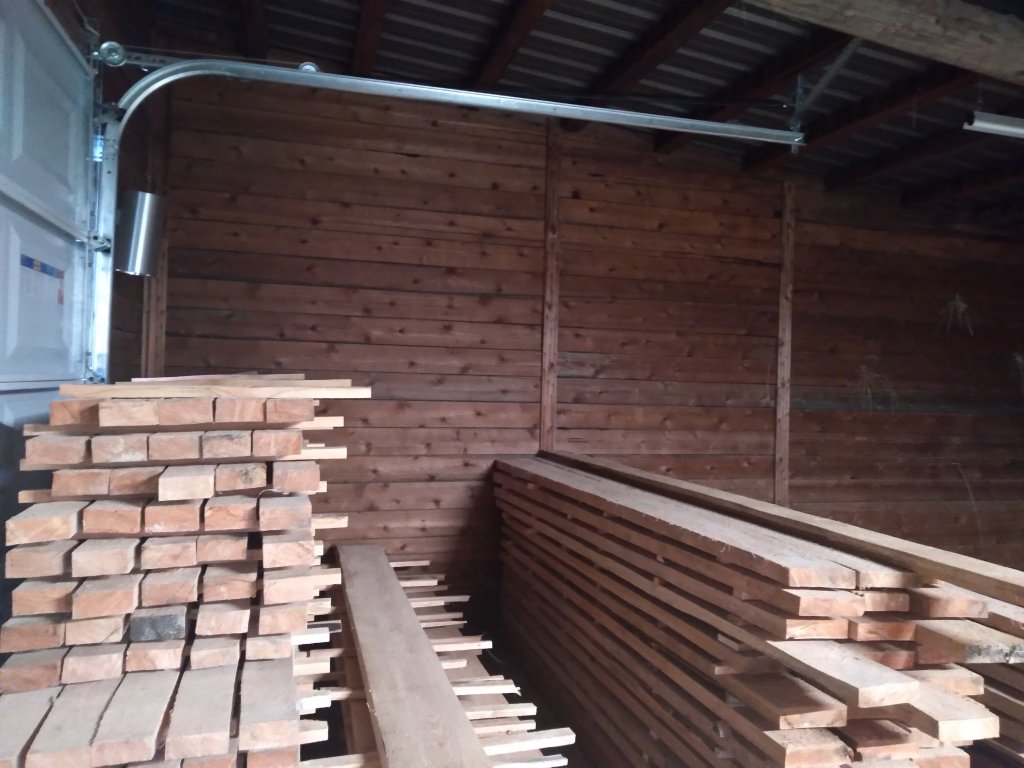
Rough Cut Lumber
Harvested as part of thinning to reduce fire danger.
$0.75 per board foot.
Call Mike (406-882-4835) or Sam (406-882-4597)
Popular Posts
Ask The Entomologist Bears Books Canada Census Community Decay Covid Covid-19 Data Deer Demography Education Elections family Firearms Game Cameras Geese Government Guns History Inflation life Lincoln County Board of Health Lincoln County MT Lincoln Electric Cooperative Montana nature News Patches' Pieces Pest Control Politics Pond Recipe School School Board Snow Taxes Teaching travel Trego Trego Montana Trego School Weather Wildlife writing
 Trego's Mountain Ear