-
Earlier this week, someone had a clever comment on facebook, suggesting that the horse equivalent of uber be called “Neigh-ber”, which made me laugh, but also got me thinking: How high does gas have to get before a horse becomes more economical?
Obviously, this is going to depend on the number of miles covered, and the price of gas, but if we can calculate the cost per mile for a horse, it should be possible to figure out. Fortunately, someone has done this for us- so we’re spared much of the research and most of the algebra.
Lancaster Online first considered this question back in 2008 when a gallon of gas was over four dollars.
Since this is purely hypothetical, the numbers won’t be perfect, but they should provide a good figure for when we should be taking this budgeting practice a bit more seriously. Besides- I want to know- How does a Horse and Buggy Compare to an Electric Car?
So- the initial purchase. According to Lancaster’s estimates, a new horse and buggy will run about $10,500, a bit more if you want to add a propane heater during the winter. The average price for a new electric vehicle is about $60,000. The average new car price seems to be about $47,000, while the average used car price is over $27,000.
Lancaster calculated an annual cost of about $6,000 for the car and $3,060 for the buggy. Then, assuming the car travels 15,000 miles in a year and the buggy only 1,500 miles, they divided the miles, and determined that it was only $0.41 per mile for the car and $2.04 per mile for the buggy.
This makes for an easy comparison- but lets consider our actual commute. First, we determine the annual cost for each (including food for the horse, gas for the car, electricity for the electric vehicle), then divide by various annual commutes. To make things easier, I’m going to ignore maintenance costs, vet bills, etc.
If Gas is only $4 per gallon:
Annual Costs for Commuting between Fortine and Eureka 5 days a week
For a Buggy
Yearly: $1,050
$1,460 (feed)
Total: $2510
Cost Per Mile: $0.44For a New Car
Yearly: $4,700
$915.20 (gas)
Total: $5,615.20
Cost Per Mile: $0.98For an Electric Car
Yearly: $6,000
$283.14 (.15 cents per kW)
Total: $6,283.14
Cost Per Mile: $1.10As gas increases, (presuming that the cost of feed does not increase as quickly), the Horse and Buggy should become more cost effective. However, the assumption that the only travel is the commute is impractical, excluding other costs (like vet bills) reduces accuracy, and failure to consider the cost in increased travel time is absurd.
That said, if you already have the space and experience needed to house a horse, your commute is short, and you aren’t in much of a hurry to get there, it’s probably time to start examining this question more closely.
*This is a thought experiment, not financial advice. Run the numbers yourself if you’re considering a purchase.
If you are curious, determine how many days you commute each week, multiply that number by your daily commuting distance, then multiply that by 52 weeks.This will be the total miles traveled in a year. Take the annual cost and divide by total miles traveled.
-
As I look at education, and demography, some things show clearly:

The table comes from: https://www.aei.org/carpe-diem/2020-update-for-every-100-girls-part-i/
The complete article is here. -
Last week, after the next-day checkup following cataract surgery, we stopped for gas in Whitefish. Whitefish has several convenient fuel stops, and, despite hearing that the town merits both a California Zip-code and area code, isn’t all that out-of-step with Montana.
So, I pulled up to the pump, swiped the credit card (how I love that phrase) and began pumping. High test, into the Talon. It really likes the most expensive gasoline. I heard the short lady on the other side of the pump, “Better fill it up. The price will go up by morning.”
I agreed, then commented that I didn’t have any Biden “I did that!” stickers on my side of the pump. She agreed that she didn’t have any on her side either, and explained that the situation was about to change. I looked at my $40 total, and saw that the “I did that!” explanation and Biden’s head had been scraped off. I don’t know who scrapes Joe off the gas pumps – if it were my business, I would much prefer to have Joe blamed for the rising prices than to risk the comments being directed toward me.
Anyway, it got me wondering, so I checked to see if AAA has something available. They do: Gasprices.aaa.com lets you monitor gasoline prices by grade, state, and over time. Here’s a screenshot from last Friday:


-
Max Weber provided the simplest definition: “A government is an institution that holds a monopoly on the legitimate use of violence.” Another, fancier way he phrased it is “A state is a human community that (successfully) claims the monopoly of the legitimate use of physical force within a given territory.” I kind of like using Weber’s perspectives on government and bureaucracy.
One of the classic writers on government was Machiavelli.
I must at the beginning observe that some of the writers on politics distinguished three kinds of government, viz., the monarchical, the aristocratic, and the democratic; and maintain that the legislators of a people must choose from these three the one that seems most suitable. Other authors, wiser according to the opinion of many, count six kinds of government, three of which are very bad, and three good in themselves, but so liable to be corrupted that they become absolutely bad. The three good ones are those we just named, the three bad ones result from the degradation of the other three, and each of them resembles its corresponding original, so that the transition from the one to the other is very easy.
Thus monarchy becomes tyranny; aristocracy lapses into oligarchy; and the popular government lapses readily into licentiousness. So that a legislator who gives to a state which he founds, either of these three forms of government, constitutes it but for a brief time; for no precautions can prevent either one of the three that are reputed good, from degenerating into its opposite kind, so great are in those attractions and resemblances between the good and the evil.”
Niccolo Machiavelli, DiscoursesThere is more to Machiavelli than his simple quotations – but I’ll end with one: “Princes and governments are far more dangerous than other elements within society.” –Niccolo Machiavelli
-
Well, maybe we should call him an undercover agent. In my youth, the term would have been narc. Still, this story, from the old Forest Supervisor, C.S. Webb, is the closest to an official story of a Forest Service spy, working from the Supervisor’s office, monitoring the Pinkham Creek residents. His whole story is at npshistory.com.
In 1933, we were allotted 4 CC camps, and in 1931 the 4 CC camps returned and sufficient Dev-Nira and Imp-Nira funds were allotted to hire 200 men all season. In these two years, we built many miles of low-standard road, new towers and houses on dozens of lookouts, and telephone lines to serve them. A good start was made on a topographic map of the forest, and we built all the ranger stations as they stand today, except the Libby Station and the residence structures at Sylvanite, Warland and Rexford. The latter three were remodeled. The airfields at Troy and Libby were also constructed during those years. Times were hard, men plentiful, and the local populace was very appreciative of the employment provided by the Forest Service.
It was in 1932 that Charlie Powell, ranger at Rexford, overheard a conversation at a trail camp between two Pinkham Ridgers, indicating that the Ridge-runners planned some incendiarism. He promptly reported this to me. The Ridge-runners were a rather canny clan who migrated from the mountains of West Virginia and Kentucky years earlier and took homesteads on Pinkham Creek and Pinkham Ridge. Their chief pursuits were stealing tie timber and moonshining, but occasionally they would set a few fires, “just for the hell of it – to bother the ‘Govment’ men,” and also to provide a few days’ work. A bad epidemic of these fires was experienced in 1922.
Their planning in 1932 was to make lots of work. Bill Nagel, supervisor of the Blackfeet, and I hired an undercover man to go to Eureka to loiter and fish and get in with the Ridgers. He took an old Ford, rambled around the country, got acquainted with all of them, and finally joined their planning discussions after being accepted into their confidence. They completed their plans and set a date (August 22) for setting a string of fires from Edna Creek on the Blackfeet clear through to Sutton Creek on the Kootenai. A man was appointed to go into each drainage and the approximate spot was prescribed where he would set his fire. The complete plan, which was pretty thorough, was reported by our man directly to Nagel at Kalispell. This man was always around Eureka in the daytime, and whenever he had anything to report he drove into Kalispell during the night and was back before morning. We never phoned or wrote to him, nor did he to us. He was an ex-forest officer known to Nagel and me as a fully reliable man.
The day before the scheduled setting of the fires, we had two or three men in the vicinity of where each fire was to be started and quite a few others at anticipated places of travel by the Ridgers in or out of the woods. Our men met several of the Ridgers, who appeared very surprised to see someone. Our fellows saw others they did not meet, and likely our men were seen, too. We had hoped to catch at least one or two Ridgers in the act, but not a fire was set. Our undercover man was out on the fire-setting expedition with one of the Ridgers and joined in their talks after they returned to Eureka. They had tumbled immediately to the fact that we had gotten wind of their plans, since everywhere they went they encountered someone. But, they never suspected our undercover man, and to this day, old timers there are wondering how we got next to their plan. I have never heard since of any attempts at incendiaries in that area. Previously, there had been several outbreaks, and one man served time in Deer Lodge for setting a fire on Pinkham Ridge.”
-
Taxes at Trego School
School taxation is not a simple subject. Part of the school taxes go to Helena, and are returned, not dollar for dollar, but apportioned according to school enrollment. Another part of taxes are assessed and go from the county revenues into the school accounts. Each portion has minimum and maximum levels. It isn’t hard math,…
Litter vs Artifacts?
If you leave trash sitting around long enough (about 50 years), something mysterious happens and it stops being litter (punishable by a $200 fine) and becomes an archaeological resource which if you remove from federal land could lead to a $500 fine and six moths in jail. What’s the difference? Litter is, according to the…
Trego School Enrollment Soars
Enrollment at Trego School continues to rise, in defiance of the historical trend. For the last few decades, school enrollment has been fairly steadily dropping. How low did enrollment actually get? The lowest official ANB (Average Number Belonging -i.e. the official state count of students) that I can find is seven, in the spring of…
A new batch of widowmakers
The recent windstorms have left new widowmakers in the trees. I spoke with a young neighbor who was hit by one, and left with a gash in the back of his head – and was reminded that they aren’t all that easy to see when you are dropping a tree. It is a reminder of…
Weird Words: Emoluments
Perhaps we should call this “ask the etymologist”… “Emolument” comes to us by way of Latin – specifically, ēmŏlŭmentum literally means “something that is produced from work”. Different forms of the Latin word “emolument” meant striving for success and achieving success, but it also referred to profits, gains, or benefits. “Emolument” can be dissected into…
Where Covid Fits in the Demographic Transition Model
The first stage of the demographic transition model includes high birth rates and high death rates – and infectious diseases dominate – for example, the black death was a highly infectious disease that killed millions in Europe – if memory serves, 60% of Venice died, and about a third of Italy’s population. The 90% fatalities…
-
I’m not particularly well-informed about Ukraine. That said, I suspect I am in the top quarter of Americans – my mother-in-law was Ukrainian. I spent several recent years using messenger to visit with a high school classmate who lived there – Randy would send a bright morning message as he drank his first cup of coffee, and I would exchange a couple of thoughts, then announce it was bedtime in my half of the world.
I would have enjoyed his willingness to be a tour guide of Ukraine – but travel is a difficult thing after being field-dressed in order to survive colon cancer. It just wasn’t in the cards. I know the geography – its a prairie that will soon turn from frozen ground to mud as Spring comes in.
My mother-in-law was one of the 2.2 million Ukrainians selected to be “guest workers” in Germany when the Nazis came in and “liberated” Kiev. She was a psychiatrist, and had lived through the Bolshevik revolution, the Holodomor*, and a long tour in Hitler’s camps. She was more than a little paranoid – and her experience justified that paranoia. As a physician, she spent the days outside the camp, doing house calls, accompanied by a series of recovering SS soldiers assigned to supervise her (possibly the best way to describe them would be walking wounded) assigned to make it impossible for her to find a way to escape.
When the second World War ended, Joe Stalin announced that those conscripted Ukrainian “guest workers” would have to do another 10 years in Siberian camps to give them time to think about their collaboration. She chose to emigrate to the US. She discouraged ever thinking about travel to the Soviet Union, fearing laws that would have allowed her daughter to be held there and used as a lever to get her to use that reservation for a stay in a Siberian camp. Yet I could hear the love for Kiev.
Her father had been a University professor, Mechanical Engineering, and was classified as an “enemy of the revolution.” He avoided his potential visit to the gulags (or worse) by shifting from engine room to engine room on river steamers working the Dneiper. While my mother-in-law was pretty quiet on politics, you didn’t need to listen long to realize that she didn’t like the idea of Russian control.
So I watch the news. I see the same toughness, the same strength that let my mother-in-law survive the Bolsheviks, the Holodomor*, and Hitler’s camps. I see that strength of character facing the inevitable, just as she did when she survived the Hitlerites. I think of Randy’s glowing descriptions of Ukraine – there is a special beauty to the prairie, whether it is in our midwest or in Europe. And I recall the words I heard on October 15, 1969. The speaker then said something like, “You don’t have to worry about Ho Chi Minh – he doesn’t want to see you in Viet Nam. It’s your own country’s leaders that put you at risk.”
*The term “holodomor” translates from the Ukrainian as “death by hunger” or “death by starvation”. In the winter of 1932-33 famine was a deliberate policy of the Soviet leadership to eliminate the wealthier Ukrainian peasants. This following quote, attributed to Lenin, provides a little insight into the Ukrainian view toward the Moscow leadership:|
“The kulak uprising in [your] 5 districts must be crushed without pity. . . . 1) Hang (and I mean hang so that the people can see) not less than 100 known kulaks, rich men, bloodsuckers. 2) Publish their names. 3) Take all their grain away from them. 4) Identify hostages . . . . Do this so that for hundreds of miles around the people can see, tremble, know and cry . . . . Yours, Lenin. P. S. Find tougher people.” -
AP showed this “ A judge has rejected an effort by New York’s attorney general to put the National Rifle Association out of business, but will allow her lawsuit accusing top executives of illegally diverting tens of millions of dollars from the powerful gun advocacy organization to proceed.
Manhattan Judge Joel M. Cohen said allegations of NRA officials misspending on personal trips, no-show contracts and other questionable expenditures can be addressed by other remedies, such as fines and restitution, and do not warrant the “corporate death penalty” that Attorney General Letitia James had sought.” on 3/2/22.
It’s good news – I went for the life membership in NRA when I was shooting competitively, and it reduced range fees considerably. Been a member a long time, and have been concerned that New York’s Attorney General could order the NRA shut down due to financial irregularities from Wayne LaPierre and others. I have to admit – after reading about the financial accusations, I haven’t been anxious to respond to the letters with cash.
“In short, the complaint does not allege the type of public harm that is the legal linchpin for imposing the ‘corporate death penalty,’” Cohen’s decision reads. “Moreover, dissolving the NRA could impinge, at least indirectly, on the free speech and assembly rights of its millions of members.”
“The remedy of dissolution is, in the court’s view, disproportionate and not narrowly tailored to address the financial malfeasance alleged in the complaint, which is amply covered by the Attorney General’s other claims,” the decision reads.
In total, Cohen tossed four of the AG’s claims against the NRA. Still, 14 other claims may move forward, the decision said.”
NY PostAP’s article went on to describe the financial problems that form the basis of the remaining suits:
“LaPierre, the CEO who has been in charge of the NRA’s day-to-day operations since 1991, is accused in the lawsuit of spending millions on private travel and personal security and accepting expensive gifts — such as African safaris and use of a 107-foot (32-meter) yacht — from vendors.
He is also accused of setting himself up with a $17 million contract with the NRA if he were to exit the organization, spending NRA money on travel consultants, luxury car services, and private jet flights for himself and his family — including more than $500,000 on eight trips to the Bahamas over a three-year span.
Some of the NRA’s excess spending was kept secret, the lawsuit said, under an arrangement with the organization’s former advertising agency, Ackerman McQueen. The advertising firm would pick up the tab for expenses for LaPierre and other NRA executives and then send a lump sum bill to the organization for “out-of-pocket expenses,” the lawsuit said.
Personally, the suit isn’t a problem if the organization is safe – if Wayne LaPierre is doing as the New York AG accuses, he needs to find some new pasture to graze. Frankly, it is one of those things where even the appearance of misconduct is damning enough.
Eric Hofer wrote: “Every great cause begins as a movement, becomes a business, and eventually degenerates into a racket.” Maybe the NRA can return to being a movement.
-
I like the term “Anthropic Global Warming” better than the generic “Climate Change.” Living in an area that was covered by glaciers 15,000 years ago, I have ample evidence to convince me that climate changes – my challenge is quantifying how much is human caused and how much has natural causes. And I like a term that defines the direction of change.
English history – from the Roman occupation forward – provides records of a warm climate cooling off and entering what is termed “The Little Ice Age.” There is a historical record of climate change, and, equally important to a Non-Malthusian demographer, the technological changes people developed to deal with the climate change is written down.
Connections, by James Burke, offers this: “Among the earliest references to the change comes from the Anglo-Saxon Chronicles, kept by monks for the year 1046: ‘And in the same year after the 2nd of February came the severe winter with frost and snow, and with all kinds of bad weather, so that there was not a man alive who could remember so severe a winter as that, both through mortality of man and disease of cattle; both birds and fishes perished through the great cold and hunger.” (p157)
Connections explores the connections between events and technical development. It continues further down the page: “The chief stimulus to change was the need to stay alive through winters that became increasingly severe, as the monks had noted. The first innovation that came to the aid of the shivering communities was the chimney. Up until this time, there had been but one central hearth, in the hall during winter, and outside during summer. The smoke from the central fire simply went up and out through a hole in the roof. After the weather changed, this was evidently too inefficient a way of heating a room full of people who until then would have slept the night together.”

Ultimate History Project: “Conisbrough Castle built in the 12th century has the earliest extant chimneys.”
Ultimate History Project: “Scottish Black Houses are named for the smoke seeping from their chimneyless roofs.” Page 159 continues: “The building to which the new chimney was added had already begun to change in reaction to the bad weather. The open patio-style structure had been replaced by a closed off building, built to withstand violent meteorological changes. The new chimney, whose earliest English example is at Conisborough Keep in Yorkshire (1185) also produced structural changes in the house. The use of a flue to conduct away sparks meant that the center of the room was no longer the only safe space for a fire. To begin with, buildings were by now less fully timbered so the risk of fire was less, and the flue permitted the setting of the fire in a corner or against a wall. . . The hood on the fireplace prevented sparks from reaching the ceiling, and as a smaller room could more readily be heated than a larger one, the ceilings could now be lower.”
“Two major innovations occurred by the fourteenth century, at the latest: knitting, and the button. The earliest buttons are to be seen on the Adamspforte in Bamberg cathedral, and on a relief at Bassenheim, both in Germany, near Hapsburg around 1232. The first example of knitting is depicted in the altarpiece at Buxtchude, where the Virgin Mary is shown knitting clothes for the infant Jesus. Both buttons and knitting contributed to closer-fitting clothes that were better at retaining heat.”

First Example of Knitting Burke’s books – Connections and The Pinball Effect are loaded with examples of how events are connected with technical development.
-
Max Weber provided the simplest definition: “A government is an institution that holds a monopoly on the legitimate use of violence.” Another, fancier way he phrased it is “A state is a human community that (successfully) claims the monopoly of the legitimate use of physical force within a given territory.”
So far as social theories go, I’m a Conflict theorist, and I like Max Weber’s teachings more than Karl Marx. Lord Acton wrote “The History of Freedom in Antiquity”.
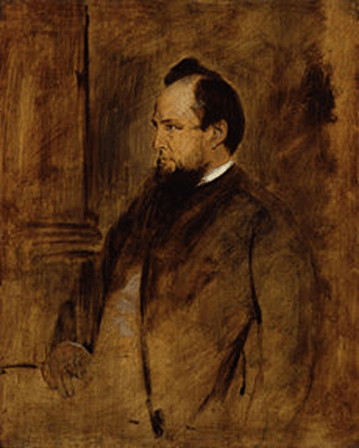
Here’s an excerpt:
“Two men’s lives span the interval from the first admission of popular influence, under Solon, to the downfall of the State. Their history furnishes the classic example of the peril of democracy under conditions singularly favorable. For the Athenians were not only brave and capable and patriotic and capable of generous sacrifice, but they were the most religious of the Greeks. They venerated the Constitution which had given them prosperity, and equality, and freedom, and never questioned the fundamental laws which regulated the enormous power of the assembly. They tolerated considerable variety of opinion, and great license of speech, and their humanity towards their slaves roused the indignation even of the most intelligent partisan of aristocracy. Thus they became the only people of antiquity that grew great by democratic institutions. But the possession of unlimited power, which corrodes the conscience, hardens the heart, and confounds the understanding of monarchs, exercised its demoralizing influence on the illustrious democracy of Athens. It is bad to be oppressed by a minority, but it is worse to be oppressed by a majority. For there is a reserve of latent power in the masses which, if called into play, the minority can seldom resist. But from the absolute will of an entire people there is no appeal, no refuge but treason. The humblest and most numerous class of the Athenians united the legislative, the judicial, and, in part, the executive. The philosophy that was then in the ascendent taught them that there is no law superior to that of the State – the lawgiver is above the law.
It followed that the sovereign people had a right to do whatever was within its power, and was bound by no rule of right or wrong but its own judgment of expediency. On a memorable occasion the assembled Athenians declared it monstrous that they should be prevented from doing whatever they chose. No force that existed could restrain them, and they resolved that no duty should restrain them, and they would be bound by no laws that were not of their own making. In this way, the emancipated people of Athens became a tyrant, and their government, the pioneer of European freedom, stands condemned with a terrible unanimity by all the wisest of the ancients.
They ruined their city by attempting to conduct war by debate in the marketplace. Like the French Republic, they put their unsuccessful commanders to death. They treated their dependencies with such injustice that they lost their maritime empire. They plundered the rich until the rich conspired with the public enemy, and they crowned their guilt by the martyrdom of Socrates. The repentance of the Athenians came too late to save the Republic. But the lesson of their experience endures for all time, for it teaches that government by the whole people, being the instrument of the most numerous and most powerful class, is an evil of the same nature as unmixed monarchy, and requires, for nearly the same reasons, institutions that shall protect it against itself, and shall uphold the permanent reign of law against arbitrary revolutions of opinion.”
John Emerich Edward Dalberg, Lord Acton


Want to tell us something or ask a question? Get in touch.

Recent Posts
- Voting Yourself In
- A Few Charts and Trends
- The Density of Water Explains When Dickey Lake Freezes
- Watching Iran
- The Quality of Numbers
- Robert Treat Payne Had Traveled To Greenland
- 75 Years Ago in New York
- Recovery Time for a Retiree
- Venn Diagram and DSM
- When Castro Was Cool
- You Have To Beat Darwin Every Day
- Computer Repair by Mussolini

Rough Cut Lumber
Harvested as part of thinning to reduce fire danger.
$0.75 per board foot.
Call Mike (406-882-4835) or Sam (406-882-4597)
Popular Posts
Ask The Entomologist Bears Books Canada Census Community Decay Covid Covid-19 Data Deer Demography Education Elections family Firearms Game Cameras Geese Government Guns History Inflation life Lincoln County Board of Health Lincoln County MT Lincoln Electric Cooperative Montana nature News Patches' Pieces Pest Control Politics Pond Recipe School School Board Snow Taxes Teaching travel Trego Trego Montana Trego School Weather Wildlife writing
 Trego's Mountain Ear