-
I went into Trego School to see a poster where the Trego Trailblazers 4-H club was welcoming us to County Congress. It brought back memories. I was there when a group of kids started the club and came up with the name “Trailblazers”. Was it Kenny Peters who coined the name? Freddie Osler? The only thing I know for sure is that I was there 60 years ago, when the Trailblazers came to life, and that I wasn’t the one who came up with the alliterative name. At the end of that meeting, I was no longer a Fortine Pioneer . . . I was a Trego Trailblazer. It was kind of a rush to see that something done so casually by a bunch of kids 60 years ago still has a bunch of kids.
I was going to write about this particular County Congress – but I have a story of County Congress, State 4-H Congress, the County Fair, a cattle workshop, and an outstanding, wonderful 4-H kid. It’s a story that I can tell because I’m typing it, not trying to talk as memories bring tears.
I was the County Extension Agent, and County Congress was due to start in a couple hours. Sam must have been pushing 5, and was visiting with her big kid friend, Kit Kinsella . . . and Sam explained that we had to give Kit a ride home to get the gear for her demonstration. I liked Kit. Sam liked Kit – and she had forgotten her gear, and the parental idea was that she would learn to be more responsible in the future by losing the opportunity. Sam had a different idea – we needed to take the Yugo, drive Kit out to McGinnis Meadows, bring back her stash and get her the chance to compete.
Sam, not yet 5, had what proved to be the right idea – one of the best things I did as an Extension agent. Kit rushed in for the competition, won it, and qualified for State 4-H Congress. A couple months later, we were carpooling with Flathead County to State Congress . . . it was a good partnership. Cheryl Weatherell would be in the girls dorm with my Lincoln County girls, and I inherited the Flathead boys to check in on in Langford Hall. It worked.
Kit lived 40 miles out of town, off-grid. The week in a college dorm was her week – unlimited showers, indoor plumbing, and a whole crew of girls fascinated by Kit’s off-grid, home-schooled life. The third day of State Congress, Cheryl was telling how much the Flathead girls learned and enjoyed Kit. That evening one of the boys I was supervising crawled out through a window, so I had a bit of a discipline problem . . . in the girls’ dorm, Kit explained to Cheryl that her upper arm hurt, and that there was a lump on the bone.
In those days, when the internet was young, and phone lines followed powerlines, there wasn’t much to do. I shared the scars on my left shoulder, where it had taken a surgery at 7, then a second at 12, to get rid of the tumor. It was calming – Kit was sure that she could handle it, even if her scars turned out ugly like mine. That Friday, I dropped Kit off with her mother, and drove home. A couple weeks later, we learned that Kit’s tumor was the iron crab – mine had been benign. I got the call as John Patterson and I were teaching a livestock class – John wound up teaching my part as well as his own – my eyes teared up too much at the words “stage 4”.
Kit made it to the county fair – she greeted me with a smile, and insisted that I roll up my sleeve – that if I would just sit on the hay bail she could show me that her surgeons left as big a scar as mine. Several times I’ve heard of the little teen-ager enjoying sitting with me comparing scars. I still tear up when the tale is repeated. Long story made short, the physicians did the best they could, but as an early Spring came in, Kit went out.
I wasn’t a 4-H agent – 4-H was just one of my duties. On one hand, I could look at how great that single trip to MSU for State Congress was for Kit. On the other hand, I wasn’t tough enough to lose one of my 4-H kids, take it in stride, and return to 4-H activities unimpaired. All of a sudden, all my 4-H kids looked vulnerable.
From that experience, moving admin, supervising 38 agents and 20 counties in South Dakota was a bit easier – the county staff has the fun of working with young learners, and administrators are removed from the realities that there are times when young people die, and that neither doctors nor extension agents can change that.
And as I think back, Sam was right. Nothing I ever did as an Extension Agent was as good an act as driving 80 miles so that Kit could qualify for a week at MSU in a college dorm. I couldn’t stay through this year’s County Congress – good, but pained memories returned.
-
A little bit of narcissism is normal and healthy – here’s how to tell when it becomes pathological

There is a major distinction between healthy and pathological narcissism. Joos Mind/The Image Bank via Getty Images April Nisan Ilkmen, Adler University
During former President Donald Trump’s campaign and presidency, the word narcissism became something of a buzzword. And in recent years the word has been popularized on social media and in the press.
As a result, social media and other online platforms are now rife with insights, tips, stories and theories from life coaches, therapists, psychologists and self-proclaimed narcissists about navigating relationships with narcissists or managing one’s own symptoms.
The term “narcissism” is commonly used to describe anyone who is egotistical and self-absorbed. Someone who exhibits narcissistic traits may have a personality disorder known as narcissistic personality disorder.
Over the past decade, the rapid development of social networking sites has caused profound changes in the way people communicate and interact. Social media websites such as Facebook, TikTok and Instagram can feel like a narcissistic field day. In seconds, one can share self-enhancing content – flattering pictures, boastful statuses and enviable vacations – with a vast audience and receive immediate feedback in the form of “likes” and reinforcing comments from followers.
As a licensed couple and family therapist who specializes in relationship issues related to attachment, I have worked with many couples with one partner who is on the narcissistic personality disorder spectrum. One reason the narcissistic partner is challenging to treat is that they’re adept at persuading their partner that they are the dysfunctional one. https://www.youtube.com/embed/_uJs0iGQN0M?wmode=transparent&start=0 The “malignant narcissist” may be the most worrisome type of all.
Defining narcissism
Dr. Otto Kernberg, a psychiatrist who specializes in personality disorders, differentiates between normal and pathological narcissism using a framework that assesses a person’s capacity to participate in satisfactory romantic relationships.
Normal narcissism refers to a well-integrated sense of self that is generally for the greater good, such as a healthy sense of pride in oneself and one’s accomplishments. Pathological narcissism describes extreme fluctuations between feelings of inferiority and failure with a sense of superiority and grandiosity.
Each person has a bit of normal narcissism within them. This can take the form of having self-confidence and even a modicum of entitlement while still displaying empathy and emotion. Research shows the role of healthy narcissism occurs at subclinical levels in everyday populations and can help motivate people to enhance themselves and to progress in life.
But when striving for achievement or gain involves an excessive desire for attention and approval and an outsize, grandiose sense of self, it is no longer in the realm of healthy narcissism.
A pathological narcissist sees everyone else as an extension of self. Those in a narcissist’s life, especially in their inner circle, must always demonstrate perfection because they contribute to the narcissist’s own self-image. Like many personality disorders, narcissism manifests itself in intimate relationships through the cycle of idealization and devaluation, creating the concept of the so-called toxic relationship.
Finding a victim
A narcissist chooses their partners based on whether the partner affirms their grandiose sense of self. And since having that affirmation is the key driver for a narcissist’s relationship, they are generally not interested in learning a lot about the other person.
The things that attract narcissists are not the personal characteristics of the other person or even the connection that comes from the relationship. If the person has a reputable status in their eyes and they find the person appealing, they are usually willing to move forward quickly in the relationship. Unfortunately, as a narcissist’s genuine interest in the other person is typically superficial, the narcissist often loses interest in the relationship just as suddenly as they began it.
Narcissistic abuse is a form of extreme psychological and emotional abuse marked by manipulative communication and intentional deception for exploitation by a person who meets the criteria for pathological narcissism. https://www.youtube.com/embed/cwuzgfFgLTM?wmode=transparent&start=0 Some key traits of narcissism include a sense of entitlement, a lack of boundaries and a need for attention.
Forms of narcissism
Narcissistic abuse can be insidious and hard to recognize. Since the signs of narcissistic abuse aren’t always obvious, it’s important to name and recognize them.
- Gaslighting: The narcissist uses a manipulation strategy known as gaslighting to make the victim doubt his or her own ability to make a decision or take an action. People use this technique to maintain control over the other person’s sense of reality. When gaslighting occurs, victims are left feeling doubtful and insecure and some even have difficulty recognizing that they are being gaslighted. In some relationships, a co-dependency develops between the narcissist and the victim in which the victim accepts the narcissist’s position of authority.
- Victim mentality: This mindset, which is common for those with narcissistic personality disorder, implies that everybody owes the narcissist something. In my clinical experience, I have often witnessed the narcissist creating a false narrative about how they did not get what they were supposed to get in life because they were wronged by others. This story allows them to feel entitled to have anger and resentment toward anyone, especially toward people they perceive as successful.
- Cycle of idealization and devaluation: Narcissists form polarized beliefs about themselves and others, meaning that their opinions of themselves and others can be exceptionally positive or unrealistically negative.
During the idealization stage, the narcissist creates a sense of unbreakable connection with the victim. No matter what type of relationship it is – whether romantic, professional or familial – it moves fast and has an intense quality to it.
At some point, the narcissist’s partner will disappoint them in some way, usually not on purpose. As a response, the narcissist will criticize every move, jump to conclusions and react dramatically to these perceived disappointments. The narcissist will begin to see their partner as flawed and accuse them of not being the perfect partner they were supposed to be. This phase is characterized by verbal and physical abuse, humiliation, bullying and smearing.
Feelings of emptiness: According to Kernberg, the psychiatrist mentioned above, the inability of narcissists to develop fulfilling and lasting relationships results in a chronically empty internal world.
Narcissistic personality disorder patients will often find themselves “waking up” at age 40, 50 or 60 with a desperate sense of loss. The narcissist often struggles with feelings of emptiness that stem from relying on a false grandiose sense of self that prevents them from being vulnerable. In turn, they project their feelings of emptiness onto the partner in a relationship. Many of these patients suffer from a loss of identity and sense of helplessness and feel alienated from the world.
Navigating relationships with a narcissist
Since the narcissist often develops controlling and manipulative relationships with the partner’s friends and family, the victim may feel reluctant to rely on their intimate circle for support. Finding a therapist who specializes in narcissistic abuse recovery is the first step to start the healing process.
I have had a lot of patients tell me that their therapists aren’t familiar with the term “pathological narcissism.” If they’re not, I suggest that, if possible, these patients find therapists who specialize in emotionally focused therapy or transference focused therapy. These therapies help identify destructive patterns of communication as they arise during a therapy session, rather than focusing only on interactions that arise outside of therapy.
From my perspective, relationships with a narcissistic partner are some of the hardest to treat. The narcissistic partners are often unwilling to participate in therapy because they will not admit that they need help and find it challenging to collaborate with the therapist. Effective couples therapy is rare but not impossible and can occur only when the narcissistic partner acknowledges that their expectations are unreasonable and destructive.
April Nisan Ilkmen, PhD Candidate in Couple and Family Therapy, Adler University
This article is republished from The Conversation under a Creative Commons license. Read the original article.
-
Years ago, probably in civics class, I was taught that the old Greeks (actually the old Athenians) developed democracy. As I grew older, and read more, I realized that the Athenians didn’t so much develop democracy as they looked for a better form of government than the empires around them – Egypt, the Hittites, Mesopotamia, Babylon, Persia, etc. had. Since those neighbors seemed to be ruled by god-kings, plunging into democracy seemed like a good idea.
Now the Athenians didn’t just look at elections – around 508 BC, they decided to turn over all of their governmental functions to one man – a guy by the name of Cleisthenes. Cleisthenes set up what seems to be experiments in democracy. He established the council of 500 – a group which became the main legislative body of the state. Here’s the kick – the members of the council of 500 weren’t elected to the office. Instead, they were selected, kind of like back when we had the draft lottery, or like we get with jury duty, but back then they hadn’t developed many ways to dodge the draft, or to get out of jury duty.
Instead of an elective, representative democracy, Cleisthenes set up an actual democracy – the random selection process gave every citizen an equal chance to serve on the council. The way it worked out, every Athenian was likely to serve twice on the council of 500 in his lifetime (remember, women weren’t citizens in Athens – the pronoun is correct).
Still Cleisthenes did include an election – it was just a bit of a different sort of an election. Once a year, Athenians voted for the man they wanted out of the city. If more than 6,000 votes were cast, the “winner” would be exiled from Athens for the next 10 years – if he came back to town before ten years, he was to be executed.
This election, called an ostracism, had each vote cast on a broken piece of pottery called an ostrakon. Since, at the end of the election, all of the ostrakons were gathered up and dumped in a hole, we have pretty good evidence that the ballots were stuffed and the elections were rigged, even in those early days of democracy.
So I got to thinking – our technology allows us to handle this without even needing to break any pots. Real Clear Politics has worked it all out for us – though this only lists eight politicians, we can easily see that Nancy Pelosi and Mitt Romney still merit inclusion on the list.
Favorability Ratings: U.S. Political Leaders
So, just glancing at the unfavorable column, on the first year, Donald Trump would win ten years of ostracism. The second year, Mitch McConnell. On year 3, Joe Biden would get his ten years of ostracism. Then Kamala Harris would get her ten years out of the country.
I can see how the founding fathers missed putting this into the constitution – getting the data together took a lot of time back then. But I suspect politics was every bit as divisive – I’ve read about Adams and Jefferson.
Cleisthenes’ Council of 500 just might be applicable to the US – draw 435 names at random to serve in the house, 101 in the senate (the vice-president chairs it) and send 536 unwilling draftees to Washington DC to run the government for the next year. Since the statistical likelihood of even one serving 2 years back to back approaches zero, we just build a dormitory for each drafted legislator, and pay each at the median US salary.
After all – democracy is an attempt at achieving better government – and shear randomness may work a lot better than raising funds for elections . . . and then, if we’re going to have election chicanery anyway, we might just as well save our elections for ostracizing unpopular politicians.
-
With the recent meeting and posting about election integrity, I’ve been reminded that while I don’t personally have any evidence of mail fraud, we do have some evidence of… malpractice? malfeasance? Willful avoidance of compliance with state election law? You decide.
(The short version: Section 7 suggests that write-in candidates, even undeclared, should be able to win the primary provided there isn’t a declared candidate. Lincoln County Election Administrator Paula Buff disagreed, and was rather sluggish in response to a freedom of information act request. Writing to the Montana Secretary of State about the issue has thus far only resulted in what appears to be “the bedbug letter”. We’re open to suggestions on where to go next)
Can Paula Omit Section 7?
I’ve inadvertently ran across a spot where Montana Counties – at least Lincoln County, and I believe others – are systematically violating election law. When Lincoln County mailed out primary ballots, the Democrat ballot had no one running within Lincoln county, showing only 3 candidates for US House – the closest Dem candidate was in Polson. The Republican ballot had a single race for Libby commissioner, a candidate for county school superintendent who had bailed out too late to get off the ballot, and no candidate for county administrator. My daughter meets all the requirements for superintendent, so she and…
To Paula on Independence Day
Greetings Paula – On June 10th, three days after our most recent election, you sent me these words: “We likely won’t have the write-in name information available for a few days. I will send you the info once we have it available.” As I type this, it is the Fourth of July – a day with some significance to our republic, as well as 27 days past the election, and 24 days past your commitment to send “the info once we have it available.” I understand the word “few” to mean not many, but more than one. We have moved…
Still no Parties in the Primary
Well, on July 7, I received another reply from Paula Buff on my Freedom of Information Act request. It included part of a spreadsheet on the write-in votes, and these words: Here is the info you requested. Candidate information can be found on the COPP website.” Since the spreadsheet didn’t include all the information I requested, I replied: Greetings Paula Thanks for including the COPP website – when I include websites, I normally attempt to have them interactive, so the recipient doesn’t have to google to figure out what the abbreviation means, but that’s merely a courtesy to which I…
Election Administrator continues to stonewall
Greetings Paula: Two long weeks ago, I reminded you that you have not shared information I requested, specifically: “Please send me the names and numbers of all write-in votes on Lincoln County ballots, by party and position, as well as the date those write-in votes were counted, and the name or names of anyone who has filed as a write-in candidate, from the recent primary election last June, at your earliest opportunity. (emphasis added)” You have provided names, numbers and positions. I can determine the date they were counted from the spreadsheet. You did not include “the name or names…
Writing to the Montana Secretary of State
Since the county election administrator informed us that she considers the matter “closed”, the question becomes who is the next level up the bureaucratic ladder. Greetings Secretary of State Jacobsen; I believe (strongly) that I have found a single word in the Montana Election Judge Handbook 2020 that allows appointed local election administrators to ignore a portion of state election law. Since you ran with the slogan “Establishment Politicians Won’t Stop Me You’ve seen it over and over Entrenched politicians trying to limit your choices and control elections Not on my watch” I am optimistic that you will view my…
To the Secretary of State (Again)
Greetings Secretary of State Jacobsen; You have my apologies for sending this letter by registered mail – but I have received no acknowledgement of my email two months earlier. Governmental unresponsiveness can have many causes, and some are benign – so this is my second attempt to bring the issue before you. I believe that a single word in the Montana Election Judge Handbook 2020 allows appointed local election administrators to ignore a portion of state election law (subsection 7 – see below). Since you ran with the promise “Establishment Politicians Won’t Stop Me, You’ve seen it over and over…
I Think I Got the Bedbug Letter
I first heard of the bedbug letter about 50 years ago – from Bob Brown, when we were undergrads at MSU. In Bob’s story, the protagonist was P.J. Hill of the Great Northern . . . the Hill that Hill county is named after. The Hill who was known as the “Empire Builder.” Since the legend of the bedbug letter has made it into Snopes, here’s their version of the story Bob told: Did a real event spark off this legend? Possibly. Folklore Jan Harold Brunvand reported on a 1992 letter from the corresponding secretary of the George Mortimer Pullman…
In Lincoln County I May be Allowed to
I’ve noticed a meme – pick the subject (your liberties are, the earth is) not dying, they’re being killed by people with names and addresses. My ability to vote against a candidate in this next election has been taken from me – by well meaning, well-regarded people. Taking my vote away (and yours) has not been accomplished in a single act – but over time, my vote has been made meaningless . . . and if my vote is meaningless, I’ve been left with the activity of voting, but my vote has no influence. Maybe it’s wrong to say I…
To the Secretary of State, Regarding Section Seven (Again)
November 21st, 2022 Dear Secretary of State Jacobsen; I received your letter of October 19, and was pleased to be commended for being a responsible, educated and committed voter, etc. It’s nice to have you say these nice things about me. Still, the only commitment in your letter was “Our office will carefully review your information and observations.” Consequently, I am describing my observations in detail in this letter to be certain your office has them and hopefully nothing is missed. This started before the 2022 Primary, and I wrote the following to describe the experience: I’ve inadvertently ran across…
-
I spotted this photo, from 1962 – in Lincoln County, as in Wittenoom, Australia, the sixties were happy days, when the hazards of asbestos exposure weren’t particularly understood.
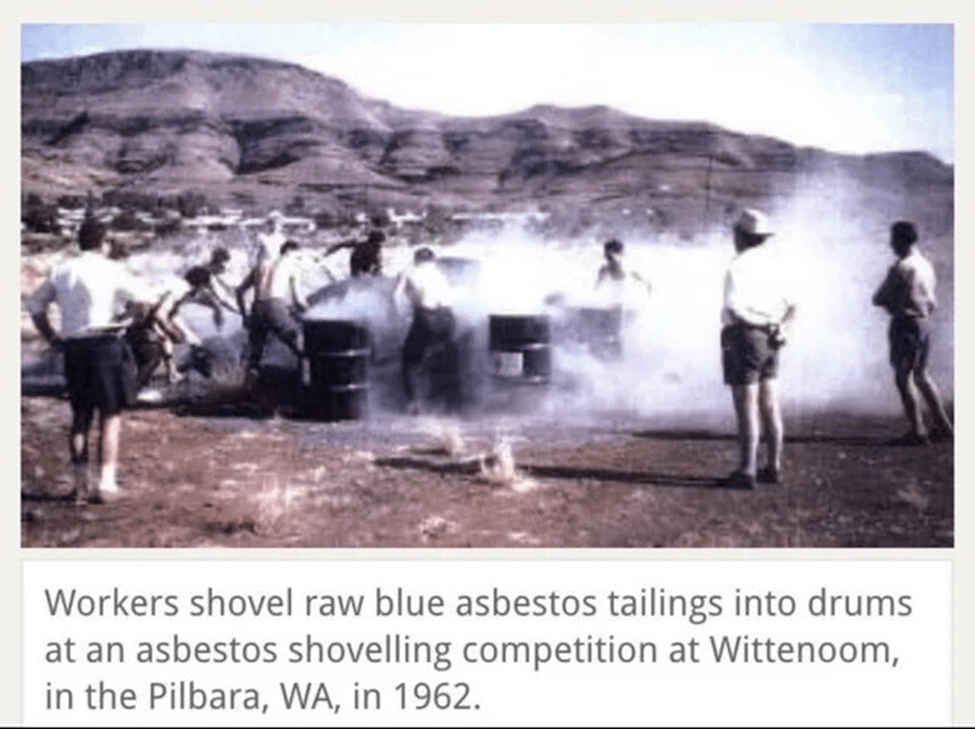
“Wittenoom was officially removed from the Western Australian maps in 2007 and legislation was introduced to forcibly remove the last three residents in 2015. This ghost town located at the mouth of the Wittenoom Gorge is the home of Australia’s greatest industrial disaster. However, being in the Hamersley Range, it can lay claim to being located in one of the most beautiful areas of the Pilbara.”
https://www.aussietowns.com.au/town/wittenoom-waThis article mesotheliomahope.com/ tells of the mesothelioma connected with the asbestos contamination of the vermiculite mined near Libby. When Gayla Benefield started bringing up the evidence that W.R. Grace knew of the health hazards, my first response was that the company officials could not have been so evil. I was wrong. Gayla’s evidence was solid.
“Prosecutors sought to prove that W.R. Grace knew they were killing miners and poisoning their families and those in the community. But in 2009, shockingly, the company received an acquittal of charges that it knowingly harmed people.”
Read the article – it quickly covers how things occurred. I knew too many people who died unable to get a lungful of oxygen in their last days to write about it. Still, it’s a story that broke nearly 25 years ago that we need to remember.
-
After GCA68 passed, the gun banners seemed ascendant, unstoppable. I heard increasing arguments that the Second Amendment was a collective right, that it was written to allow the National Guard to be armed – and while the logic was missing from the arguments, it was pretty obvious to me that they were passing laws that bloody well infringed on the ‘right to keep and bear arms’. I didn’t expect to be able to own handguns for the rest of my life.
I expected that, as a nation, we would go through increasingly restrictive legislation. Remember, the National Rifle Association was first and foremost an organization that organized shooting competitions – not a particularly politically active bunch. NRA moved into political activism, and others followed . . . but by 1994, under Clinton, they passed what was called the Assault Weapons Ban. The only glimmer of hope was that it had a ten-year expiration date.
In the Seventies, I looked at what was left unregulated, and saw that I could still get replicas of percussion revolvers developed about the time of the war between the states. A bit of calculation showed that the Remington New Model Army had about the same muzzle energy as a 38 special, and, with a cylinder that was easy to change, could be reloaded fairly quickly.

A repeating rifle, using percussion technology, was a bit more challenging. The Colt Dragoon revolver offered a heavier cylinder, roughly equivalent to the 45 Colt or 44/40 cartridge energy levels, and Val Forgett at Navy Arms was offering one with an 18 inch barrel and a detachable stock.
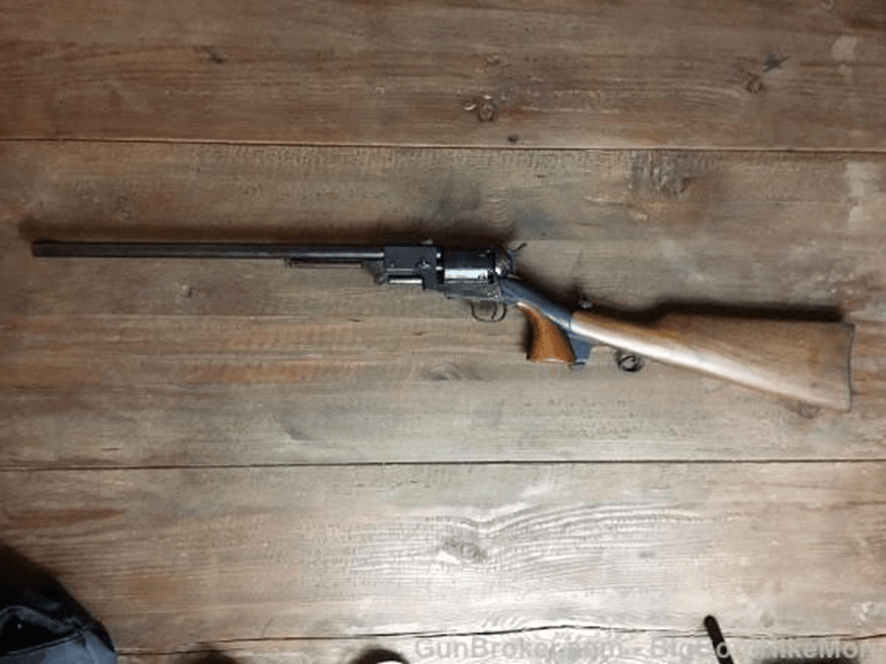
So I bought one of each, with a spare cylinder for the short gun – recognizing that the Dragoon was nearly equivalent to a model 1873 Winchester carbine, and that the Remington pattern revolver, with a spare cylinder, was nearly equivalent to a cartridge revolver.
There has been a couple of significant improvements for caplock revolver reliability in the past few years – wonder wads have the original purpose of reducing the possibility of multiple discharges, but can also be used to load the revolver with the equivalent of a .410 shotgun load of birdshot. The other new development is percussion cap keepers – small vinyl tubes that surround the percussion cap, keeping it from falling off due to impacts and recoil. They are a bit easier to use than in Wild Bill Hickock’s day.
Yet despite having more efforts at gun bans, the Supreme Court has reached the conclusion that “shall not be infringed” means what it says. The gun banners seem to realize that their desired legislation is not constitutional. Now, we just have to see how the court cases on pistol braces come out. The issue of gun control in my lifetime has turned out far better than I had expected.
-
Rural Americans aren’t included in inflation figures – and for them, the cost of living may be rising faster
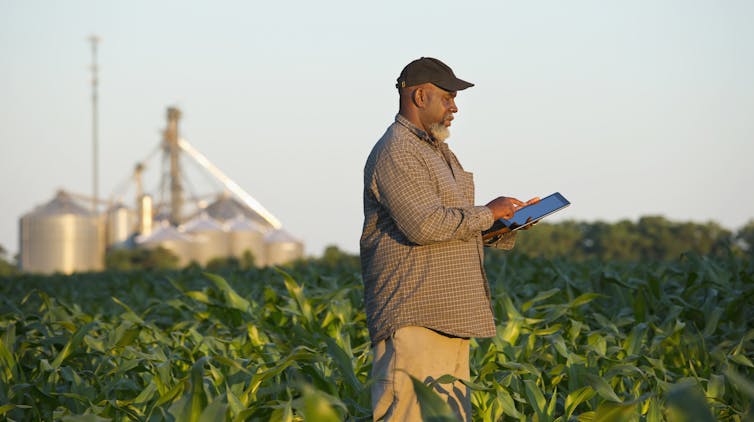
Calculating the cost of living in the country. Ariel Skelley/Getty Images Stephan Weiler, Colorado State University and Tessa Conroy, University of Wisconsin-Madison
When the Federal Reserve convenes at the end of January 2023 to set interest rates, it will be guided by one key bit of data: the U.S. inflation rate. The problem is, that stat ignores a sizable chunk of the country – rural America.
Currently sitting at 6.5%, the rate of inflation is still high, even though it has fallen back slightly from the end of 2022.
The overall inflation rate, along with core inflation – which strips out highly volatile food and energy costs – is seen as key to knowing whether the economy is heating up too fast, and guided the Fed as it imposed several large 0.75 percentage point interest rate increases in 2022. The hope is that raising the benchmark rate, which in turn increases the costs of taking out a bank loan or mortgage, for example, will help reduce inflation back to the Fed target of around 2%.
But the main indicator of inflation, the consumer price index, is compiled by looking at the changes in price specifically urban Americans pay for a set basket of goods. Those living in rural America are not surveyed.
As economists who study rural America, we believe this poses a problem: People living outside America’s cities represent 14% of the U.S. population, or around 46 million people. They are likely to face different financial pressures and have different consumption habits than urbanites.
The fact that the Bureau of Labor Statistics surveys only urban populations for the consumer price index makes assessing rural inflation much more difficult – it may even be masking a rural-urban inflation gap.
To assess if such a gap exists, one needs to turn to other pricing data and qualitative analyses to build a picture of price growth in nonurban areas. We did this by focusing on four critical goods and services in which rural and urban price effects may be significantly different. What we found was rural areas may indeed be suffering more from inflation than urban areas, creating an underappreciated gap.
1. The cost of running a car in the country
Higher costs related to cars and gas can contribute to a urban-rural inflation gap, severely eating into any discretionary income for families outside urban areas, a 2022 report found.
This is likely related to there being considerable differences in vehicle purchases, ownership and lengths of commutes between urban and rural Americans.
Car ownership is integral to rural life, essential for getting from place to place, whereas urban residents can more easily choose cheaper options like public transit, walking or bicycling. This has several implications for expenses in rural areas.
Rural residents spend more on car purchases out of necessity. They are also more likely to own a used car. During the first year of the COVID-19 pandemic, there was a huge increase in used car prices as a result of a lack of new vehicles due to supply chain constraints. These price increases likely affected remote areas disproportionately.
Rural Americans tend to drive farther as part of their day-to-day activities. Because of greater levels of isolation, rural workers are often required to make longer commutes and drive farther for child care, with the proportion of those traveling 50 miles (80 kilometers) or more for work having increased over the past few years. In upper Midwest states as of 2018, nearly 25% of workers in the most remote rural counties commute 50 miles (80 kilometers) or more, compared with just over 10% or workers in urban counties.
Longer journeys mean cars and trucks will wear out more quickly. As a result, rural residents have to devote more money to repairing and replacing cars and trucks – so any jump in automotive inflation will hit them harder.
Though fuel costs can be volatile, periods of high energy prices – such as the one the U.S. experienced through much of 2022 – are likely to disproportionately affect rural residents given the necessity and greater distances of driving. Anecdotal evidence also suggests gas prices can be higher in rural communities than in urban areas.
2. Rising cost of eating at home – and traveling for groceries
As eating away from home becomes more expensive, many households may choose to eat in more often to cut costs. But rural residents already spend a larger amount on eating at home – likely due in part to the slimmer choices available for eating out.
This means they have less flexibility as food costs rise, particularly when it comes to essential grocery items for home preparation. And with the annual inflation of the price of groceries outpacing the cost eating out – 11.8% versus 8.3% – dining at home becomes comparably more expensive.
Rural Americans also do more driving to get groceries – the median rural household travels 3.11 miles (5 kilometers) to go to the nearest grocery store, compared with 0.69 miles (1.1 kilometers) for city dwellers. This creates higher costs to feed a rural family and again more vehicle depreciation.
Rural grocery stores are also dwindling in number, with dollar stores taking their place. As a result, fresh food in particular can be scarce and expensive, which leads to a more limited and unhealthy diet. And with food-at-home prices rising faster than prices at restaurants, the tendency of rural residents to eat more at home will see their costs rising faster.
3. The cost of growing old and ill outside cities
Demographically, rural counties trend older – part of the effect of younger residents migrating to cities and college towns for either work or educational reasons. And older people spend more on health insurance and medical services. Medical services overall have been rising in cost too, so those older populations will be spending more for vital doctors visits.
Again with health, any increase in gas prices will disproportionately hit rural communities more because of the extra travel needed to get even primary care. On average, rural Americans travel 5 more miles (8 kilometers) to get to the nearest hospital than those living in cities. And specialists may be hundreds of miles away.
4. Cheaper home costs, but heating and cooling can be expensive
Rural Americans aren’t always the losers when it comes to the inflation gap. One item in rural areas that favors them is housing.
Outside cities, housing costs are generally lower, because of more limited demand. More rural Americans own their homes than city dwellers. Since owning a home is generally cheaper than renting during a time of rising housing costs, this helps insulate homeowners from inflation, especially as housing prices soared in 2021.
But even renters in rural America spend proportionately less. With housing making up around a third of the consumer price index, these cost advantages work in favor of rural residents.
However, poorer-quality housing leaves rural homeowners and renters vulnerable to rising heating and cooling costs, as well as additional maintenance costs.
Inflation – a disproportionate burden
While there is no conclusive official quantitative data that shows an urban-rural inflation gap, a review of rural life and consumption habits suggests that rural Americans suffer more as the cost of living goes up.
Indeed, rural inflation may be more pernicious than urban inflation, with price increases likely lingering longer than in cities.
Stephan Weiler, Professor of Economics, Colorado State University and Tessa Conroy, Economic Development Specialist, University of Wisconsin-Madison
This article is republished from The Conversation under a Creative Commons license. Read the original article.
-
Let me start with a bit of humility – I have competed against good shooters. I wasn’t at the bottom of the heap, but normally four or five competitors were between me and the top. I performed at that area where I was treated politely by the top competitors, who, on a bad day might shoot at my level, but normally didn’t. In any endeavor, the hardest place for an athlete is being almost good enough. The nice thing about competitive shooting is that it isn’t like football or boxing – you just lose the match on points, and don’t have to take a physical beating. And honest humility isn’t a bad thing.
That said, I think the spot to learn is Bullseye (folks are beginning to call it precision pistol). The website mtrpa.org describes the requirements – basically a 22 handgun and a 45 for the minimum investment:
“This format got its start as a way to combine shooting with the civilian’s .22, the police officer’s .38 revolver and the military man’s 1911 .45 auto. As the 1911 accuracy improved, however, shooters began to use the .45 for both center-fire and .45 matches, and today it is rare to see a pure center-fire pistol.”
For learning, start with a decent .22 pistol or revolver, get the Bullseye targets for reduced ranges, then practice. The scores will tell you how you’re doing – and reduced targets can be set for 50 ft ranges. The nice thing about Bullseye is the standard ranges are 25 and 50 yards – distances that are realistic where we live.
The B-16 is the standard 25 yard slow fire target – 10.5”x12”.

If your group is too large at 25 yards, go ahead and get a closer shot, and when that becomes comfortable, go back out to 25 yards.
The Civilian Marksmanship Program even offers a class on how to shoot bullseye – the description is at the link. You will note from the picture that you’re even allowed to use two hands – I recall using two hands years ago, and receiving the patient, condescending criticism “If Colonel Colt had wanted you to use two hands on his revolver, he would have put two handles on it.”

I think these ladies are using Glocks – I prefer the 1911A1, which is something like a Glock, but with a steel frame and is the handgun that started the business.
I recall an old gentleman who showed up at Whittington Center with his 1911 and a white cane about 35 years ago. Despite being legally blind, he beat my slow fire score by 7 points. I thought that he might have a lesson for me, so I asked. He explained “Son, you just have too many distractions – all I can see clearly is the front sight, so I concentrate on it.” I’m older now, but I’m pretty certain he was always a better shot.
-
In the seventies, our snow-water records were Jay Penney’s hand-written notes that he brought along while we conducted snow surveys and Phil Farnes’ files in Bozeman. Now, the records are online, and we don’t even have to do the math. Still, this last cold snap and snowfall demonstrates why the percentage of normal isn’t a great measurement in early winter.
This two week plot shows Grave Creek nudging normal on February 21 with a couple of inches of precipitation showing up.

The next chart lets us see that we’ll need 3 inches more of precipitation to bring us up to normal by April 1 – and that’s not an unlikely thing.

As we go through March and April, temperatures begin to make a difference in precipitation and snowpack. Going back through 2012 to 2022, the April 1 temperatures at Stahl Peak vary considerably:
Date Year Temp
April 1 2012 28.9 F
April 1 2013 40.5 F
April 1 2014 26.1 F
April 1 2015 27.9 F
April 1 2016 40.5 F
April 1 2017 31.8 F
April 1 2018 22.5 F
April 1 2019 Not Recorded
April 1 2020 11.8 F
April 1 2021 36.9 F
April 1 2022 29.1 FWe could calculate standard deviation . . . and even go back to 1989 for temperature data on the site – but the most significant data is that snow melts when the temperature is over 32 degrees Fahrenheit. Three of the ten recorded years show melting snow, and seven do not. Here, we can see the maximum and minimum temperatures that have been recorded this year (for those who notice, the hydrologic year begins on October 1).

-
I’m reading an article on biblical archaeology. While I have thought this might be a scientific article, I’m not certain. It doesn’t seem particularly religious in nature – but I’m not sure that I can trust the conclusions.
“It might seem strange, but in the days of the biblical kings, wine flavored with vanilla was a hit. We are not just talking about vanilla overtones, though. According to a recent study by the Israel Antiquities Authority (IAA) and Tel Aviv University, the kings and royals of biblical Judah directly infused their wine with this luxury spice. This is despite the valuable spice having previously been unknown from the Old World before the time of Christopher Columbus. The study demonstrates the wealth and power of Judah and its biblical kings in the days right before the Babylonian destruction of Jerusalem in 586 B.C.E.”
Another article covers the residue in the same wine containers:
“In the year 586 B.C.E., the Babylonians laid waste to Jerusalem in a fury at the rebellion by King Zedekiah of Judah. Ahead of which, we learn – at least some of the elites in Jerusalem were drinking their wine flavored with exotic vanilla, archaeologists revealed on Tuesday.
This startling discovery was a result of residue analysis of shattered wine jars from the time of King Zedekiah, found in two destroyed buildings in Iron Age Jerusalem, researchers from Tel Aviv University and the Israel Antiquities Authority announced. Signals of vanilla were found in five of eight jars, says Dr. Yiftah Shalev of the IAA . . . The analysis was performed by Ayala Amir, a doctoral student at Tel Aviv University, performing the tests in laboratories at the Weizmann Institute, Rehovot, and Bar-Ilan University, Ramat Gan. “Vanilla markers are an unusual find, especially in light of the fire that occurred in the buildings where the jars were found. The results of the analysis of the organic residues allow me to say with confidence that the jars contained wine and that it was seasoned with vanilla,” she said.”
OK, the Authority and Tel Aviv University seems to be a solid source. I’m sure they know Israel Antiquities better than I – my archaeology is pretty much limited to North America. And I’m a bit of an aggie – kind of up on the crops that were developed by American Indians. And I’m pretty sure that my international ag class taught me that Vanilla was one of those crops developed by American Indians. Fortunately, the internet offers the other side:
“Long before Europeans took to vanilla’s taste, the creeping vine grew wild in tropical forests throughout Mesoamerica. While the Totonac people of modern-day Veracruz, Mexico, are credited as the earliest growers of vanilla, the oldest reports of vanilla usage come from the pre-Columbian Maya. The Maya used vanilla in a beverage made with cacao and other spices. After conquering the Totonacan empire, the Aztecs followed suit, adding vanilla to a beverage consumed by nobility and known as chocolatl.
The Spanish conquest of the Aztecs in 1519 brought the fragrant flower—and its companion, cacao—to Europe. Vanilla was cultivated in botanical gardens in France and England, but never offered up its glorious seeds. Growers couldn’t understand why until centuries later when, in 1836, Belgian horticulturist Charles Morren reported that vanilla’s natural pollinator was the Melipona bee, an insect that didn’t live in Europe. (A recent study, however, suggests that Euglossine bees may actually be the orchid’s primary pollinator.)
Five years later, on the island of Réunion, a 39-mile long volcanic hotspot in the Indian Ocean, everything changed. In 1841, an enslaved boy on the island named Edmond Albius developed the painstaking yet effective hand-pollination method for vanilla that is still in use today, which involves exposing and mating the flower’s male and female parts. His technique spread from Réunion to Madagascar and other neighboring islands, and eventually worked its way back to Mexico as a way to augment the vanilla harvest pollinated by bees.”
https://www.smithsonianmag.com/science-nature/bittersweet-story-vanilla-180962757/So I don’t have an answer to how vanilla got into wine jars in Jerusalem 1500 years before Cortez ran across it in Mexico. From the stories I’ve read, it wouldn’t be the first case of divine intervention ever heard of around Jerusalem. It’s possible – but we have some fairly solid dates that tell us when Vanilla made it to the old world. There are histories and voyages that were never recorded. But this research strikes me as needing a little more verification.

Want to tell us something or ask a question? Get in touch.

Recent Posts
- Watching Iran
- The Quality of Numbers
- Robert Treat Payne Had Traveled To Greenland
- 75 Years Ago in New York
- Recovery Time for a Retiree
- Venn Diagram and DSM
- When Castro Was Cool
- You Have To Beat Darwin Every Day
- Computer Repair by Mussolini
- Getting Alberta Oil to Market
- Parties On Economics
- Thus Spake Zarathustra – One More Time
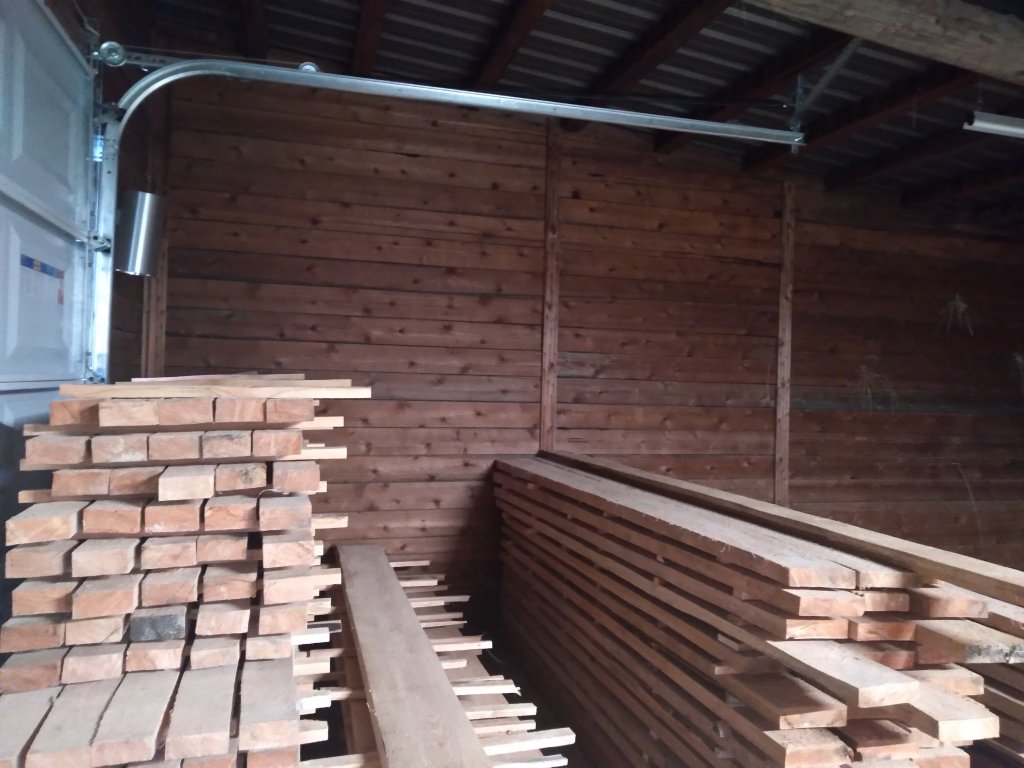
Rough Cut Lumber
Harvested as part of thinning to reduce fire danger.
$0.75 per board foot.
Call Mike (406-882-4835) or Sam (406-882-4597)
Popular Posts
Ask The Entomologist Bears Books Canada Census Community Decay Covid Covid-19 Data Deer Demography Education Elections family Firearms Game Cameras Geese Government Guns History Inflation life Lincoln County Board of Health Lincoln County MT Lincoln Electric Cooperative Montana nature News Patches' Pieces Pest Control Politics Pond Recipe School School Board Snow Taxes Teaching travel Trego Trego Montana Trego School Weather Wildlife writing
 Trego's Mountain Ear