-
I’m reading an article on biblical archaeology. While I have thought this might be a scientific article, I’m not certain. It doesn’t seem particularly religious in nature – but I’m not sure that I can trust the conclusions.
“It might seem strange, but in the days of the biblical kings, wine flavored with vanilla was a hit. We are not just talking about vanilla overtones, though. According to a recent study by the Israel Antiquities Authority (IAA) and Tel Aviv University, the kings and royals of biblical Judah directly infused their wine with this luxury spice. This is despite the valuable spice having previously been unknown from the Old World before the time of Christopher Columbus. The study demonstrates the wealth and power of Judah and its biblical kings in the days right before the Babylonian destruction of Jerusalem in 586 B.C.E.”
Another article covers the residue in the same wine containers:
“In the year 586 B.C.E., the Babylonians laid waste to Jerusalem in a fury at the rebellion by King Zedekiah of Judah. Ahead of which, we learn – at least some of the elites in Jerusalem were drinking their wine flavored with exotic vanilla, archaeologists revealed on Tuesday.
This startling discovery was a result of residue analysis of shattered wine jars from the time of King Zedekiah, found in two destroyed buildings in Iron Age Jerusalem, researchers from Tel Aviv University and the Israel Antiquities Authority announced. Signals of vanilla were found in five of eight jars, says Dr. Yiftah Shalev of the IAA . . . The analysis was performed by Ayala Amir, a doctoral student at Tel Aviv University, performing the tests in laboratories at the Weizmann Institute, Rehovot, and Bar-Ilan University, Ramat Gan. “Vanilla markers are an unusual find, especially in light of the fire that occurred in the buildings where the jars were found. The results of the analysis of the organic residues allow me to say with confidence that the jars contained wine and that it was seasoned with vanilla,” she said.”
OK, the Authority and Tel Aviv University seems to be a solid source. I’m sure they know Israel Antiquities better than I – my archaeology is pretty much limited to North America. And I’m a bit of an aggie – kind of up on the crops that were developed by American Indians. And I’m pretty sure that my international ag class taught me that Vanilla was one of those crops developed by American Indians. Fortunately, the internet offers the other side:
“Long before Europeans took to vanilla’s taste, the creeping vine grew wild in tropical forests throughout Mesoamerica. While the Totonac people of modern-day Veracruz, Mexico, are credited as the earliest growers of vanilla, the oldest reports of vanilla usage come from the pre-Columbian Maya. The Maya used vanilla in a beverage made with cacao and other spices. After conquering the Totonacan empire, the Aztecs followed suit, adding vanilla to a beverage consumed by nobility and known as chocolatl.
The Spanish conquest of the Aztecs in 1519 brought the fragrant flower—and its companion, cacao—to Europe. Vanilla was cultivated in botanical gardens in France and England, but never offered up its glorious seeds. Growers couldn’t understand why until centuries later when, in 1836, Belgian horticulturist Charles Morren reported that vanilla’s natural pollinator was the Melipona bee, an insect that didn’t live in Europe. (A recent study, however, suggests that Euglossine bees may actually be the orchid’s primary pollinator.)
Five years later, on the island of Réunion, a 39-mile long volcanic hotspot in the Indian Ocean, everything changed. In 1841, an enslaved boy on the island named Edmond Albius developed the painstaking yet effective hand-pollination method for vanilla that is still in use today, which involves exposing and mating the flower’s male and female parts. His technique spread from Réunion to Madagascar and other neighboring islands, and eventually worked its way back to Mexico as a way to augment the vanilla harvest pollinated by bees.”
https://www.smithsonianmag.com/science-nature/bittersweet-story-vanilla-180962757/So I don’t have an answer to how vanilla got into wine jars in Jerusalem 1500 years before Cortez ran across it in Mexico. From the stories I’ve read, it wouldn’t be the first case of divine intervention ever heard of around Jerusalem. It’s possible – but we have some fairly solid dates that tell us when Vanilla made it to the old world. There are histories and voyages that were never recorded. But this research strikes me as needing a little more verification.
-
Cooler, dryer


-
I’m seeing news flashes describing the chemical spills that resulted from a derailment in Ohio – some sound like the chemical equivalent of Chernobyl. Others point out that Pete Buttigieg just isn’t up to the job as secretary of transportation.
Rail transportation is a fairly intense business from what I hear – and, since the mainline is about a mile away, I hear the trains and the whistles. Since the spur line is even closer, I hear that little train. Living close to the trains and listening to the whistles doesn’t qualify me to critique the handling of chemical spills – but I have read Merton’s 1936 article “Unanticipated Consequences of Purposive Social Action” https://kamprint.com/essay/merton.html It isn’t a great stretch to move Merton’s observations into the present – and I have often assigned the essay as a reading assignment.
Still, as I read the wailings of environmental degradation in East Palestine, I think back to a simpler time, with a derailment near the continental divide, and a huge grain spill. I have no idea who made the decision to bury the grain, pull the damaged cars out, and get things back to normal as quickly as possible – but, with the benefit of 20/20 hindsight, I can describe the knowledge that wasn’t considered in deciding how to handle the problem.
“Party animal” takes on a whole new meaning when you’re talking about drunken grizzly bears, and Glacier National Park officials want no more of them, thank you.
They are taking special steps to ensure that hundreds of tons of corn spilled along the park’s southern edge in a train derailment Sunday doesn’t ripen into a boozy smorgasbord for all the bears in the area – as happened in 1985.Burlington Northern crews tried to clean up the 1985 corn spill but left much that couldn’t be salvaged. Bears, both black and grizzly, were often spotted feeding on the corn.
By spring of 1987 the corn had fermented, and officials began receiving reports about bears getting tipsy after eating the spoiled spillage.”
https://www.deseret.com/1988/12/24/18788931/spilled-corn-a-temptation-for-glacier-bearsObviously, the railroad decision-maker had no significant experience with moonshining. He had no idea that burying the damp grain next to the stream would create an environment favorable to its fermentation . . . the old moonshiners would have known. They handled grain similarly as they made the mash that they would distill into whisky. While we weren’t moonshining, Dad had us handle grain that way to feed the pig – we didn’t have a grinder, and mash was more digestible than unprocessed barley.
Which leads to the next area of ignorance – both bears and pigs like alcohol infused meals. I’m no biologist – but as an aggy, I have some general information. I’m not surprised that grizzlies can smell out and dig down to fermented mash. I’m not surprised that drunken grizzlies can be obnoxious. Still, knowledge of fermenting mash, grizzly digging behavior, and how bears behave when drunk isn’t probably part of a railroad damage control man’s preparatory curriculum.

At any rate, the unanticipated consequence of the grain spill by the divide was signage, telling drivers not to stop along this stretch of highway. The signs didn’t read “the grain is in the valley, and the griz is on the grain” – but that’s what they meant.
As Merton reminds us, not all unanticipated consequences are bad. The problem is, we tend to focus on solving one problem, and we fail to anticipate the other problems that our solutions can create.
-
Iron and materials containing iron give off sparks when ground, but other metals do not spark for grinding. Why? This is a surprisingly complex question that involved more concepts from teaching high school chemistry than I initially expected. The short answer is, of course, because it’s iron.
The physical process of grinding does a few things. It adds energy via friction. It produces small fragments, depending on the tensile strength of the metal (some metals shatter while others will deform) that are flung away due to the kinetic energy of the grinding. One potential explanation for the difference in outcomes is simply that softer metals will experience less friction (and thus a lower increase in thermal energy).
Fragments of metal (warm) contain newly exposed surface which then has the opportunity to oxidize. Oxidization is a really fundamental process- it’s the process we typically try to prevent in food in the kitchen, the process by which fire burns, and the process by which our bodies turn food into energy. Oxidation is typically a spontaneous process, a reaction that wants to happen.
Metal oxides are formed by the interaction of a metal with oxygen. Copper oxides are responsible for the greenish hue of the statue of liberty, while the lead oxides that form on batteries leads reduce conductivity over time (oxides are better insulators than the metals they are formed from).
In chemistry, when we consider the likelihood of a reaction, and the energy released, we look at values of free energy and enthalpy (heat of formation). These are experimentally determined and relatively straight forward to look up. These tell us which compounds should release the most energy when they are formed (the more negative, the more energy released to the surroundings)
Metal Oxide Enthalpy (kJ/mol) Aluminum Oxide –1676 Copper (I) Oxide -157.3 Copper (II) Oxide -168.6 Iron (III) Oxide -824.2 Iron (II,III) Oxide -1118.4 Lead (II) Oxide -218.99 All of these metal oxides are formed by exothermic reactions, that is, the formation of the oxide releases energy, giving off heat to the environment. The copper and lead oxides are relatively mildly exothermic, but aluminum oxide is substantially more exothermic than the iron oxides (though those are much more so than copper or lead).
So why doesn’t aluminum oxide spark? Heat of formation isn’t the whole story. Once we know the amount of energy generated, we still need to consider what the actual change in temperature is.
This is another value. Different substances absorb temperature differently. Water, for example, is extremely good at absorbing energy without changing temperature- it has a high specific heat capacity.
Metal Oxide Solid Heat capacity (J/mol K) Aluminum Oxide 102.42 Copper (I) Oxide 59.42 Copper (II) Oxide 42.24 Iron (III) Oxide 103.7 Iron (II,III) Oxide 147.2 Lead (II) Oxide 51.65 For Iron and Aluminum, even heat capacity doesn’t provide the whole story. The table compares heat capacity of solids- apples to apples, as it were. But Iron oxides and aluminum oxides also don’t have the same melting temperature. The difference is well over a thousand degrees, and a huge decrease in heat capacity.
Liquid iron oxides change temperature in response to energy much more readily, and so get hotter than do aluminum oxides. Additionally, once an aluminum oxide forms, the reaction typically stops. Aluminum oxide is an excellent insulator.
Conclusion: Copper really doesn’t generate all that much energy when it oxidizes, neither does lead, and should be pretty safe. Aluminum is a bit more complicated, and it really should be possible to get aluminum to spark under the right circumstances. Iron and iron containing compounds will certainly spark for grinding.
And of course, Aluminum and Iron powders are a very risky combination- but more on that another time.
-
Psychopaths: why they’ve thrived through evolutionary history – and how that may change

Petr Bonek/Shutterstock Jonathan R Goodman, University of Cambridge
When you start to notice them, psychopaths seem to be everywhere. This is especially true of people in powerful places. By one estimate, as many as 20% of business leaders have “clinically relevant levels” of psychopathic tendencies – despite the fact as little as 1% of the general population are considered psychopaths. Psychopaths are characterised by shallow emotions, a lack of empathy, immorality, anti-social behaviour and, importantly, deceptiveness.
From an evolutionary point of view, psychopathy is puzzling. Given that psychopathic traits are so negative, why do they remain in successive generations? Psychopathy seems to be, in the words of biologists, “maladaptive”, or disadvantageous. Assuming there’s a genetic component to this family of disorders, we’d expect it to decrease over time.
But that’s not what we see — and there’s evidence that the tendencies are, at least in some contexts, an evolutionary benefit. According to my own research, the reason for this may be down to the ability to fake desirable qualities through deception.
The power of cheating
Trust and trustworthiness are important elements in the story of human social evolution. The most successful people, evolutionarily speaking, are the ones regarded as trustworthy or reliable.
Trust further encourages cooperation, which has helped us to develop tools, build cities and spread across the world — even to the most inhospitable environments. No single other species has achieved this, making human cooperation a wonder of the natural world.
Yet once our cultural groups became too large to know everyone individually, we needed to find ways to ensure the people we met were likely to be cooperative. It’s easier to trust a parent or sibling when hunting in the wild than to trust a stranger — the stranger might attack you or refuse to share any meat with you.
To cooperate with a stranger takes trust – they have to convince you they’ll do no harm. But they could, of course, cheat by pretending to be trustworthy and thereafter killing you or stealing your meat.
Cheaters who pull this off will be at an advantage: they’ll have more food and probably be thought of as good hunters by other, unsuspecting people. So cheating posed a problem for non-cheaters.
Therefore it is thought that cultural groups developed powerful tools, such as punishment, to dissuade cheating in cooperative partnerships. Evolutionary psychologists also argue that people evolved what’s called a cheater detection ability to tell when someone is likely to be a cheater. This put cheaters at a disadvantage, especially in groups where punishment was strict.
This approach relied on the ability to trust others when it is safe to do so. Some people argue that trust is just a kind of cognitive shortcut: rather than making slow and deliberative decisions about whether someone is trustworthy, we look for a few signals, probably subconsciously, and decide.
We do this every day. When we walk by a restaurant and decide whether to stop in for lunch, we choose whether to trust that the people running it are selling what they advertise, whether their business is hygienic and whether the cost of a meal is fair. Trust is a part of daily life, at every level.
Yet this presents us with a problem. As I suggest in my research, the more complex society is, the easier it is for people to fake a proclivity for cooperation — whether that’s charging too much at a store or running a multi-national social media company ethically. And cheating while avoiding punishment is, evolutionarily speaking, still the best strategy a person can have.

‘No really, you can trust me.’ So, within this framework, what could be better than being a psychopath? It’s effective, to misuse a popular modern phrase, to “fake it till you make it”. You garner trust from others only insofar as that trust is useful to you and then betray trust when you no longer need those people.
Viewed in this way, it’s surprising there aren’t more psychopaths. They occupy a disproportionate number of powerful positions. They don’t tend to feel the burden of remorse when they misuse others. They even appear to have more relationships — suggesting that they face no barriers to successful reproduction, the defining criterion of evolutionary success.
Why not more psychopaths?
There are a few convincing theories about why these disorders aren’t more common. Clearly, if everyone were a psychopath, we’d be betrayed constantly and probably completely lose our ability to trust others.
What’s more, psychopathy is almost undoubtedly only partly genetic and has a lot to do with what’s called “human phenotypic plasticity” — the innate ability for our genes to express differently under different circumstances.
Some people think, for example, that the callous and unemotional traits associated with psychopathy are consequences of a difficult upbringing. Insofar as very young children do not receive care or love, they are likely to turn off emotionally — a kind of evolutionary fail-safe to prevent catastrophic trauma.
That said, people from different countries don’t associate the same traits with psychopathy. For example, a cross-cultural study showed that Iranian participants did not, in contrast to Americans, rate deceitfulness and superficiality as indicative of psychopathy. But the general idea is that while some people have a genetic predisposition to such traits, the tendencies develop mainly in tragic family circumstances.
People with a morbid fascination with psychopathy should be aware that the object of their interest often is a sad product of the failures of society to support people.
The cultural context of psychopathy may be a point of hope, however. Psychopathy, at least in part, is a set of characteristics that allows people to thrive — again, evolutionarily speaking — even when faced with terrible hardship. But we can, as a society, try to redefine what desirable qualities are.
Rather than focusing on being good or trustworthy only because of how it can help you get ahead, promoting these qualities for their own sake may help people with antisocial tendencies to treat others well without ulterior motives.
That’s probably a lesson we can all learn — but in a world where pathological fakers are the ones who tend to be celebrated and successful, redefining success in terms of ethics may be a way forward.
The amazing thing about evolution is that we can ultimately help shape it.
Jonathan R Goodman, Researcher, Human Evolutionary Studies, University of Cambridge
This article is republished from The Conversation under a Creative Commons license. Read the original article.
-
With the amount of conversations going on as ATF tries to redefine rifles and short barrelled rifles, and the definitions going way back, I realized most people can’t remember the immediate aftermath of GCA68 – I was 18. It was a time of stress and inconvenience. I remember, distinctly, having to show ID, and sign with name and address just to buy a box of 22 shells.
GCA68 passed after the assassinations of Martin Luther King and Bobby Kennedy – and changed the way guns were sold in the US by mandating federal licensing for retail sales, manufacturers, importers, etc. – all the things we think are normal today. When it passed, I had a 22 rifle Mom had bought for me at the PX, a 22 pistol that Dad got for me at Montgomery Wards, and and 03A3 I’d picked up in a hardware store – face it, at 18, I hadn’t had the opportunity or cash to take advantage of the old system. Still, here are some of the ads from those golden days. The top rifle in the right hand column is a long barrelled version of the rifle Oswald used – and President Kennedy’s assassination was less than 5 years in the past when GCA68 passed.
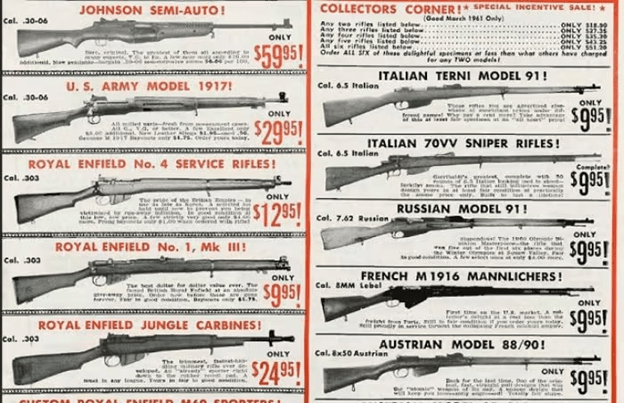
Now the thing is, in 1968 I was making $2.50 an hour – and the ad above may have been from when I was making a buck and a quarter. There were some good buys – but even good buys need capital. I wasn’t bothered by tanks in the neighborhood, and $98.50 was a lot of money, so I never took the opportunity to get an anti-tank rifle.

In 1986, President Reagan signed the Firearms Owners Protection Act – which removed parts of GCA68 that were generally accepted as unconstitutional – the big thing to me was the end of the federally required records on ammunition sales. It also banned ownership of any full-auto that wasn’t registered before May 19, 1986. I was working at TSJC at the time, and I suppose I could have squeezed enough out for the $200 tax on a frame or two – but I’ve never been a spray and pray guy – so I stayed out of my last affordable chance for a machine gun. As the ad below shows, the NFA mandated tax was a lot higher than the submachine gun.
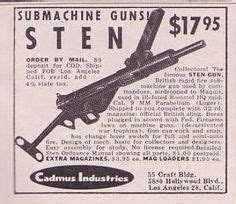
And parts kits are still available for the folks who registered a frame back in 1986 and haven’t finished their project yet . . . or want to build one as a semi-automatic.

-
What are we usually thinking about towards the end of February? The annual fishing derby, Canadian news, Trego School, and some of the early stories from the area.
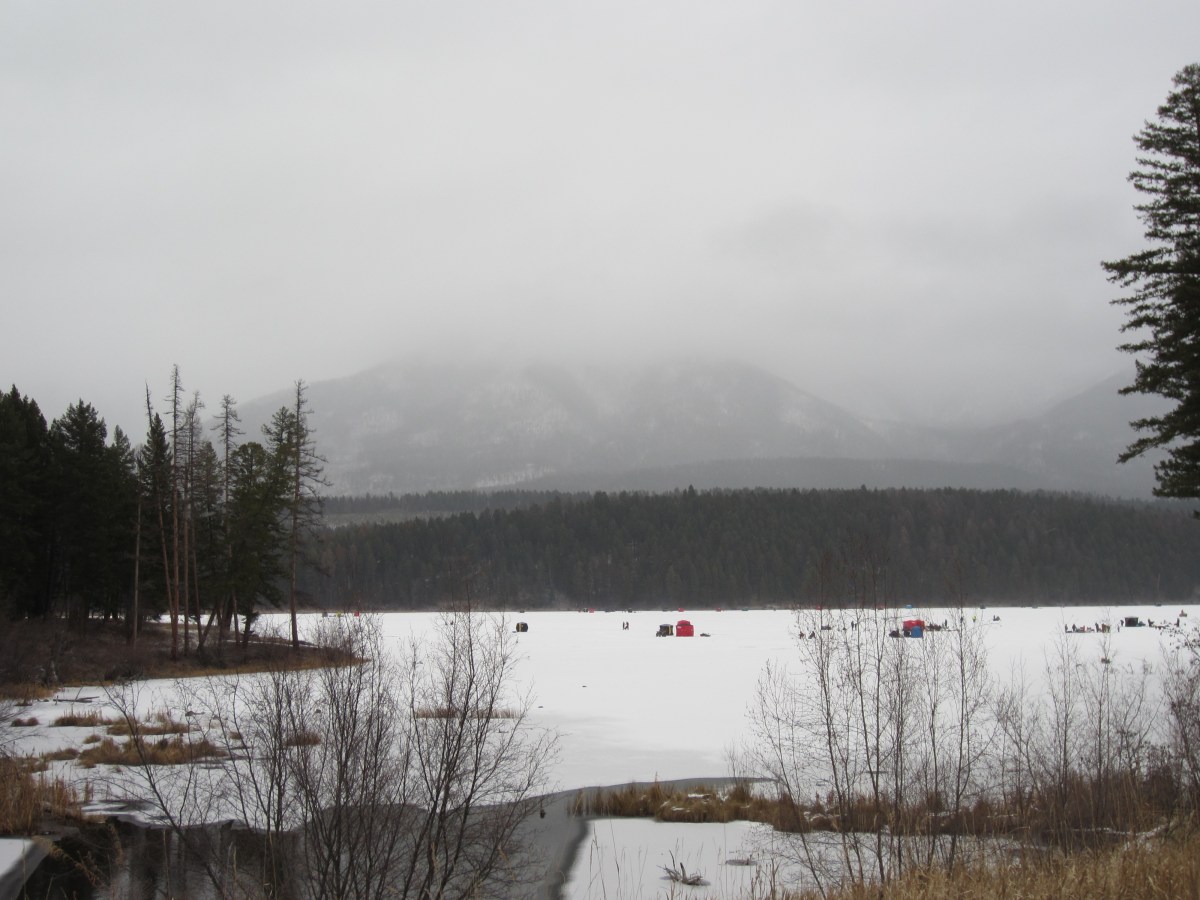
Murphy Lake was bustling for the 16th Annual Ryan Wagner Ice Fishing Derby
Murphy Lake was bustling with activity Saturday (February 6th). It was the 16th Annual Ryan Wagner Ice Fishing Derby. Money raised at the derby goes to the Ryan Wagner Memorial Scholarship, which provides scholarships to Lincoln County High School students. The scholarship fund will also accept direct donations. Parking was crowded, and the lake spotted…
Declaring an Emergency
How different is the United States from Canada? With the recent declaration of National Emergency by Prime Minister Trudeau, I’ve been curious about how National Emergencies work within the United States. Comparing the requirements of Canada’s Emergency Act with that of the United States shows that Canada has much more precise definitions, requirements for oversight…
Not All Canadians
I noticed a headline that referenced “North of the 49th Parallel” as a descriptor for Canadians. Here, where I’m 20 miles south of the 49th Parallel, that’s correct – basically the Canadians I know are north of 49. Still, they’re unusual Canadians. Toronto is further south than Sioux Falls, South Dakota. 72% of Canadians live…
Trego School Enrollment Soars
Enrollment at Trego School continues to rise, in defiance of the historical trend. For the last few decades, school enrollment has been fairly steadily dropping. How low did enrollment actually get? The lowest official ANB (Average Number Belonging -i.e. the official state count of students) that I can find is seven, in the spring of…
Stahl’s Dog
It got so lonely my dog couldn’t stand it. He went down to the Kootenai River and howled ’til the ferryman from Gateway came over and took him across to town. When a man’s dog shows up at the settlement without his master, the settlers in the valley assume, and often correctly, that it is…
Stahl’s Early Days
Edward Stahl shared a bit about his early days – the early days of Trego and Stryker – in his writings about his time at Ant Flat . . . a time when the Ranger was expected to build his own cabin, among other things. The whole story is at npshistory.com and the following excerpts…
-
The photo of a chinese balloon over Billings took my memories back to the beginnings of the US Space Program in South Dakota.
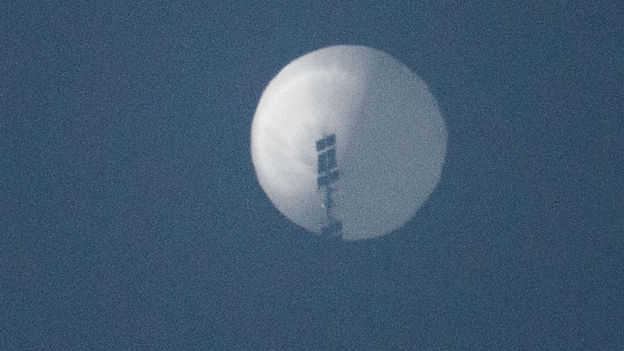
That first balloon launch preceded the US Air Force – The Beauty and History of South Dakota’s Stratobowl tells the story of the Army Air Corps and the National Geographic Society teaming their efforts for our nation’s first space travel – in the really old days when rockets were too new to use.
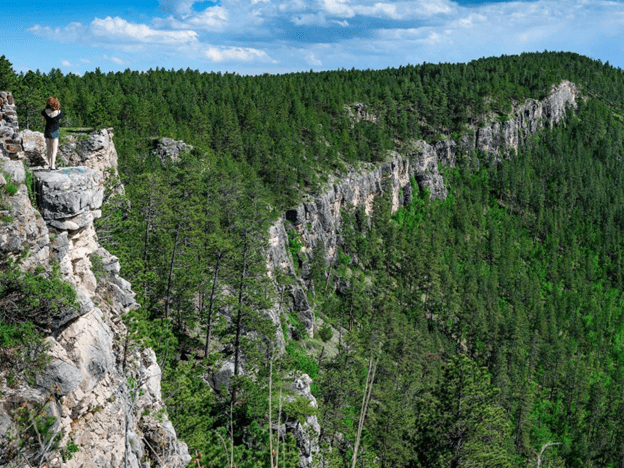
“The box canyon was an ideal place for a launch, since the natural walls could allow the balloon to be shielded from wind until it was fully inflated. But the natural assets were no guarantee of success. The first mission ended in near-disaster on July 28, 1934, when the hydrogen balloon carrying Stevens and two other crew members made it to 63,000 feet before a tear in the balloon sent the crew plummeting to the ground. All three were able to bail out safely – and later awarded the Distinguished Flying Cross – before the remaining hydrogen burst into flame. Albert was undeterred.
On November 11, 1935, Captains Stevens and Orvil Anderson ascended from the canyon in a helium balloon known as Explorer II. The pair reached a new record of 72,395 feet — a record that would last for 20 years — and snapped the very first picture to show the curvature of the Earth.
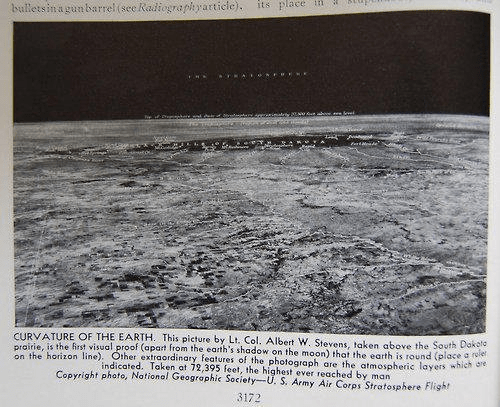
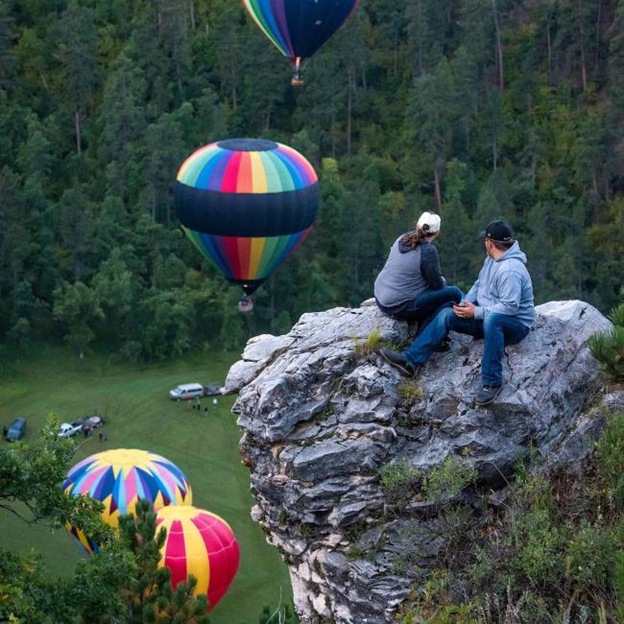
Later balloon launches used a strip-mined pit in Minnesota to provide the windbreak that would shelter balloons during inflation – but the stratobowl was the first. I never felt flush enough to take the family for a one hour hot air balloon ride launched from the stratobowl – but if you check the link above, you’ll see that those trips are available.
The wiki article https://en.wikipedia.org/wiki/Stratobowl tells more:
“In 1934 the NGS and Air Corps co-sponsored the Explorer, a mannedhigh-altitude balloon capable of stratospheric flight. After the crash of the Soviet Osoaviakhim-1 that nevertheless set an altitude record of 72,178 feet (22,000 m), the sponsors redefined their primary objectives from record-setting to scientific research and tests of new navigation instruments.[1] Air Corps Capt. Albert William Stevens, Capt. Orvil Arson Anderson and Maj. William E. Kepner were selected to fly the Explorer.[1] Kepner and Anderson, experienced balloonists, were in charge of locating a suitable launch site. According to Kepner, an ideal site would be a crater or canyon, a clear grassy valley encircled with rocky ridges high enough to shield the tall balloon from any wind.[2] Ideally, the launch site it would have a high-voltage electric line, road and rail access, “and a trout stream”.[3] Kepner and Anderson eventually located their dream canyon near Rapid City, South Dakota. City officials, fascinated by the expected publicity campaign, agreed to build a road and electric line.[3]”
The Rapid City hydro-electric plant that provided electricity to the Stratodome is still producing electricity – Doug MacDonald bought it and moved it up to the MacDonald Ranch just a little across the border north of Eureka.
-
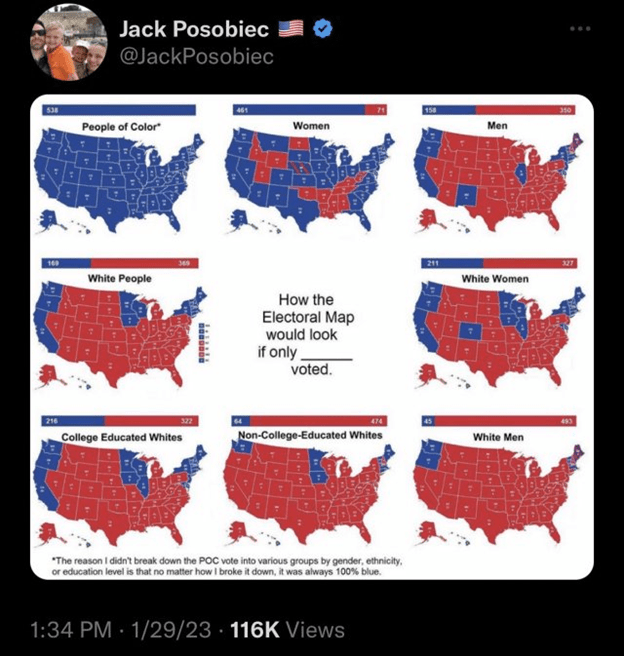
An interesting series of maps, showing how elections would turn out if only certain groups voted. I haven’t worked the math, or checked the definitions, but the maps are interesting.
-
Harrington and Richardson marketed the bicycle gun – a hammerless 5 shot revolver in 32 S&W short. Most had 2 inch barrels – Renata’s grandfather left his long-barreled version -3 inches.

There is actually a hammer concealed in the expanded frame – it should probably be termed something like ‘concealed hammer’ – but a glance at the little revolver, and the first experience with the heavy double action trigger pull, demonstrates that part of the design criteria was avoiding accidental discharge. I don’t believe pocket holsters had been developed in 1915 – the intent was a pocket revolver that was convenient for bicyclists.
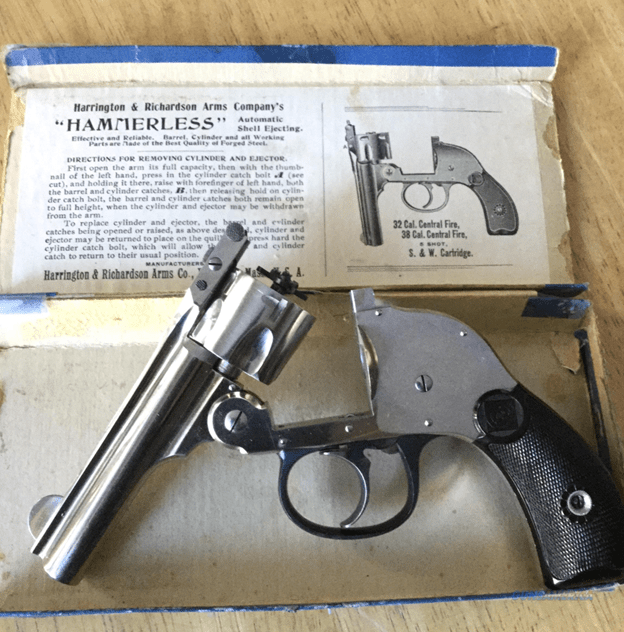
The revolver was a surprise when the old man died – none of his heirs anticipated the discovery of a small, easily concealed revolver stashed in a drawer. Renata’s challenge was getting the revolver home from Chicago – once safe in Trinidad, the next challenge was finding ammunition. With a gunsmithing school as part of the college, that didn’t take long.
Ours is a perplexing little revolver – the serial number suggests 1912 manufacture, while the barrel markings and ejector mechanism pretty well scream that it was 1915 production. I’m guessing the frame got stuck at the bottom of the pile for a couple of years.
Not a particularly valuable antique – but a neat heirloom.


Want to tell us something or ask a question? Get in touch.

Recent Posts
- The Density of Water Explains When Dickey Lake Freeze
- Watching Iran
- The Quality of Numbers
- Robert Treat Payne Had Traveled To Greenland
- 75 Years Ago in New York
- Recovery Time for a Retiree
- Venn Diagram and DSM
- When Castro Was Cool
- You Have To Beat Darwin Every Day
- Computer Repair by Mussolini
- Getting Alberta Oil to Market
- Parties On Economics
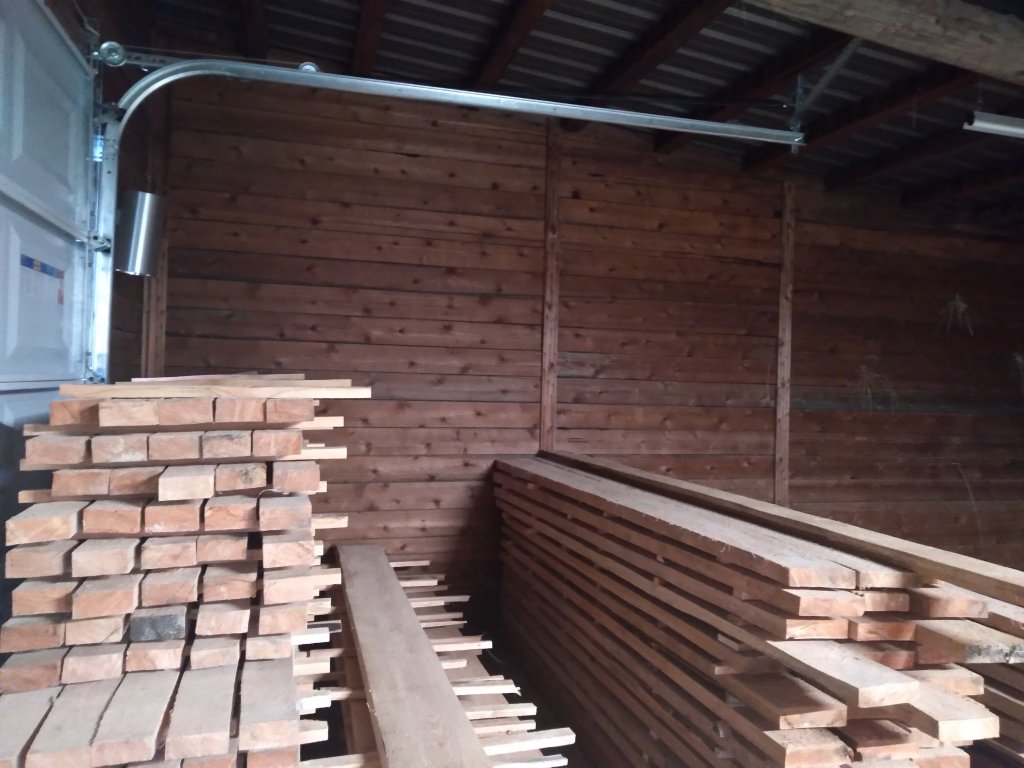
Rough Cut Lumber
Harvested as part of thinning to reduce fire danger.
$0.75 per board foot.
Call Mike (406-882-4835) or Sam (406-882-4597)
Popular Posts
Ask The Entomologist Bears Books Canada Census Community Decay Covid Covid-19 Data Deer Demography Education Elections family Firearms Game Cameras Geese Government Guns History Inflation life Lincoln County Board of Health Lincoln County MT Lincoln Electric Cooperative Montana nature News Patches' Pieces Pest Control Politics Pond Recipe School School Board Snow Taxes Teaching travel Trego Trego Montana Trego School Weather Wildlife writing
 Trego's Mountain Ear