-
It’s late September and the usual topics are relevant again. How much heat do you really get in a cord of wood (not all cords are created equal)? Do filters really help with the smoke? What is that spider? (Cat-faced spiders are in evidence this time of the year) Where are all those bugs coming from?
Firewood Rankings by Species
The change from burning forests to burning wood is coming fast – and while we use a lot of firewood, we rarely look at just how much heat each species produces, or at how much a cord weighs. This chart, from the California Energy Commission, ranks production by species, and shows the weight of a…
HEPA Filters and Wildfire Smoke
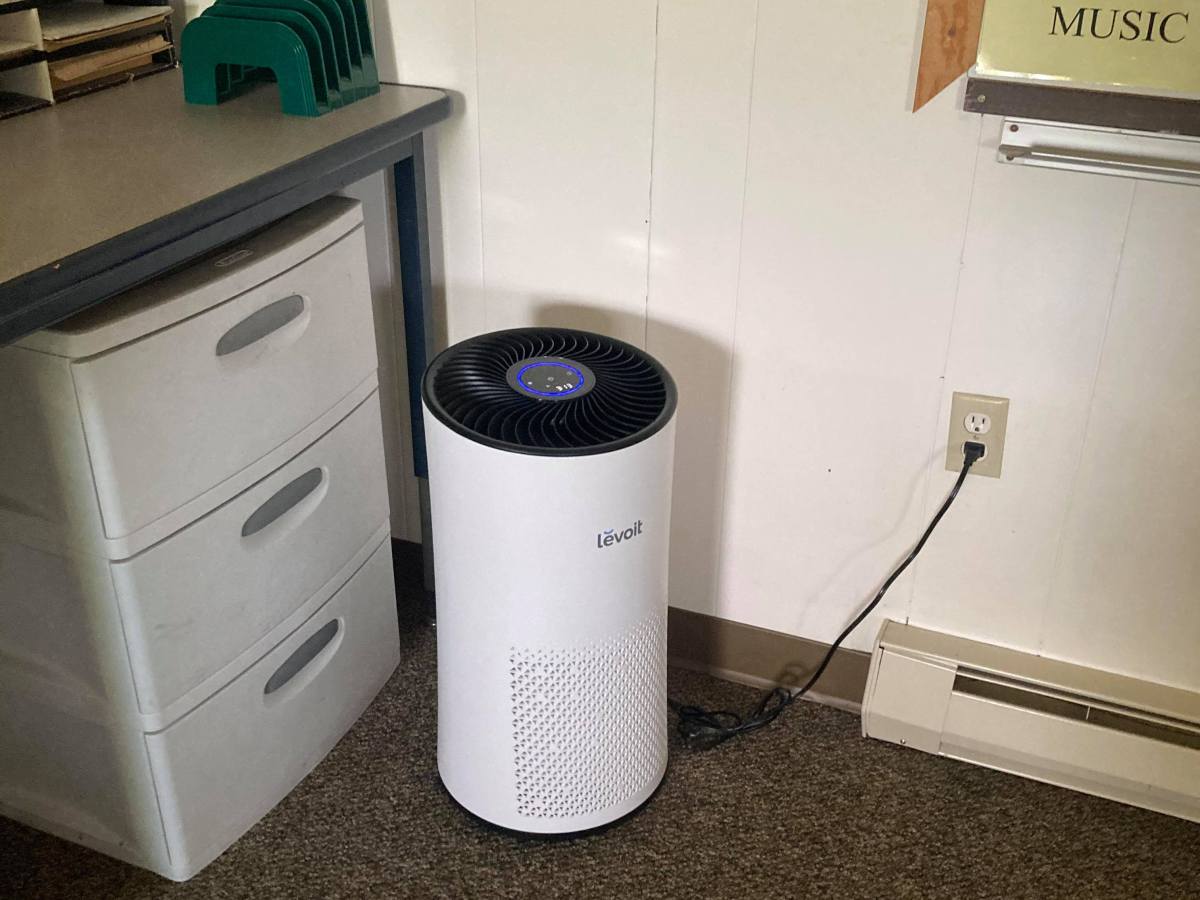
As I stepped into Trego School on a warm smoky afternoon, I developed a sudden admiration for HEPA filters. About a month ago, I wrote about the school’s new HEPA filters, purchased as part of their Health and Safety plan. As it turns out, HEPA filters are excellent for wildfire smoke. HEPA filters are good…
Ask the Entomologist: Massive spider
This past week I had an identification request from a bit closer to home. This giant spider was perched right below one of our windows and my wife wanted to know what it was. While I’d seen and admired her webs before, this was the first time I met the web’s weaver. She must have…
Refugees from the cold
As the year goes by and we feel the weather shifting towards winter, we find more and more insects in our homes. By and large, these insects are trying to get out of the cold, and find our homes just as good an answer as cracks in treestumps, downed wood, or burrows beneath the frostline.…
Fires by Year and Partial Duration Series
When I listened to the explanations that the California and Oregon fires were worse than ever, and resulted from anthropic climate change, I did what I usually do. I checked for data and found statistics at the National Interagency Fire Center. The table I found lists both number of fires, and acreage burned by year,…
-
Fruit flies are a science teacher’s nightmare. They’re a classic study for genetics- short life span, only six chromosomes. The trouble is, no matter what you do, somehow, someway, the darned things get loose. Fruit flies. Everywhere. They breed like, well, flies, and aren’t nearly as selective about diet as the name would suggest.
A fruit fly infestation is hard to get rid of, because total removal of food sources is difficult. However, the combination of fruit fly trap and removal of food sources does prove effective.
While they have a surprisingly varied diet, they do prefer fruit. Like many animals that eat fruit, they’re attracted to the smell of fermenting fruit. The bait, then? Apple Cider Vinegar.

What makes your cup (disposable- easier to throw the whole thing out that way) into a trap? That’s the drop or two of soap you add to it.
Fruit flies are tiny and attempting to land on the surface of apple cider vinegar wouldn’t normally pose much in the way of problems. Soap disrupts the hydrogen bonds between water molecules, which in this case means it disrupts the surface tension. A classic classroom illustration is pepper floating on the surface of water. A drop of soap and it sinks.
So, apple cider vinegar for bait. Soap to disrupt the surface tension so they fall through and drown. Then, wait a few days. Fruit flies have short life expectancy, and you want to catch all of the newly emerging adults as they hatch as well. An effective trap, and an infestation removed.
-
This chart is taken from inflationtool.com It isn’t the whole thing – more of a teaser of excerpts to convince you that the link is worth the click and the read. As a generality, it looks like having a bunch of oil keeps the Saudi inflation rate down, China and Japan have low inflation rates, and Costa Rica is doing a good job. The whole chart – at the link – provides a lot more information.
Country Current Inflation Rate 2021 Argentina 71.00 2022-07 50.94 Australia 6.14 2022-Q2 3.50 Austria 9.33 2022-07 4.25 Belgium 9.94 2022-08 5.71 Brazil 10.07 2022-07 10.06 Canada 7.59 2022-07 4.80 Chile 14.09 2022-08 7.17 China 2.70 2022-07 1.50 Colombia 10.84 2022-08 5.62 Costa Rica 3.50 2022-01 3.30 Czech Republic 17.24 2022-08 6.61 Denmark 8.91 2022-08 3.09 Estonia 24.79 2022-08 12.14 Eurozone 8.90 2022-07 5.00 Finland 7.79 2022-07 3.47 France 6.08 2022-07 2.75 Germany 7.90 2022-08 5.31 Greece 11.40 2022-08 5.11 Hungary 15.60 2022-08 7.40 Iceland 9.74 2022-08 5.11 India 5.78 2022-07 5.56 Indonesia 4.69 2022-08 1.87 Ireland 8.69 2022-08 5.52 Israel 5.21 2022-07 2.81 Italy 7.93 2022-07 3.90 Japan 2.50 2022-04 0.80 Latvia 21.55 2022-08 7.92 Lithuania 22.36 2022-08 10.56 Luxembourg 6.76 2022-08 4.14 Mexico 8.70 2022-08 7.36 Netherlands 11.96 2022-08 5.71 New Zealand 7.30 2022-Q2 5.95 Norway 6.53 2022-08 5.31 Poland 15.60 2022-07 8.60 Portugal 8.94 2022-08 2.74 Russia 16.70 2022-03 8.39 Saudi Arabia 2.67 2022-07 1.24 Slovakia 13.63 2022-07 5.82 Slovenia 10.96 2022-08 4.88 South Africa 8.05 2022-07 5.93 South Korea 5.71 2022-08 3.70 Spain 10.55 2022-08 6.55 Sweden 8.49 2022-07 3.87 Switzerland 3.45 2022-08 1.53 Turkey 80.21 2022-08 36.08 United Kingdom 8.80 2022-07 4.80 United States 8.26 2022-08 7.04 -
What to do with lots of onions? Soup!
Onion soup is simple, good with bread, and relatively low effort. Not a meal in and of itself but a very good accompaniment to a meal.
- Lots of onions, chopped
- Garlic powder
- Oil
- 6 cups of broth
- 1 tsp thyme
- light acid
- Caramelize the onions with oil and copious amounts of garlic powder in whatever pot you’re making the soup in. Stir just often enough to keep from burning
- Use acid (lemon juice, wine vinegar, etc.) to “deglace” the pot
- Add broth
- Add thyme
- Simmer until done
-
The second installment of the Lincoln Electric member uprising. I need to include a bit of an explanation of the Rural Electrification Act and the Rural Electrification Administration – Rural Electrification Administration (REA) provides a good description of how and why legislation was passed that gave the Electric Cooperatives a financial advantage (over the private electric companies) in providing electrical service to rural areas. Go ahead – read it. I’ll wait.
Essentially, the conflict boiled down to structure – a private electric company (Montana Power for example) was supervised by Montana’s Public Service Commission. With Lincoln Electric (and the other Montana Rural Electric Cooperatives) the assumption is that the coop board members will represent the cooperative’s owners and users. The slogan is still on the wall: “Owned by the people we serve” and we still hear the deliberate misquote “Owned by the people we screw.” Both versions can show some support.
I knew most of the board members. I worked with many on projects unrelated to electricity before and after. Still, Lincoln Electric’s management only needed to convince six out of ten to go along – and they had worked together for a long time, and developed trust. Gareth Eaton and Duke Baney weren’t so easy to convince – and it was their dissatisfaction with the explanations that led to the member uprising. Gareth talked to his son Craig. Duke shared his concerns with Kenny Gwynn and Al Luciano. The management and remainder of the board didn’t see it – but the member uprising was coming.
There’s a 1944 publication online that tells of the strengths and weaknesses of cooperatives at historians.org.
- A cooperative business is set up by a group of individuals to obtain services for themselves at cost—not to obtain profit from rendering services to others.
- A cooperative business tries to render the greatest possible benefit to its members—not to make the largest possible profit.
- A cooperative distributes any surplus income over the cost of doing business among those who are served by it, in proportion to their use of its services—not in proportion to their investment.
- A cooperative is controlled by its patron members, each of whom ordinarily is allowed a single vote—not by the owners of its capital stock, if any, in proportion to the number of shares they hold.
In other words, the chief aim of cooperative business, as contrasted with other kinds of business, is to provide goods and services to its members at cost. A cooperative does not engage in buying and selling in order to make a profit for its members. Although it may buy and sell from the general public in order to carry on its own business, this is incidental to its chief aim—serving its members.
A common problem with co-ops is that the organization is theoretically operated for the benefit of its members, but there is a tendency for co-ops to shift from that emphasis to being operated more directly for the benefit of the employees. A glance at Lincoln Electric’s declining numbers for a quorum at the annual meeting suggests that a lack of general interest from most of the membership. At the most recent annual meeting, the report on the website shows 101 members required for a quorum and 25 employees of the cooperative. Those numbers show how difficult it is to “render the greatest possible benefit to its members” as a priority over rendering the greatest possible benefit to its employees. It is a natural tendency of management to look for agreeable board members. (Board members have been known to argue against this statement, but I have yet to be convinced by those arguments)
The big concern that led to the members revolt was that the manager was retiring, had pretty much selected his own successor, and the board supported paying him his full wages for the next two years as a consultant. Another concern was nepotism. The electric service was probably close to the best in the state, and office services were available to the public 5 days a week.
Next installment: Force 5: Fresh Breeze – small trees in leaf begin to sway
-
The Salmon are running in the local creeks again. Salmon are a fish that spawn and hatch in one place and do their growing in another. This makes them a transporter of energy between places, in the case of many salmon between the open ocean and forest streams. Our local salmon are not ocean salmon. There are two species of salmon in Montana- the Chinook Salmon (introduced in the Fort Peck Reservour) and the Kokanee Salmon (first introduced in Flathead lake).
Trego School recently completed it’s annual fall fishing trip, taking advantage of salmon run. Fishing for Salmon this type of year is a slightly different process than other types of fishing: Salmon Snagging
Salmon Snagging
Salmon snagging is not like other forms of fishing. I was introduced to it as an adult, and to me fishing is the art of deception, of all those careful and clever tricks to convince a fish to bite. Fishing is fancy lures, artfully designed to mimic a tasty insect, or endless patience (it’s possible…
Trego School Annual Fishing Field Trip
As the first chills of autumn hang in the air, and the salmon run, the older students of Trego School spend the day fishing with their teachers and support staff. While this year’s trip was marked by somewhat fewer salmon and smaller fish, students returned grinning and eager to show off their catch. Photos by…
-
This time I didn’t need to bother our overworked election officials to find out how many and which of our state senators and representatives will be unopposed on November’s ballot. I could go to nrapvf.org and find out . . . as well as learning the candidates NRA grades.
Unopposed for the State House are:
District 1 Steve Gunderson (R) District 2 Neil Durham (R)
District 6 Amy Regier (R) District 8 Terry Falk (R)
District 9 Tony Brockman (R) District 11 Tanner Smith (R)
District 14 Denley Loge (R) District 16 Tyson Running Wolf (D)
District 18 Llew Jones (R) District 19 Russel Miner (R)
District 27 Josh Kassmier (R) District 29 Douglas Flament (R)
District 32 Jonathan Windy Boy (D) District 34 Rhonda Knudsen (R)
District 35 Brandon Ler (R) District 36 Bob Phalen (R)
District 37 Jerry Schillinger (R) District 39 Gary Parry (R)
District 40 Greg Oblander (R) District 43 Kerri Seekins-Crowe (R)
District 45 Katie Zolnikov (R) District 53 Nelly Nicol (R)
District 54 Terry Moore (R) District 55 Lee Deming (R)
District 56 Sue Vinton (R) District 66 Eric Matthews (D)
District 71 Ken Walsh (R) District 75 Marta Bertoglio (R)
District 78 Gregory Frazer (R) District 80 Becky Beard (R)
District 81 Ron Marshall (R)
Thirty-one of Montana’s 100 state representatives have no opponent in the general election. Since legislative districts are apportioned according to population, this essentially translates to 31% of Montanans not having a choice on their state representative in November – because subsection 7 is ignored by their county election administrators.
In the State Senate, the following are unopposed:
District 1 Michael Cuffe (R) District 5 Mark Noland (R)
District 9 Bruce Gillespie (R) District 19 Kenneth Bogner (R)
District 20 Barry Usher (R) District 27 Dennis Lenz (R)
District 29 Forrest Mandeville (R)
Since state senate terms are 4 years, only 25 state senators are up for election this year. The 7 unopposed candidates translates to 28% of Montana voters not having a choice on their state senator in the upcoming election – because subsection 7 is ignored by county election administrators. At least the folks voting for a US Senator in Pennsylvania can choose between a pair of bad candidates – here in Lincoln County when the primary ballot is printed, choice vanishes. The problem here is not bad candidates – it’s that subsection 7 is being ignored and the voter’s last option for choice is taken away by unelected administrators. I would probably vote for Mike Cuffe and Neil Durham . . . but with the decision already locked in stone by Paula, why bother?
-
Claremont Institute has an article called “The Looming Extinction of the Working Class.”
It begins with this paragraph: “You can’t have a democracy—at least outside of a one-party “people’s” version—without a middle class. Much of the last half millennia is the story of the bumpy rise of an expanding middle class, which successfully replaced ancient aristocratic structures, creating a remarkably innovative economic culture and a vital democratic society. But over the last four decades, this class—which includes artisans, small business people, and skilled workers—has been declining, largely as the result of economic forces but also because of political decisions to adopt policies inimical to those groups’ needs.”
I think the statement is about right – I came to the decision in early adulthood that small business ownership – particularly retail – was no place for me. I never went so far as to describe the reason as “political decisions to adopt policies inimical to those groups’ needs” – but I won’t argue with the statement.
The article describes the influence of the Netherlands in developing the bourgeois class and the republican form of government:
“Across Europe, the old medieval order was undermined by a diminishing threat of invasion, more efficient agricultural practices, a demographic rebound, and the revival of commerce and urban culture, particularly around the Mediterranean and the Baltic.[11]
But it was in the Netherlands where the bourgeois class flourished most. At a time when property ownership was limited to a few, Netherlanders expanded their territory by draining swamps and building dikes, establishing new farms and businesses. Improvements in agricultural methods led to an early commercialization of the countryside and fueled a wider economic boom. As the economic historian Jan de Vries observed, “capitalism grew out of the soil in Holland.”[12]
After expelling their Spanish Habsburg rulers in the seventeenth century, the Dutch built the world’s most powerful maritime empire, with a fleet larger than all the rest of Europe’s combined. Amsterdam’s large port bustled with a rich trade in foodstuffs, hemp, hops, and dye plants. The opportunistic Dutch expanded their commercial activity in part by pioneering technological changes decades ahead of their competitors.[13]
But arguably their greatest achievement lay in creating a republic free from aristocratic or clerical domination.[14] The growing ranks of proprietors set down “the geographical roots of republican liberty,” notes historian Simon Schama.[15] Dutch culture was family-centered, inventive, sober, frugal, and tolerant.[16] Although it was majority Calvinist, the country boasted large colonies of Catholics, Jews, and other outsiders, including Muslims; indeed, roughly one-third of Amsterdam’s population in 1650 was foreign-born, though European.”
Further in, the article goes into our more recent history: “Between 1940 and 1950, the incomes of the bottom 40 percent of American workers surged by roughly 40 percent, while the gains in the top quintile were a modest 8 percent and the top 5 percent saw their incomes drop slightly.[33] Between 2005 and 2014, the percentage of families with flat or decreasing real incomes rose to over 60 percent in the twenty-five most advanced economies.”
Under the heading “Why the Middle Class Declined we find: “these remarkable achievments of liberal capitalism are now distinctly threatened. This is likely not a “conspiracy” but the collective result of private actions driven by rational decision-making.
Until the 1990s, fields that were growing and promised higher profits invited newcomers, as one would expect.[36] Since then, there has been a marked decrease in the percentage of all small firms in both the United States and Europe as larger firms continue to increase their share of the pie.[37] Technology has played a critical role by facilitating global commerce and, increasingly, driving business from the Main Streets and local companies to massive firms with the ability to adjust to changing conditions.[38] . . . Roughly one hundred and ten thousand restaurants have shut down during the lockdowns, and some two hundred thousand more businesses overall have simply shut down.[40] It is no surprise that barely 16 percent of small business owners, according to one recent survey, think the federal government is performing well for them.[41] As executive compensation reached the stratosphere at the big tech and finance firms, the Harvard Business Review notes that small businesses—the bulwark of the yeoman class—face “an existential threat” to their existence.[42] The pandemic shift clearly favored big companies, who could deploy far greater resources make the necessary transition to the new reality. Big Pharma companies have reined in lucrative profits with vaccine revenue.[43] CEO compensation reached record levels this year; investment bankers on Wall Street enjoyed record bonuses; and the giant tech firms now boast a market capitalization greater than the bloated federal budget.[44] The biggest tech firms achieved new record valuations and ever-increasing domination. As millions struggle to fill their gas tanks and pay their rent, sales of business jets to the rising ranks of billionaires have soared to new heights.[45]”
As the article move on to the effects of “the clerisy” – the group the author identifies as responsible for the end of the working class – we note that author Joel Kotkin doesn’t feel that the extinction of the middle class is inevitable – but he looks at it as a social trend – not a conspiracy theory. It’s worth reading.
-
There’s often a conflict between public school educators and home schooling parents. Parents that choose to home school are invested in education, they want the best for their kids- but their often invested in a version of education that looks somewhat different (or looks beyond) the typical public school classroom.
Certainly, it’s an easy area for conflict. The choice to home school after public schooling is often the result of conflict with a school district. And, a teacher is inclined to believe that the way they are teaching, their classroom instruction, is the best way of educating a child (if they didn’t- they’d be doing it differently, after all). So a teacher can hear an implied criticism in a parent’s decision to home school. Hurt feelings abound, even without the exchange of hurtful words.
Which is why in what should be a conversation between reasonable adults, all educators, all people who care very deeply about children and their education, conflict arises needlessly. A defensive school district says “No, you can’t come on our field trips.” Or “No, you can’t come for just one class.” And isn’t making that decision based on educating children, but in response to hurt feelings, to the sense of criticism they feel from a parent’s choice.
But a home school family still pays taxes to fund the local school. And they should still be part of the client base the school considers. School districts have a bad habit of treating school enrollment as a “all or nothing, my way or the high way” situation, when it shouldn’t be.
The best education available to a child may include both individual instruction in math, from a parent who once taught the subject, and art classes from a qualified art teacher at the public school. Education should never be one-size-fits-all, because children are not one-size-fits-all. Who better to know that, and to make the choices, than a child’s parents.
Hybridizing the home school/public school model offers the best of both worlds. I’m happy to say that our local school district is finally on board. This year, the district is accepting part-time enrollments, with a block schedule that makes that feasible even for families that are far off the beaten path. Hopefully our district will continue to view parents as partners in the educational process.












Want to tell us something or ask a question? Get in touch.

Recent Posts
- A Few Charts and Trends
- The Density of Water Explains When Dickey Lake Freezes
- Watching Iran
- The Quality of Numbers
- Robert Treat Payne Had Traveled To Greenland
- 75 Years Ago in New York
- Recovery Time for a Retiree
- Venn Diagram and DSM
- When Castro Was Cool
- You Have To Beat Darwin Every Day
- Computer Repair by Mussolini
- Getting Alberta Oil to Market

Rough Cut Lumber
Harvested as part of thinning to reduce fire danger.
$0.75 per board foot.
Call Mike (406-882-4835) or Sam (406-882-4597)
Popular Posts
Ask The Entomologist Bears Books Canada Census Community Decay Covid Covid-19 Data Deer Demography Education Elections family Firearms Game Cameras Geese Government Guns History Inflation life Lincoln County Board of Health Lincoln County MT Lincoln Electric Cooperative Montana nature News Patches' Pieces Pest Control Politics Pond Recipe School School Board Snow Taxes Teaching travel Trego Trego Montana Trego School Weather Wildlife writing
 Trego's Mountain Ear